
Over the past month, the Boxpark Sushi brand has been more clearly defined by research and critiques that support many design strategies but question other previous choices. The research also informed the creation of a media delivery plan which describes the best ways to connect with a target audience (Stone, 2010). The final design brief is an overview of the key information regarding this design project, including the media delivery plan.
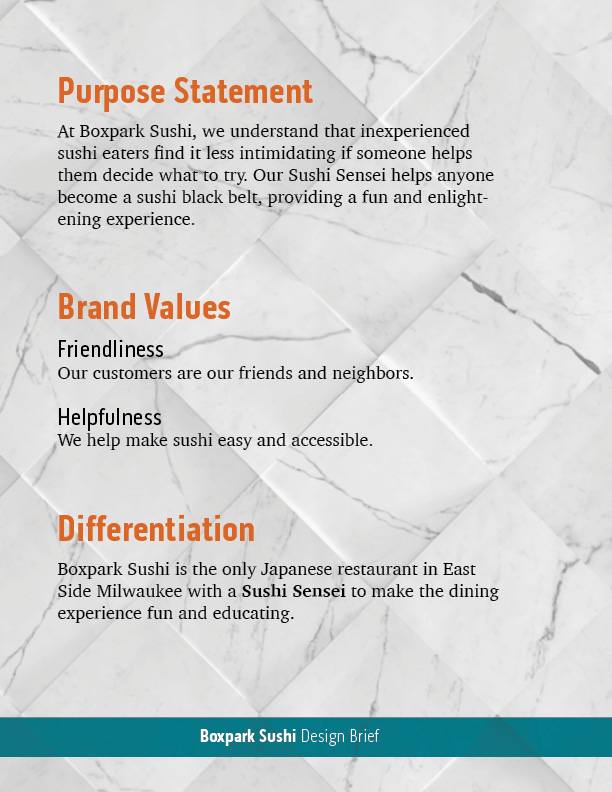
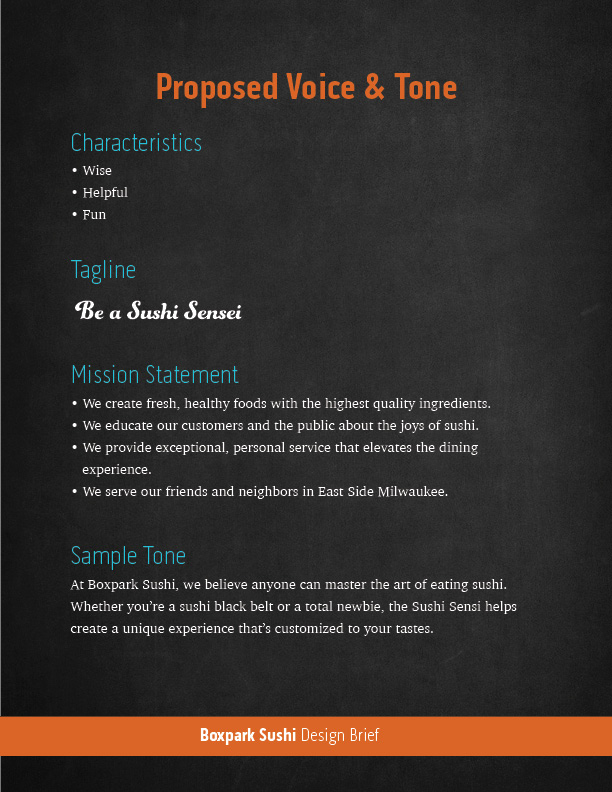
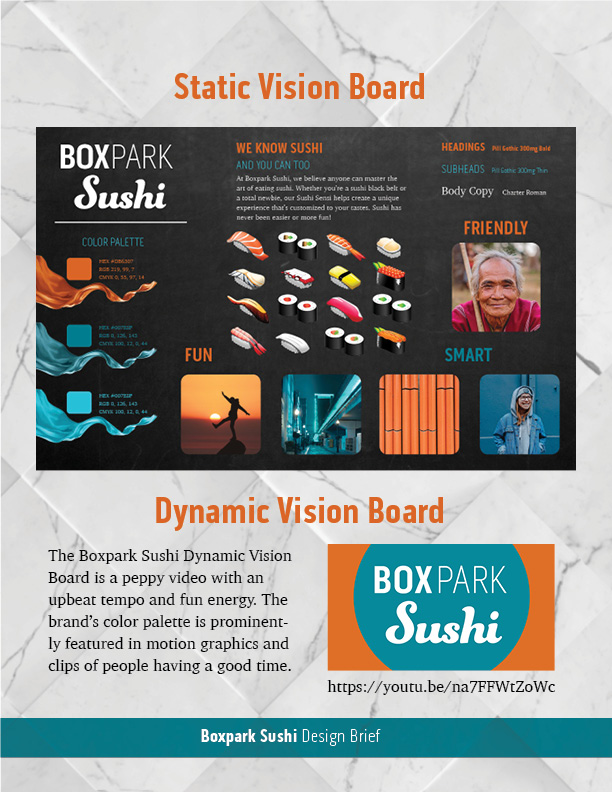
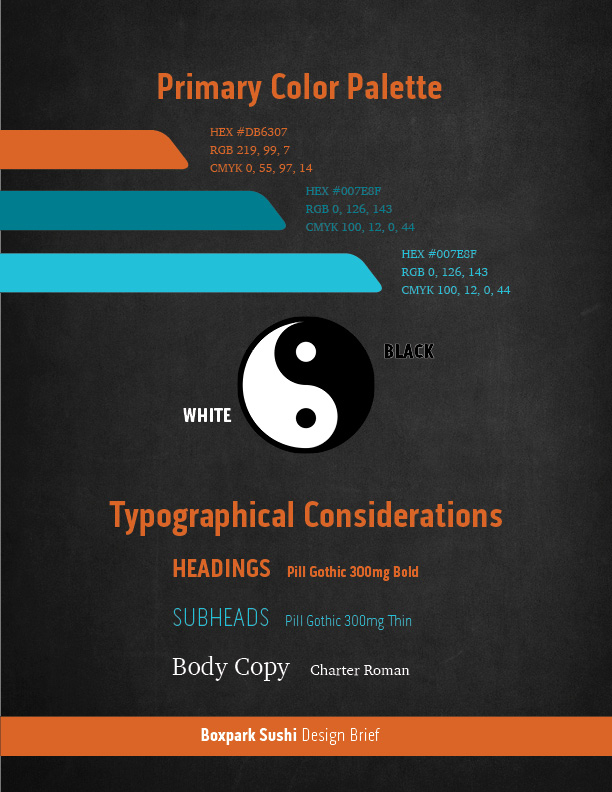
Previous design research and strategies for Boxpark Sushi determined that the brand voice is wise and friendly, and the tone is playful. These adjectives, along with the brand’s fun and helpful personality traits, provided directive words used to find appropriate images, colors, and typography for the brand. Many of these design choices and directive words were established in the brand’s static vision board but were adjusted after critiques from Jose Caceres and Dr. Adam Baldowski. For example, the word “smart” was changed to “wise” to project a softer and kinder image rather than an arrogant or condescending form of intelligence.
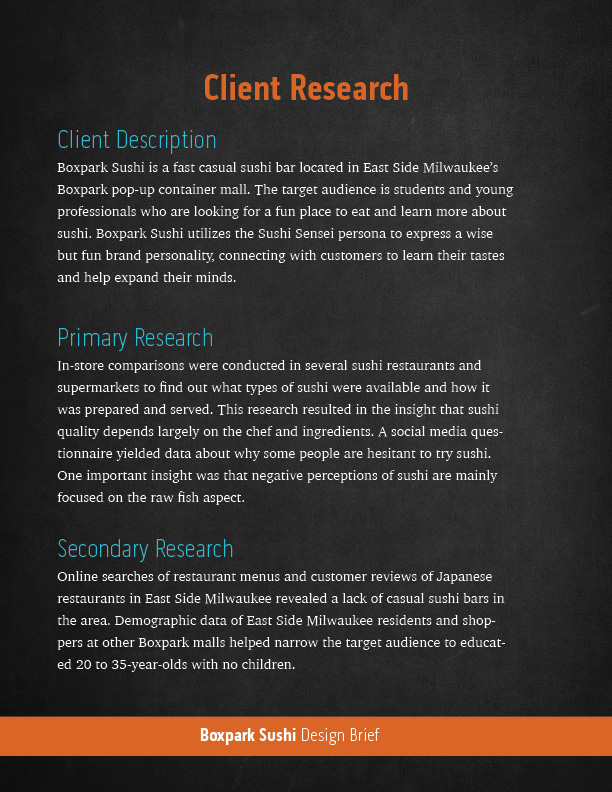
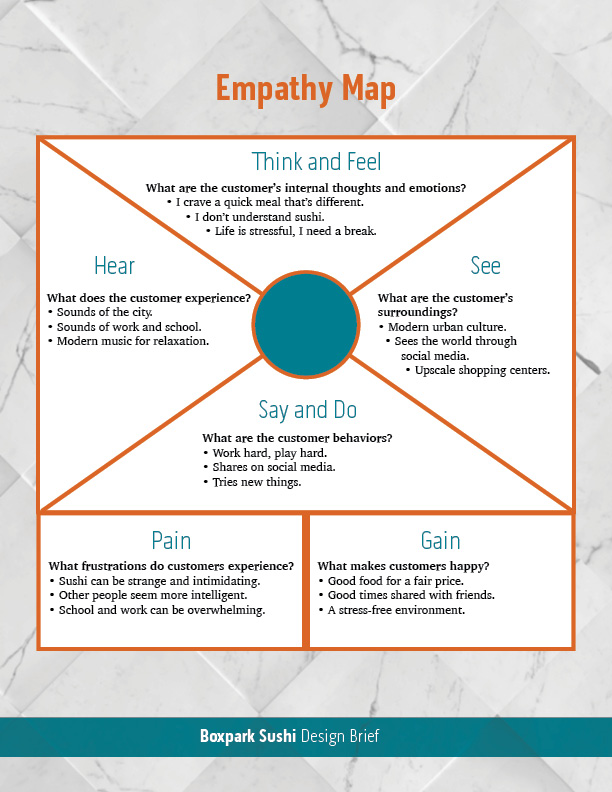
The brand narrative is based on the concept of a “Sushi Sensei” helping customers decide what to order with the ultimate goal of helping them become masters in the art of sushi eating. This narrative and the Sushi Sensei persona are designed to appeal to the primary target audience of East Side Milwaukee college students and young professionals who are educated and aspire to learn more.
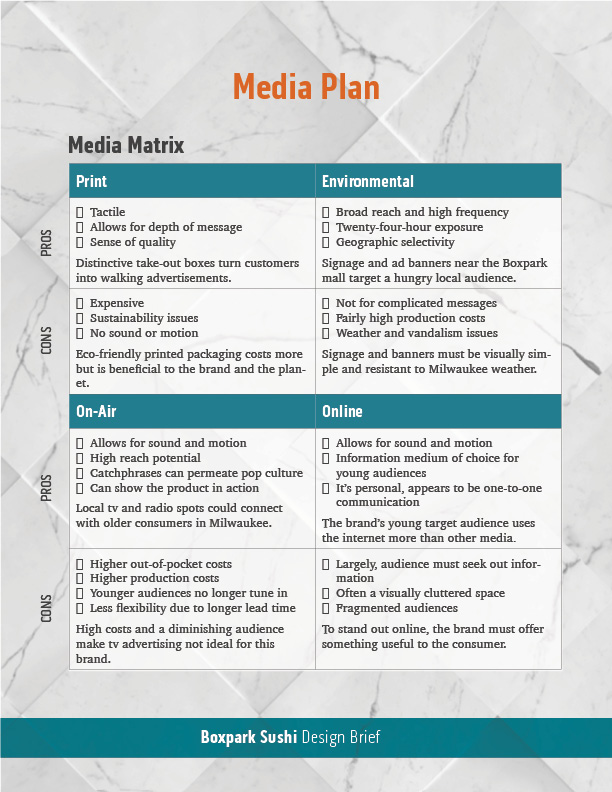
An effective ad strategy involves using media that targets the primary audience and repeatedly exposes that target demographic to a persuasive message that keeps the featured brand visible (Gordon, 2017). In order to determine the best way to reach Boxpark Sushi’s audience, a media matrix was used to consider the benefits and drawbacks of each media outlet. A media matrix is a graphical media planner that explains the pros and cons of advertising in four categories of media: print, environmental, on-air, and online (Stone, 2010). Boxpark Sushi will utilize each of the categories except on-air. The high production costs for television commercials make this medium cost prohibitive for a small, local brand. Broadcast television is also a fading medium. Reporting for Ad Age, Crupi (2019) notes that 27% of 18 to 49-year-old broadcast television viewers stopped watching over a period of just two years (2016-2017), tuning in to streaming services or social media instead.
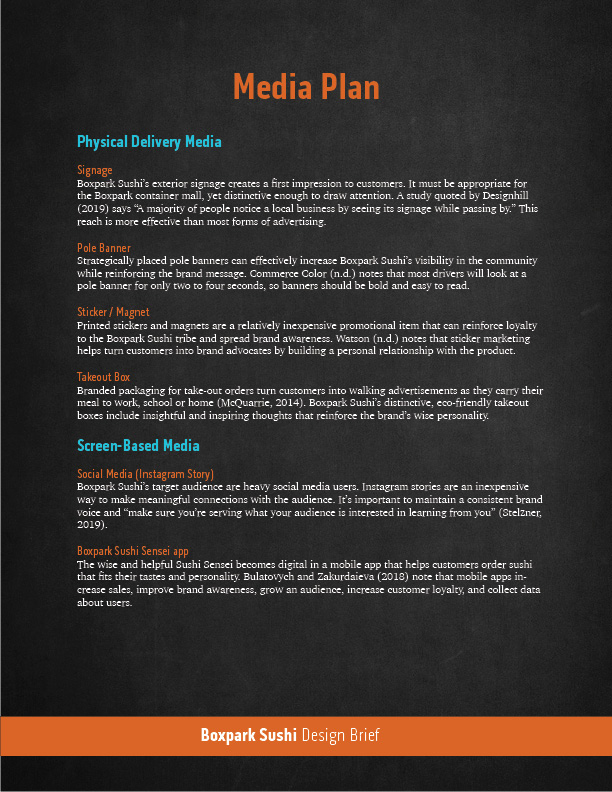
The Boxpark Sushi media delivery plan describes six media assets and explains the strategic purpose of each. Three of the media assets were class requirements, but the other three were developed from the brand’s media matrix. All six of the assets utilized research to explain the proposed application and determine its strategic purpose. For example, research of pole banners revealed that although drivers will look at a pole banner for only two to four seconds, effective banners can reinforce your brand message by repeatedly exposing it to a localized audience (Commerce Color, n.d.). Boxpark Sushi can clearly benefit from this type of physical delivery media advertising near the Boxpark shopping center in East Side Milwaukee.
In terms of screen-based media, a Sushi Sensei app is one way for the brand to stand out in an already cluttered online environment. A mobile app can help customers order sushi that fits their tastes and personality, even if they are not eating at Boxpark. This provides a useful benefit to users while also helping Boxpark Sushi increase sales, improve brand awareness, grow the audience, increase customer loyalty, and collect data (Bulatovych & Zakurdaieva, 2018). The app can also be used in-store to help staff fill the Sushi Sensei role.
Learning to develop a media delivery plan was a new and valuable lesson. Vision boards and creative briefs were created for previous classes, but the final design brief for the Boxpark Sushi brand integrated all the strategies and creative decisions that were developed in the past few months. Brand differentiation, user behaviors, and advertising strategies all came into play while developing the media delivery plan and design brief. In the coming months, the knowledge acquired in this project will inform further design of the Boxpark Sushi brand logo and media assets.
References:
Commerce Color. (n.d.). 5 Ways You Can Supercharge Your Pole Banner Promotions. https://www.commercecolor.com/blog/5-ways-you-can-supercharge-your-pole-banner-promotions
Crupi, A. (2019, January 28). Ratings Bombshell: In Two Years, Network TV Demos Plummeted 27 Percent. Ad Age. https://adage.com/article/media/c3/316390
Gordon, E. (2017). Marketing and Advertising Strategies. https://medium.com/inkbot-design/marketing-and-advertising-strategies-45242269f5ee
Stone, L.T. (2010, July 01). Managing the Design Process-Concept Development: An Essential Manual for the Working Designer. Rockport Publishers.
 Joshua Siegel's Mastery Journal