Logo Design Workshop, part 4 – color studies

If color is the strongest and most proprietary part of a visual system, how can you use it to differentiate the brand identity for the city represented by your logo from the brand identities of other cities?

Sean Adams recommends doing a color study of the competition. Find the primary colors that dominate the field, then go the opposite direction to differentiate your brand from competitors (Adams, 2015).

I researched the brand identities of Japan and other Asian countries. Red was the primary color used most often. I saved four swatches of red sampled from the logos and brought that image into Adobe Color.
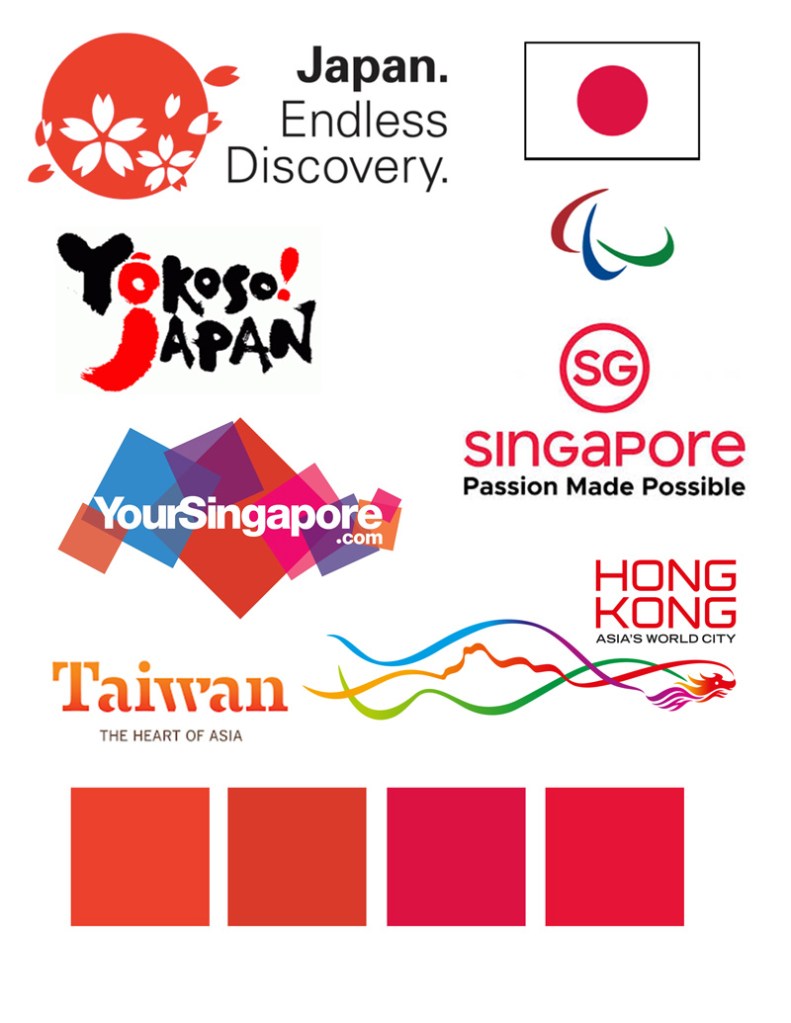
competition logo colors study

The color wheel helped me find a hue of green that is opposite the competition’s red color. I then used that green as a starting point for my city logo color studies.

I collected mood photos for each of the three brand identities. For Geography, I used Adobe Color to sample colors from a photo of Arashiyama bamboo forest in Kyoto. The colors in this photo are natural and adventurous according to Steve Douglas, fitting the values and characteristics of the brand (Douglas, n.d.).
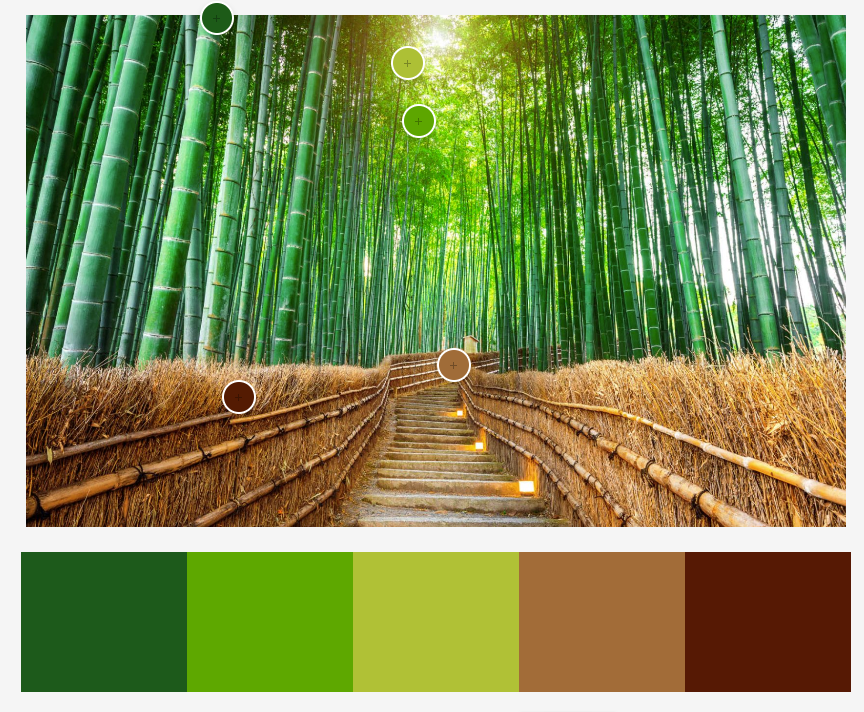
bamboo forest color palette

Harajuku fashion is a fun, creative representation of modern Japan that originated in Tokyo but is popular in Kyoto, so I sampled some of the most common colors to match the Modern Culture brand definition. After experimentation with different unique colors, a magenta pink best captured the friendly, creative spirit of Kyoto without being overtly feminine (Cross, n.d.).

I repeated the process for the Traditions brand identity, seeking colors that represent the spiritual sophistication of historic Kyoto. Again, I consciously avoided bright red to differentiate the brand. Although the color purple has be overused to represent royalty, it is still effective for expressing elegance and harmony (Douglas, n.d.).

After picking a main color for each of the three brand identities, I made variations to compare with the colors of popular logos. This helped me find unique colors that weren’t immediately identified with another brand.
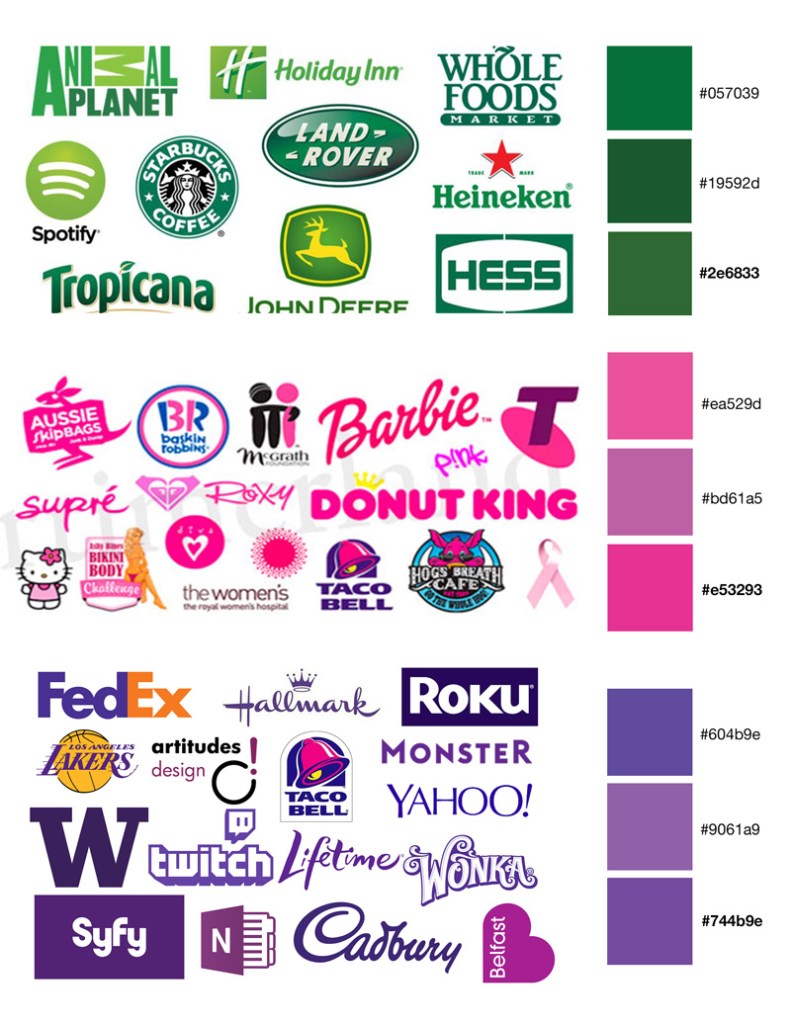
competition logos color study

After finding the best variation of each main color, I used Adobe Color to create secondary palettes using the analogous, complementary, split-complementary, and triadic color harmony rules. I labeled the main colors with the hex code, Pantone number, CMYK, and RBG values.
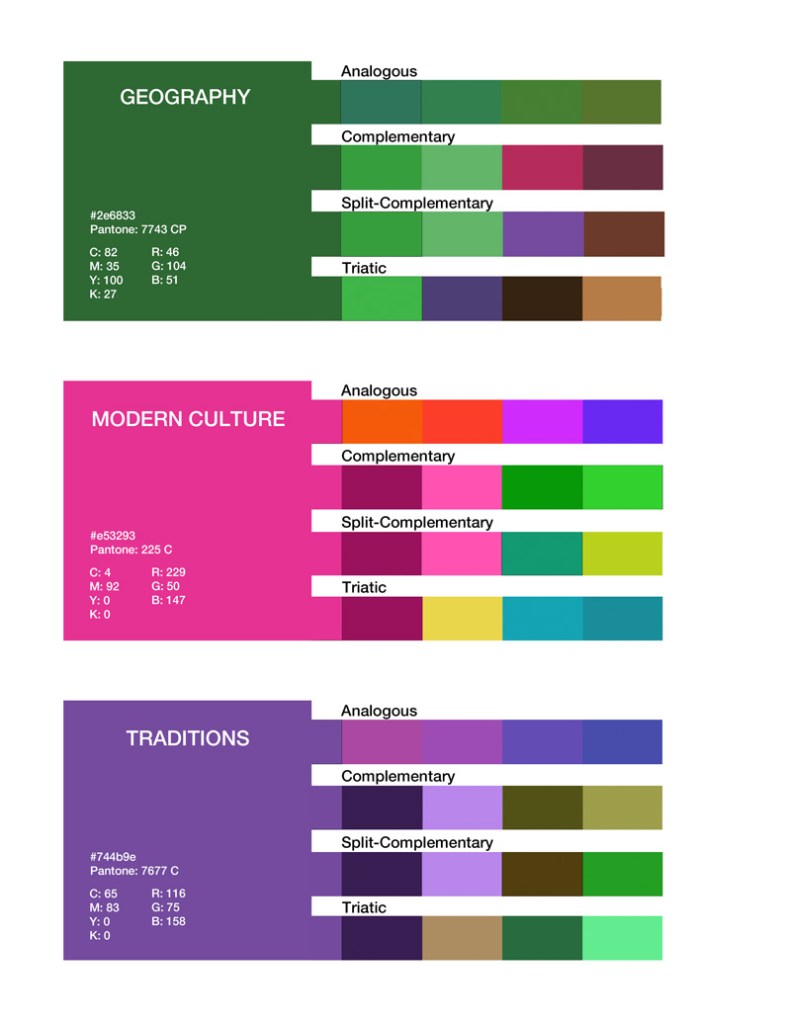
Kyoto city logo colors

Using those color tests, I selected a secondary palette for each brand identity based on the values and characteristics of each brand. Then I started color tests with the previously designed logos.
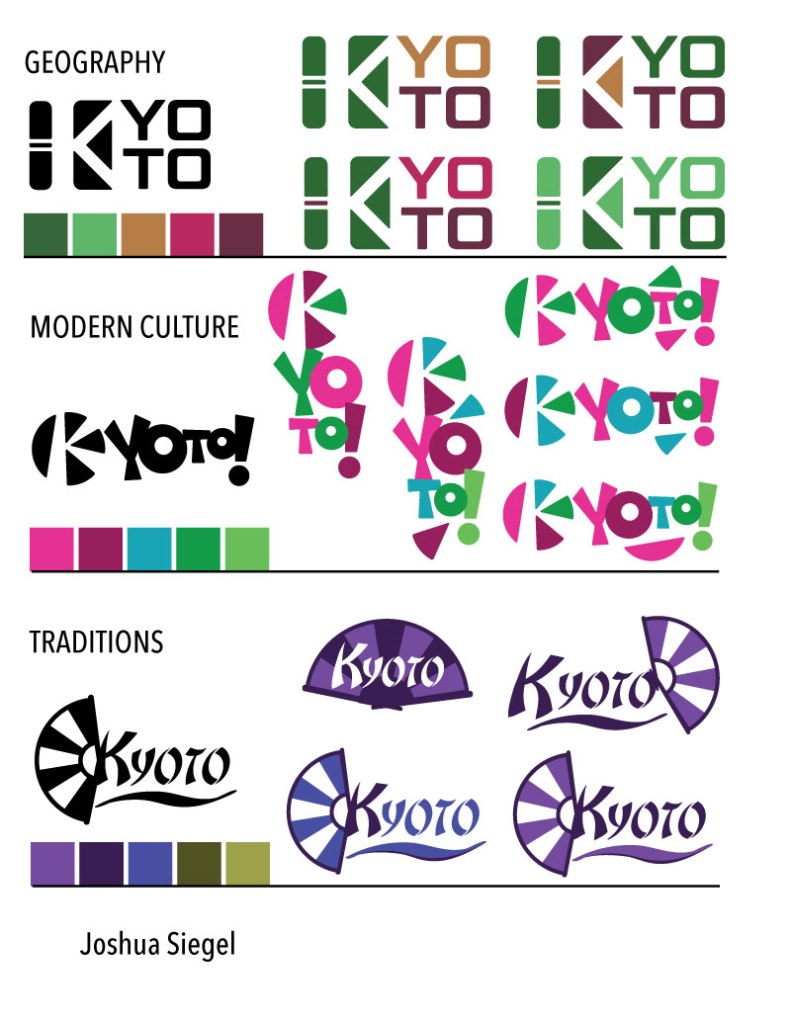
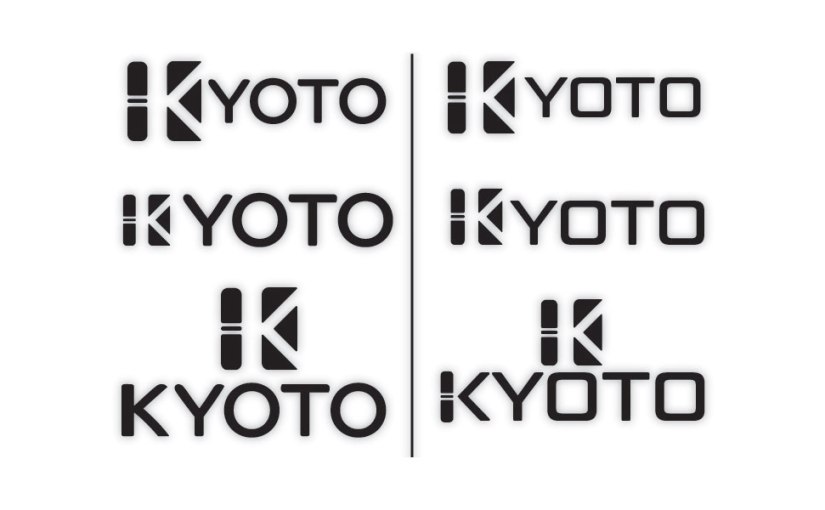
Kyoto city logos color studies

Color Choice Rationale

Geography:
Steve Douglas describes green as a serene and peaceful color that represents health and growth to many people (Douglas, n.d.). The green is complemented by a dark magenta and earth tones that are adventurous yet simple and comforting (Cross, n.d). The top right logo is currently the strongest, but much more exploration is needed.

Modern Culture:
The color choices for this palette are fun and modern without being too feminine or using overly bright colors that may be difficult to read or reproduce (Adams, 2015). After exploration in both horizontal and vertical layouts, the color combinations still don’t feel natural. I will have to reconsider the two green colors in further development. Although visually complementary to the pink, green is a peaceful, serene color (Douglas, n.d). That does not fit with the youthful energy of this brand identity.

Traditions:
The purple, its darker shade, and dark blue express the elegant history (Douglas, n.d), but the complementary greens are more appropriate to a nature inspired design (Cross, n.d.). In my efforts to find distinction from competitors, I’ve avoided bright red. However, a deep shade of red may be appropriate as a secondary color in this palette.

Color Logo Revisions

This week I received peer feedback from Krystal Awai, Jorge Cainas, and Misty Francis. All three gave excellent suggestions on how the city logo designs and color choices could be improved.

Kyoto geography

Cainas suggested adding a small detail to the geography logo to make the bamboo icon more recognizable. After trying variations on the bamboo stalk, I found that adding a single leaf was effective way to make the design more distinctive while keeping it simple. The leaf also makes the boxy shaped logo more natural and freer from constraints, keeping with the brand definition.

Geography Brand Definition

Key Value 1: reverence for nature
Key Value 2: independence
Key Characteristic 1: adventurous
Key Characteristic 2: natural
Its Differentiation: historic temples surrounded by natural beauty
Experience / Emotional connection: collecting shared memories and photos

For the colors, I kept only the primary green and two strongest earth tones.
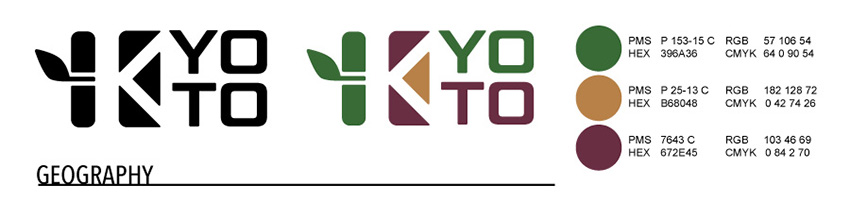
Kyoto geography revised color logo

Primary Color:
Dark Green
PMS     P 153-15 C                   RGB     57 106 54
HEX     396A36                        CMYK  64 0 90 54

Secondary Colors:
Golden Brown
PMS     P 25-13 C                     RGB     182 128 72
HEX     B68048                        CMYK   0 42 74 26

Dark Magenta
PMS     7643 C                         RGB     103 46 69
HEX      672E45                        CMYK   0 84 2 70


Kyoto modern culture

The modern culture logo and color palette both needed improvements based on feedback from Cainas and Francis. Multiple colors led to color pollution, so I simplified the palette to two colors.  Milano Kate Valihura notes that ninety-five percent of brands use no more than two colors in their logos (Valihura, 2018).

When rearranging the logo, I used the wedges and circle segment that form the negative space K as accents to the wordmark. Cainas found the logo more engaging with the newly formed face.

Modern Culture Brand Definition

Key Value 1: creativity
Key Value 2: individuality
Key Characteristic 1: fun
Key Characteristic 2: friendly
Its Differentiation: modern but historic
Experience / Emotional connection: fun with friends

The bright pink sampled from modern Japanese fashion is a strong fit for the brand, but I chose a slightly different shade that had an exact Pantone match. The dark purple secondary color is more gender-neutral than pink and provides strong contrast.
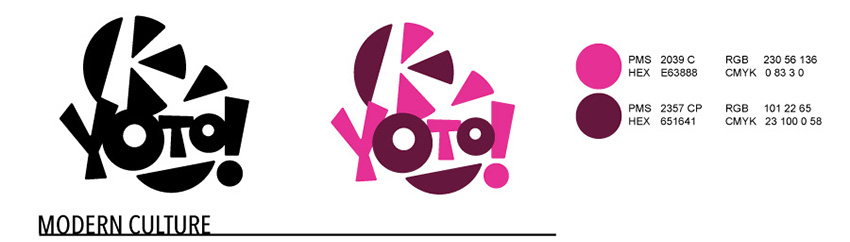
Kyoto modern culture revised color logo

Primary Color:
Bright Pink
PMS     2039 C             RGB     230 56 136
HEX     E63888            CMYK   0 83 3 0

Secondary Color:
Dark Burgundy
PMS     2357 CP           RGB     101 22 65
HEX     651641            CMYK   23 100 0 58


Kyoto Traditions

The traditions brand palette needed more development, so I looked to the traditional Japanese color chart for inspiration. Based on suggestions by Awai, I sampled a dark red from a photo of Romon gate in Kyoto. I then followed Sean Adams’s advice and compared that red to competitor logos, making it slightly more crimson to differentiate (Adams, 2015).

Traditions Brand Definition

Key Value 1: respect
Key Value 2: harmony
Key Characteristic 1: spiritual
Key Characteristic 2: sophisticated
Its Differentiation: spiritual heart of Japan
Experience / Emotional connection: a spiritual connection to Japanese history

In traditional Japan, purple represented virtue and spirituality (Tofugu, 2013). Western society also associates purple with spirituality, royalty, and luxury (Valhura, 2018). A soft light purple fit the traditions brand, and a much darker violet added depth.

I also included the unique crimson red that evokes Kyoto’s historic shrine gates. In Japanese society, red is a symbol of power with strong connections to religion (Tofugu, 2013).  
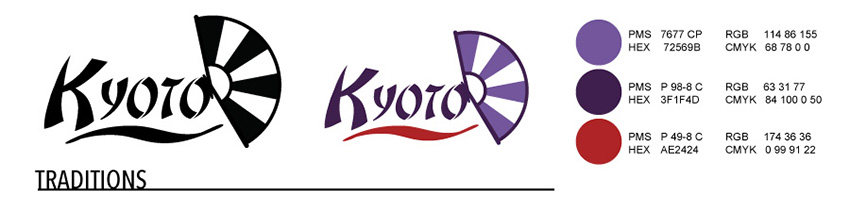
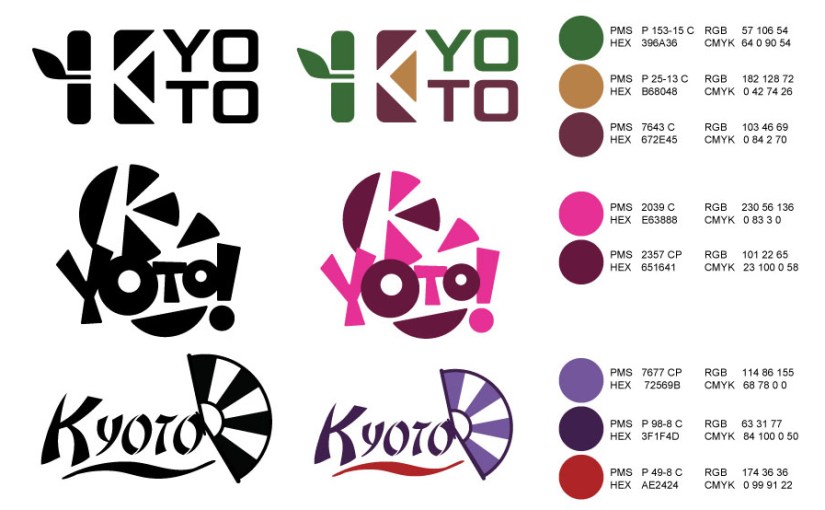
Kyoto traditions revised color logo

Unique Colors:

Light Purple
PMS     7677 CP           RGB 114 86 155
HEX     72569B           CMYK 68 78 0 0

Dark Violet
PMS     P 98-8 C           RGB 63 31 77
HEX     3F1F4D            CMYK 84 100 0 50

Crimson
PMS     P 49-8 C           RGB 174 36 36
HEX     AE2424            CMYK 0 99 91 22


With my logo designs now (mostly) complete, I will develop Brand Vision Boards for each of the Kyoto logos.

References:

Adams, S. (2015, March 27). Branding for Designers. Retrieved from https://www.lynda.com/Design-Color-tutorials/Foundations-Branding-Designers/363131-2.html

Cross, R. (n.d.). Color meaning and symbolism: How to use the power of color in your branding. Canva. Retrieved from https://www.canva.com/learn/color-meanings-symbolism/

Douglas, S. (n.d.). Psychology Of Color In Logo Design. TLC Blog. Retrieved from https://thelogocompany.net/blog/infographics/psychology-color-logo-design/

Shutterstock. (n.d.). Bamboo Forest in Kyoto, Japan. Retrieved from https://www.shutterstock.com/image-photo/bamboo-forest-kyoto-japan-763721149

Tofugu.com. (2013, September 12). The Traditional Colors of Japan. Retrieved from https://www.tofugu.com/japan/color-in-japan/

Valihura, M. (2018, July 24). A Cheat Sheet for Choosing the Best Logo Colors That Will Grab Your Audience’s Eye. Retrieved from https://foundr.com/best-logo-colors/
Logo Design Workshop, part 3 – vector graphics

The logo design process that we started last month continued with the creation of vector graphics. At the end of the last stage we selected the three strongest designs guided by peer critique and self-critique based on David Airey’s seven elements of iconic design (Airey, 2014).

I designed the following logos to represent the city of Kyoto, Japan.

Kyoto Geography

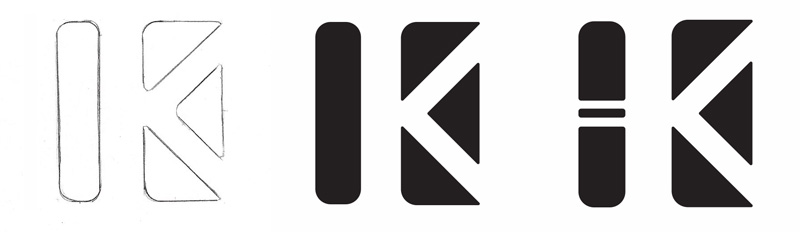
Kyoto geography logo

The rounded column and triangles represent the bamboo forests and gently sloped mountains around Kyoto. A letter K is formed by the negative space. The concept sketch and first vector graphic were not distinctive enough, so I added lines to represent a joint in the bamboo stalk. I also followed Von Glitchka’s advice from Logo Design: Illustrating Logo Marks and adjusted spacing for visual continuity (Glitchka, 2016).

Kyoto Modern Culture

Kyoto modern culture logo

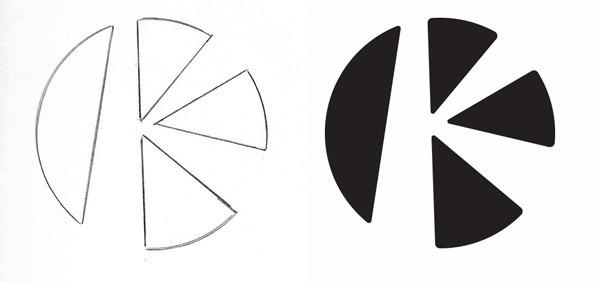
This design captures the energy and style of today’s people in Kyoto. The negative space letter K is inspired by manga comics while evoking the narrow streets of Kyoto’s historic Gion district. After creating a vector graphic based on the sketch, I added gentle curves to the sharp edges. These subtle rounds are another of Glitchka’s recommendations for making a design stand out (Glitchka, 2016).

Kyoto Traditions

Kyoto traditions logo

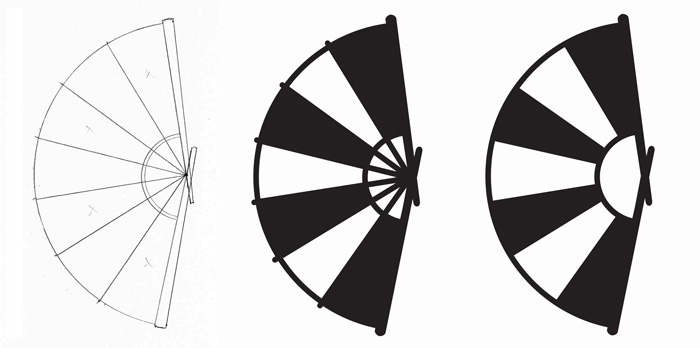
The fan design is a simplified icon based on the folding fans carried by Kyoto’s geisha. The alternating dark and light panels evoke Japan’s historic flag, but I must be careful to choose a color other than red for the primary palette to avoid offense (Taylor, 2015).

After creating a vector graphic based on the sketch, I realized the design was still not simple enough to be effective at small sizes. The removal of just a few elements made the design stronger according to Airey’s elements of iconic design (Airey, 2014).

Font Selection

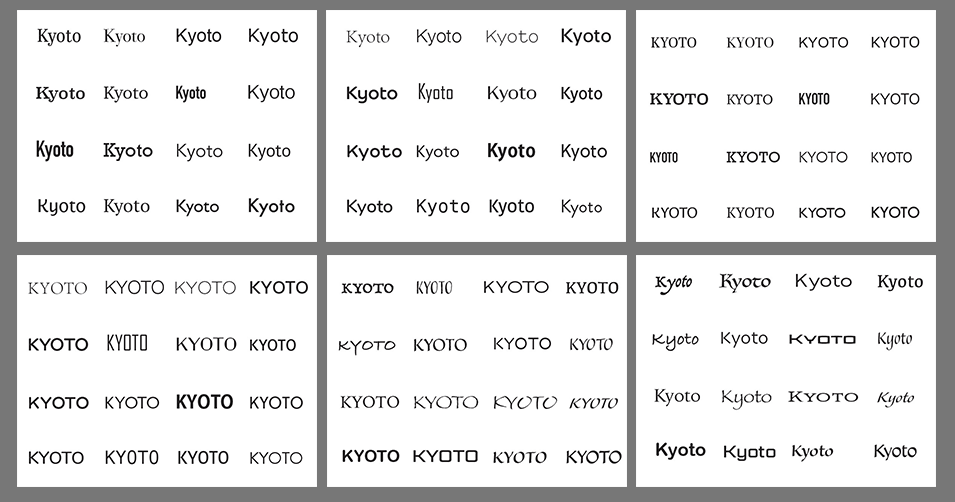
The next step was to choose fonts with the most potential to be effective wordmarks. In Adobe Illustrator, I created a file with six artboards. On each artboard, I placed type and used Adobe Fonts to find at least 32 wordmarks for each of the three logos. This follows the example set by Sean Adams in Branding for Designers (Adams, 2015).

I looked for typefaces that met the following qualities:

  • Geography: steady, solid, regular edges
  • Modern Culture: energy, fun, rounded shapes
  • Traditions: elegant, respect, calligraphic
Kyoto logo type tests

After printing and cutting out the logos and wordmarks, I compared each of them by hand to find complementary shapes and angles. Following Janie Kliever’s advice, I made choices based on what was appropriate for the design concept, not my personal tastes (Kliever, N.D.).

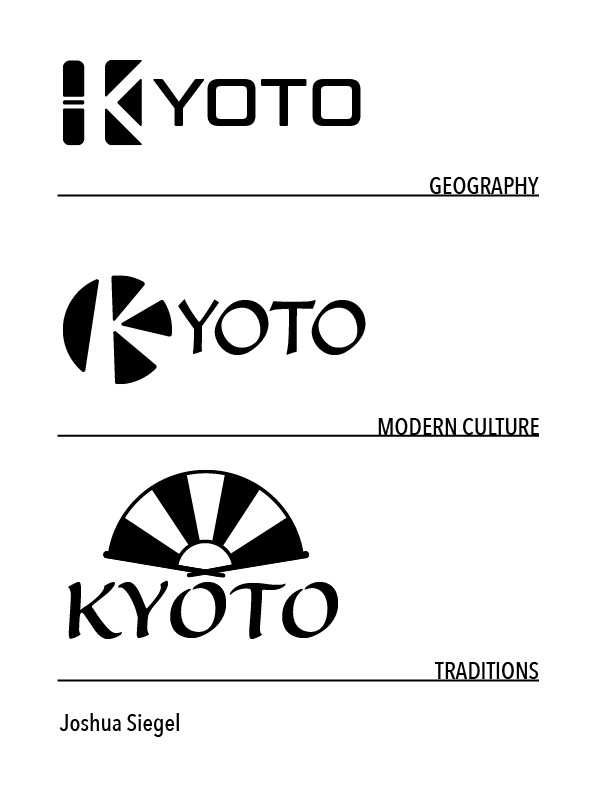
I eventually settled on two font choices to pair with each logo icon in Adobe Illustrator.

With multiple variations to choose from, I selected the strongest option for each of the three logos.

References:

Adams, S. (2015, March 27) Branding for Designers. Retrieved from https://www.lynda.com/Design-Color-tutorials/Foundations-Branding-Designers/363131-2.html

Airey, D. (2014, August 20). Logo Design Love, Annotated and Expanded Edition, Second Edition. Retrieved from https://ce.safaribooksonline.com/book/branding/9780133812589

Glitschka, V. (2016, August 10) Logo Design: Illustrating Logo Marks. Retrieved from https://www.lynda.com/Illustrator-tutorials/Foundations-Logo-Design-Illustrating-Logo-Marks/475455-2.html

Kliever, J. (n.d.). How designers choose fonts. Retrieved from https://www.canva.com/learn/font-design/
Taylor, A. (2015, June 27). Japan has a flag problem, too. The Washington Post. Retrieved from https://www.washingtonpost.com/news/worldviews/wp/2015/06/27/japan-has-a-flag-problem-too/

Defining Client Needs – Week 4 Reflection

Mastery Journal
In the Week 4 Live Session video for Defining Client Needs, Ryan McClung explained why a Mastery Journal is an important part of the learning journey. We are presented with so much information through research and class assignments that it is important to keep that information filed somewhere for future reference. The Mastery Journal is a permanent repository of data, insights, strategies and reflections gathered during the Media Design MFA program. (McClung, 2019)

This personal catalog of resources will not only come in handy for future professional work, it is an essential part of preparing for the Media Design Mastery Thesis in Month 11 of the MFA program. McClung notes that design is not a linear process. Design is a cyclical journey that goes back to the research phase again and again. (McClung, 2019) This description of the cyclical design process is supported by Jennifer Visocky O’Grady and Ken O’Grady in A Designer’s Research Manual. (O’Grady & O’Grady, 2009)

Effective Critique
O’Grady and Ken O’Grady also state that the design process should have an assessment phase to help the designer make better informed decisions about the work. (O’Grady & O’Grady, 2009). We are using peer critiques as a means of assessment for the Logo Design Workshop city logo sketches. In the Week 4 Live Session, McClung offers advice for giving better, more productive critiques. He notes that critique is a life skill that requires balance, truthfulness, and effective communication. (McClung, 2019)

Kate Lawless and Shannon Crabill suggest the “Love Sandwich” approach, where negative but constructive criticism is sandwiched between what is good about the work. (O’Grady & O’Grady, 2009) I have applied this approach in my own classroom, and I encourage my students to consider the sandwich when giving peer critiques. Honesty is also important to helping peers grow as designers. Negative critique, presented in a positive way, helps determine the most effective solutions. McClung notes that flattery provides a temporary ego boost but is otherwise a waste of time. (McClung, 2019)

Logo Prototypes
While developing the city logo prototypes, I have tried to adhere to David Airey’s seven elements of iconic design but found it difficult to resist my tendency to over-illustrate. In the future, I will continually remind myself to follow Airey’s advice and “Keep it simple.” (Airey, 2014).

Critiquing my peers’ sketches helped remind me of the weaknesses in my own work. McClung also offers several questions to consider when critiquing prototypes. Why are you doing it? Is it well researched? Is it cohesive with the brand? (McClung, 2019) Questions like theses should be considered when critiquing your own work as well as your peer’s.

Overall, the information I learned this week will very useful for my media design career. It will also improve my teaching, specifically my student critiques. I look forward to the next step of the mastery journey.

References:

Airey, D. (2014, August 20). Logo Design Love, Annotated and Expanded Edition, Second Edition. Retrieved from https://ce.safaribooksonline.com/book/branding/9780133812589

Lawless, K., & Crabill, S. (2015, March 27). How to Give and Receive a Good Design Critique. Retrieved from https://baltimore.aiga.org/how-to-give-and-receive-a-good-design-critique/

McClung, R. (2019, August 27). Week 4 Live Session. Retrieved August 27, 2019, from https://online.fullsail.edu/class_sections/46722/modules/173179/activities/1087782

OGrady, J. V., & OGrady, K. V. (2009, February 1). A designer’s research manual: succeed in design by knowing your clients and what they really need. Gloucester, MA: Rockport Publishers. Retrieved from http://ce.safaribooksonline.com/book/graphic-design/9781592535576/chapter-2-practicing-research-driven-design/68

Logo Design Workshop, part 2 – sketch revisions

Task 2

For Part 2 of the Logo Design Workshop, we gave and received peer critique of our rough concept sketches. Jose Caceres and Krystle Awai offered valuable feedback that informed my choices of the strongest nine concepts to take to the next stage. Each reminded me to follow David Airey’s seven elements of iconic design and pointed out the designs they felt were most successful. (Airey, 2014)

Kyoto Geography inspired designs

Kyoto geography sketches 1

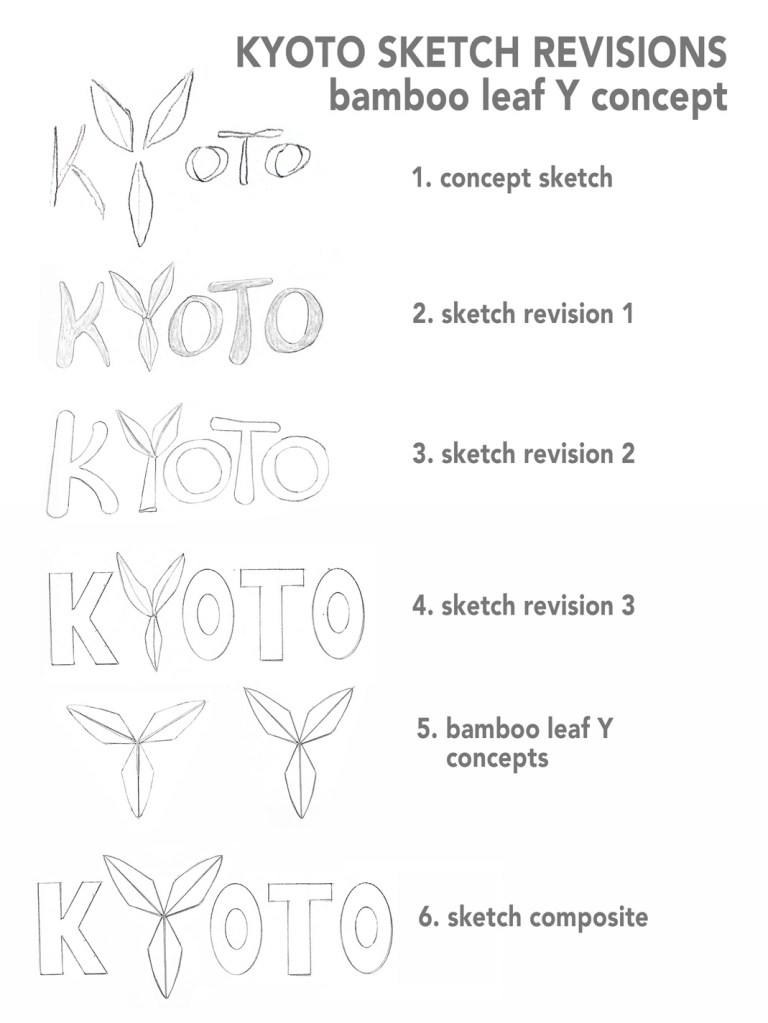
Bamboo leaf Y concept

  1. Concept sketch: Three bamboo leaves replace the letter Y.
    Caceres noted that this design was successful because the simple, symmetrical shapes are easy to commit to memory as well as providing information about Kyoto’s natural features.
  2. Sketch revision 1: I kept the style of the original sketch but adjusted the scale of the leaves in relation to the letters.
  3. Sketch revision 2: Instead of three bamboo leaves, I used two leaves atop a bamboo stalk to replace the letter Y.  My lettering was cleaner on this revision, but the hand-drawn type seems cramped and hard to read at a distance.
  4. Sketch revision 3: Using a ruler and oval templates, I drew sharper modern type to contrast with the soft organic leaves. This is the strongest revision so far because it is recognizable at any size.
  5. Bamboo leaf Y concepts: I drew and cut out a single leaf that I used as a guide to create a more symmetrical leaf Y. The perfect symmetry of the first design was too similar to an upside-down Mitsubishi logo, so I adjusted the angles on the second design to make it more distinct as a letter Y.
  6. Sketch composite: After scanning the sketch revisions, I combined the lettering of revision 3 with the second Y concept sketch. This composite is a distinctive, modern design but it lacks the organic quality of the original concept sketch.
Kyoto geography sketches 2

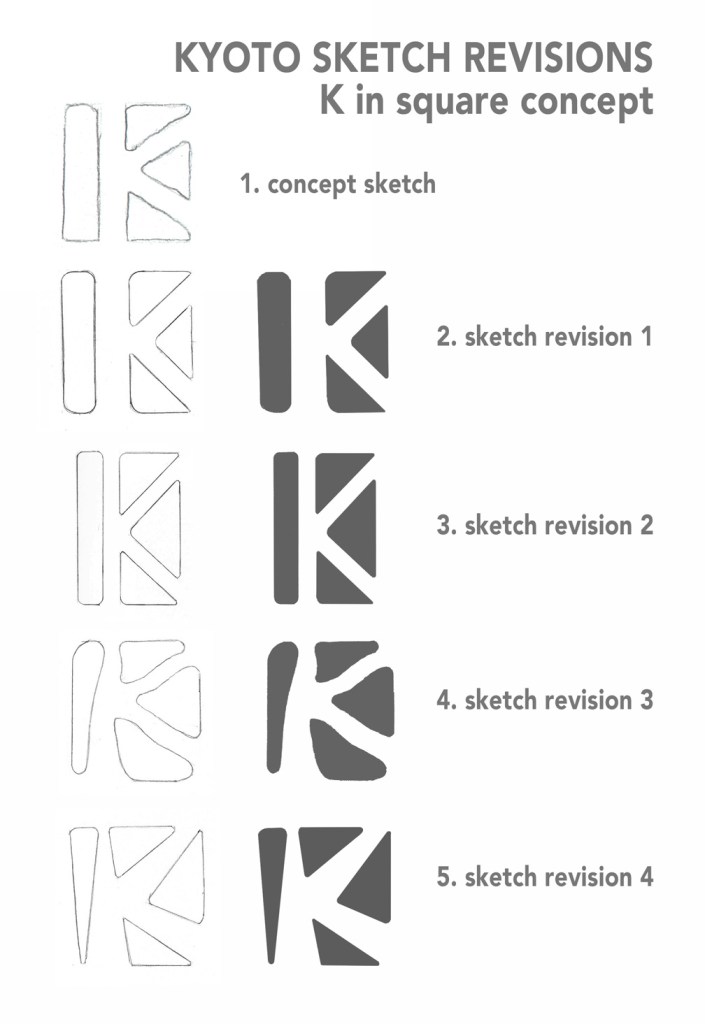
K in square concept

  1. Concept sketch: Three triangles and column form a K in the negative space.
    Both Awai and Caceres found this to be an effective concept because of the simplicity of the shapes. Awai also noted that the negative space evokes Kyoto’s scenic walkways as well as the letter K. The triangles represent the mountains around Kyoto.
  2. Sketch revision 1: I redrew the original concept with straight lines and refined angles., keeping the rounded edges to soften the design. I filled in the dark areas after scanning for consistency.
  3. Sketch revision 2: This revision uses symmetrical shapes and less negative space for a compressed design. The first two revisions both represent a recognizable pattern that can be used with a Kyoto wordmark, as an icon, or as a repeating motif in a variety of ways.
  4. Sketch revision 3: There are many recognizable logos featuring the letter K, such as K-Mart, Circle K, and Special K cereal. To find distinction as well as incorporate tradition, I rounded the shapes in the design to make the negative space K resemble the meandering paths in Kyoto’s Zen gardens.
  5. Sketch revision 4: The fourth revision returned to straight lined rectangles but kept the energy and historical tradition of the previous design.
Kyoto geography sketches 3

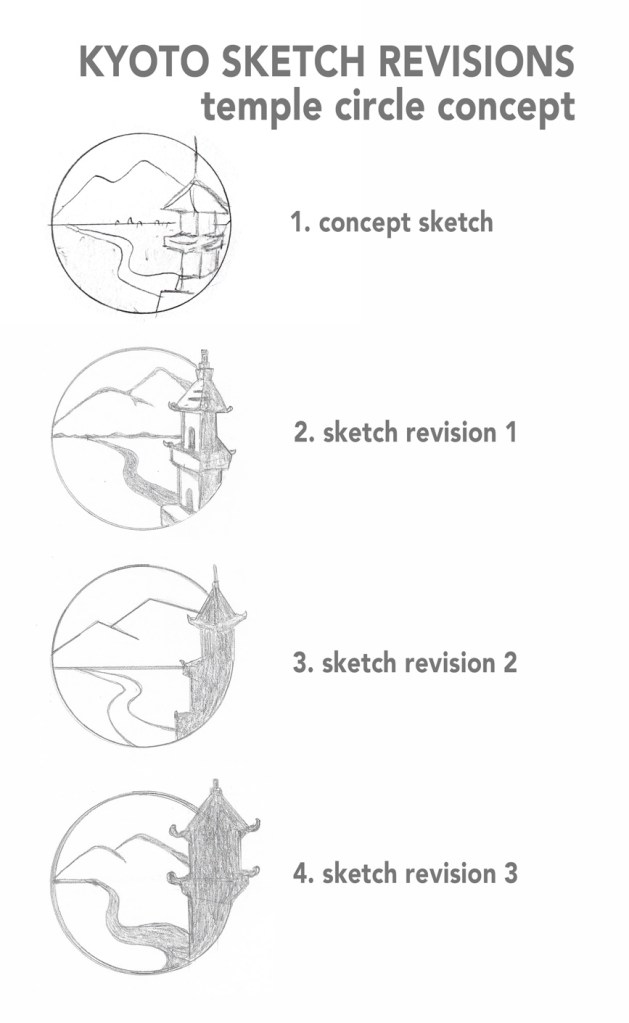
Temple circle concept

  1. Concept sketch: A circle holds a view of a river, mountains, and a Kyoto temple.
    Awai felt that this sketch incorporated tradition with the natural beauty of Kyoto in a relevant way.
  2. Sketch revision 1: I illustrated the design, trying to simplify the details. The temple breaks free of the circle, helping the balance.
  3. Sketch revision 2: The first revision was too detailed to work at a small scale, so I made the temple into a silhouette. The curve of the river looks more natural, but this design can be simplified even more.
  4. Sketch revision 3: The thicker line weight and modified temple make this design less illustrative and more iconic while retaining its historic relevance.

Kyoto Modern Culture inspired designs

Kyoto modern culture sketches 1

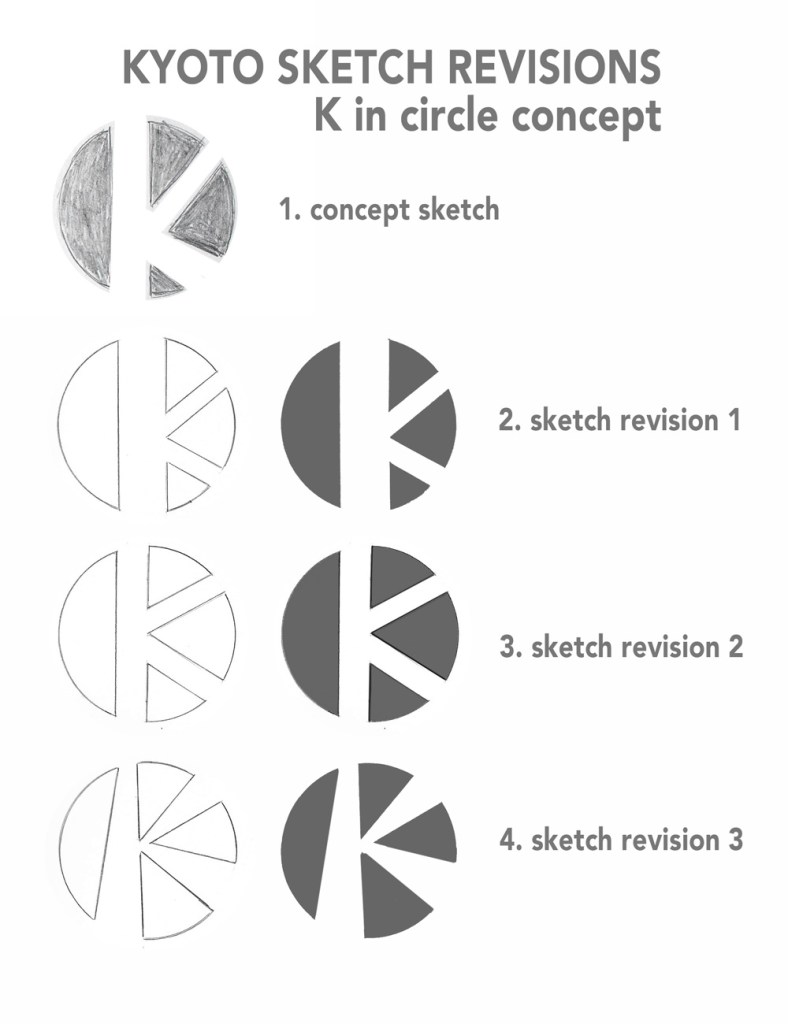
K in circle concept

  1. Concept sketch: A negative space K is made by shapes that form a circle evocative of the rising sun.
    Caceres stated that this design was successful because of its simplicity. Like the “K in square” concept, it aims for distinction and is easy to commit to memory.
  2. Sketch revision 1: I tried to closely recreate the original concept with cleaner lines. Again, I filled in the dark areas after scanning for consistency.
  3. Sketch revision 2: My unfortunate fondness for symmetry influenced this revision. Although the design feels more balanced, it actually becomes less distinctive than the original concept.
  4. Sketch revision 3: This design sheds the balanced symmetry and becomes more energetic. It remains distinctive and incorporates tradition by making the negative space resemble rays of the rising sun.
Kyoto modern culture sketches 2

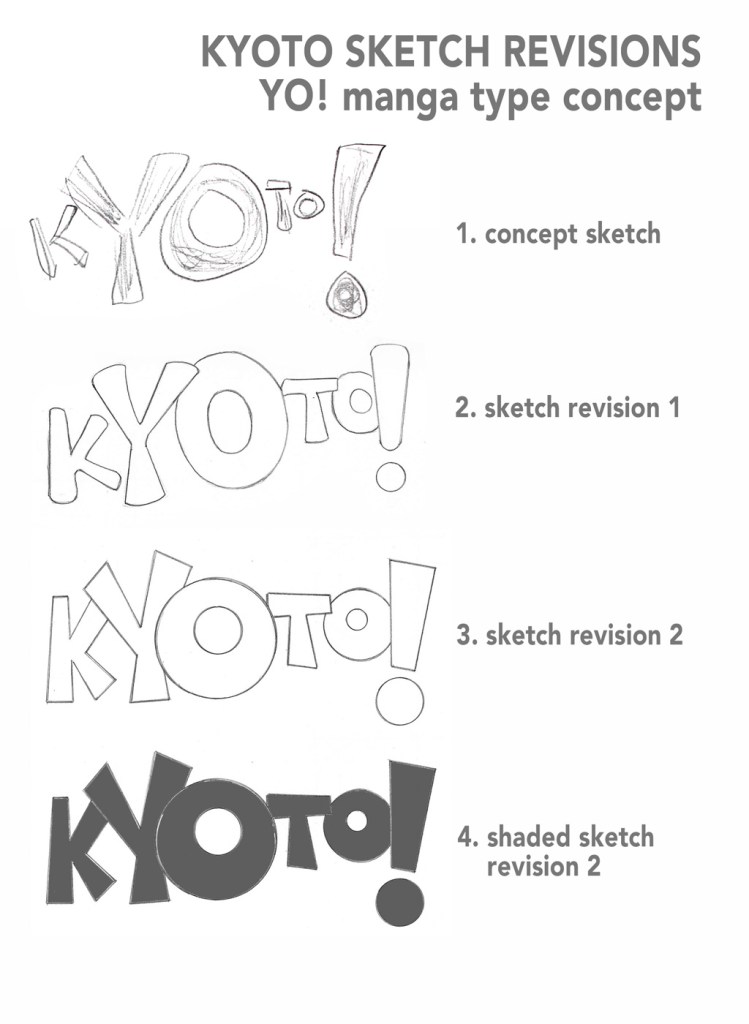
YO! Manga type concept

  1. Concept sketch: Kyoto spelled out with manga-style comic type, emphasizing the letters Y and O.
    Awai said this design captures the young, vibrant energy of Kyoto.
  2. Sketch revision 1: The first revision uses soft, rounded type to match the concept sketch. I kept the large size of the Y, O, and exclamation mark but also increased the size of the other letters.
  3. Sketch revision 2: By straightening the lines, the design became much cleaner and distinctive. The type closely mimics comic type without using a particular typeface.
  4. Sketch revision 3: After scanning, I filled in the design too see how it would look. This concept has youthful energy but might not appeal to older visitors.
Kyoto modern culture sketches 3

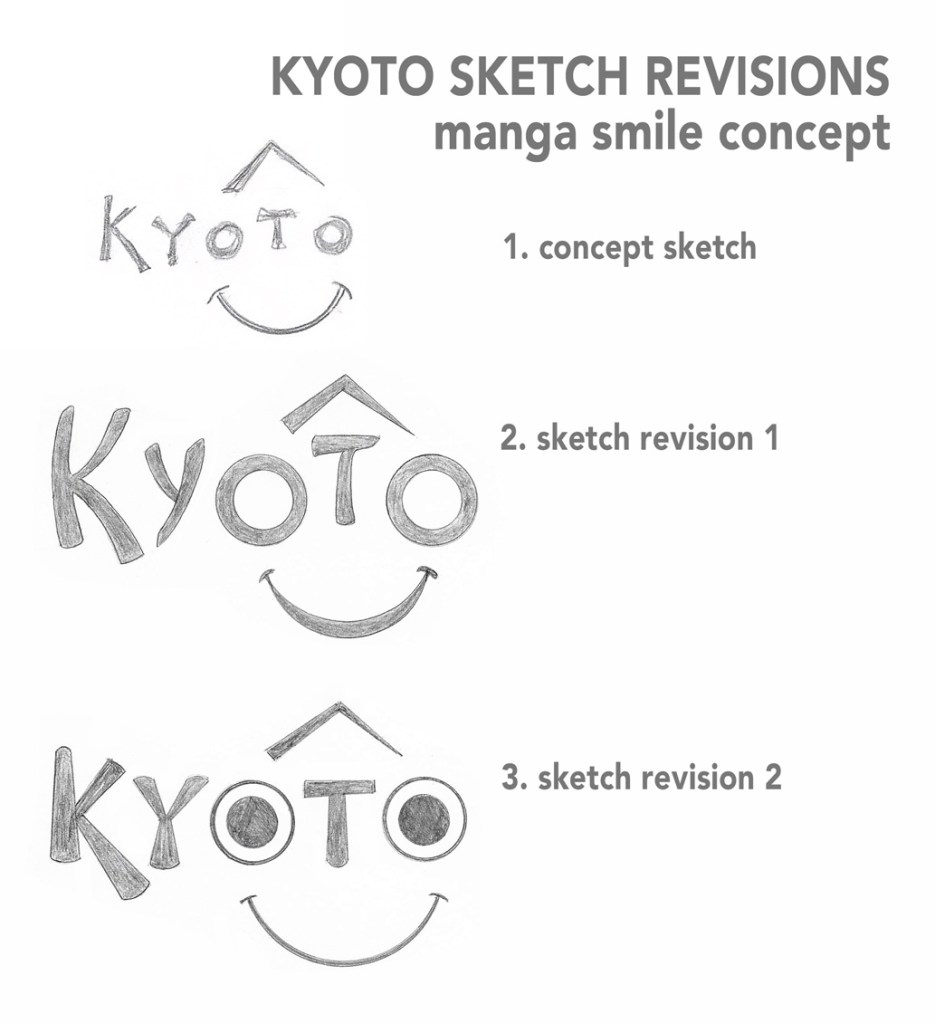
Manga smile concept

  1. Concept sketch: The two letter O’s in Kyoto form the eyes of manga-inspired smiling face.
    This is the only design that I selected without input from peers. I chose it because it is simple and distinctive.
  2. Sketch revision 1: The first revision is simply a cleaner, more refined version of the original sketch. The type is reminiscent of Japanese calligraphy, but simple enough to be read at any size.
  3. Sketch revision 2: I tried a different style of eyes and thinner smile to make it distinctive from the smile shape in the Amazon.com logo. This version feels more child-like and less appropriate than Revision 1.

Kyoto Traditions inspired designs

Kyoto traditions sketches 1

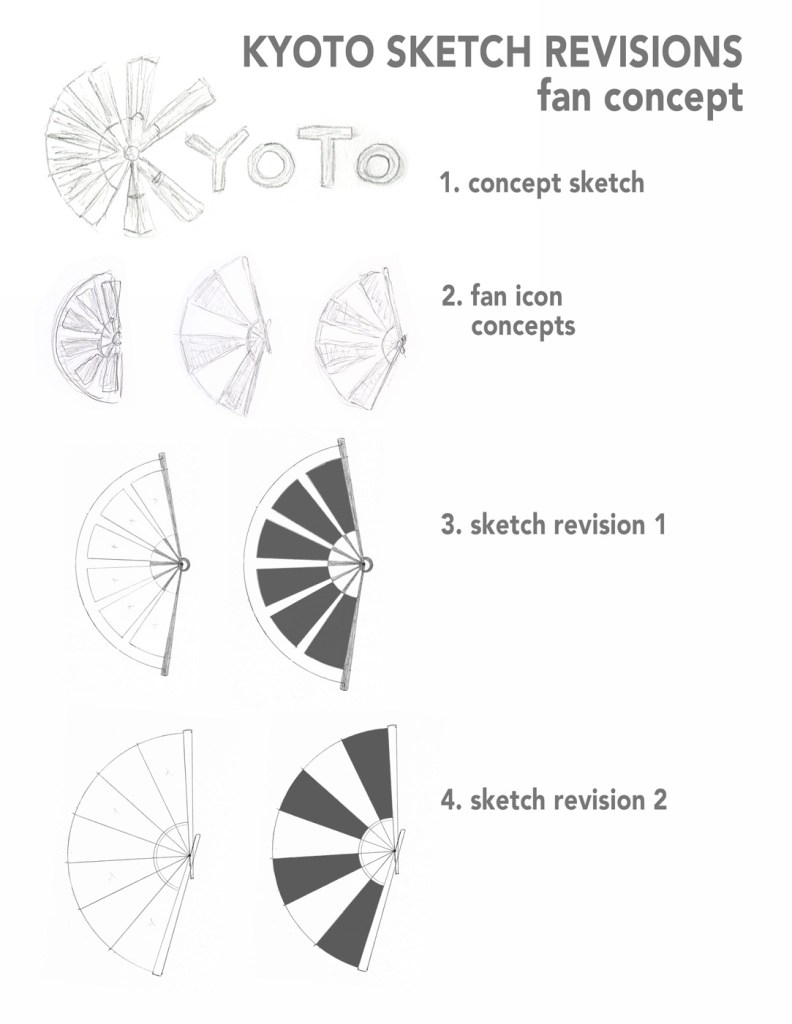
Fan concept

  1. Concept sketch: A folding fan replaces the spine of the letter K in Kyoto.
    Both Awai and Caceres appreciated the simplicity of this logo.
  2. Fan icon concepts: The folding fan in the concept sketch is very rough, so I first worked on developing a simplified icon that could be paired with a typeface chosen later.
  3. Sketch revision 1: The first version uses six dark sections with white dividers. Again, I filled in dark areas after scanning.
  4. Sketch revision 2: The second revision uses seven alternating dark and white panels. This simplified fan will be an effective icon once I thicken the line weights.
Kyoto traditions sketches 2

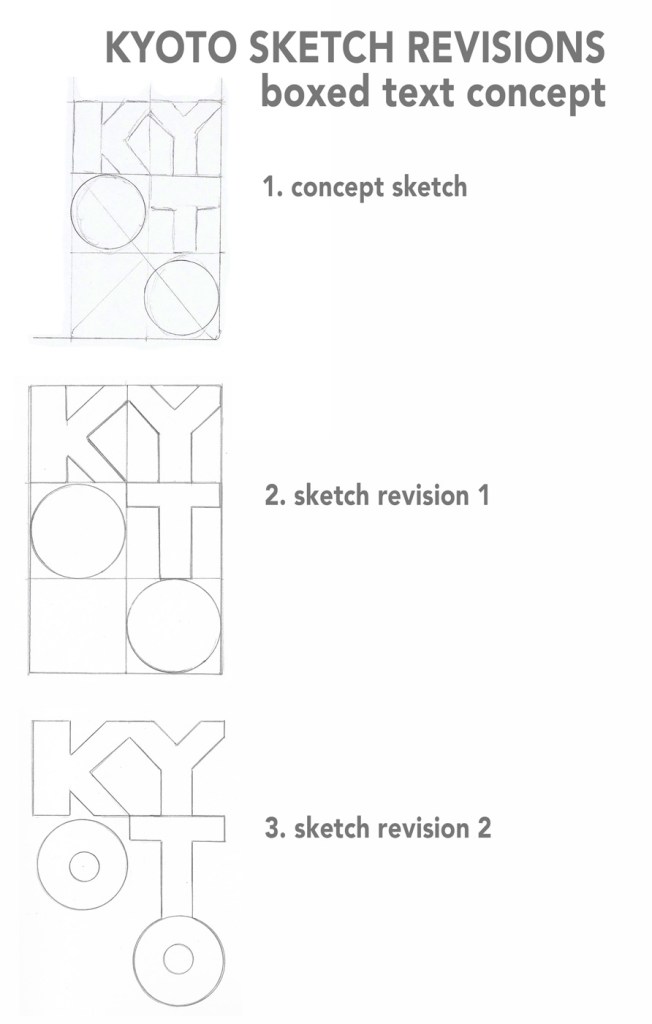
Boxed text concept

  1. Concept sketch: Letters spelling Kyoto are arranged in boxes.
    Caceres said this was one of the strongest designs because it is simple, different, and traditional.
  2. Sketch revision 1: The first revision in a cleaner version of the original sketch. I left out the diagonal line that runs through the O’s because it was reminiscent of “no smoking” signs and other negative images.
  3. Sketch revision 2: I removed the bounding boxes from the letters and added center circles to the O’s. This design is not as effective because it is less distinctive and does not feel as relevant to Kyoto’s traditions.
Kyoto traditions sketches 3

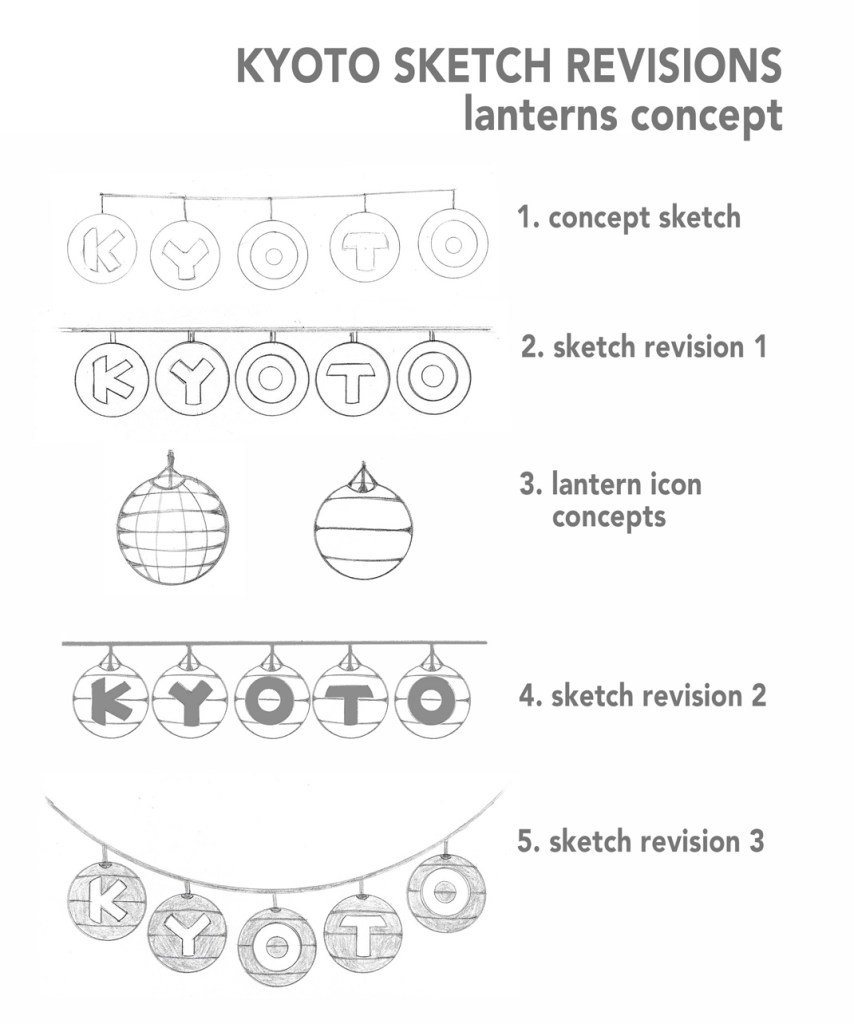
Lanterns concept

  1. Concept sketch: Hanging paper lanterns spell out Kyoto. Awai appreciated the tradition and symbolic meaning of the lanterns in Japanese culture.
  2. Sketch revision 1: I tightened the spacing of the lanterns and tried to make the type clearer than in the concept sketch.
  3. Lantern icon concepts: My next step was to draw simplified icons to represent the paper lanterns. The first illustration was too busy, but the second was simple enough to use in the design.
  4. Sketch revision 2: I replaced the empty circles of the first design with the lantern icons and made the overlying text dark.
  5. Sketch revision 3: For the final revision, I curved the line that the lanterns hang from and made the letters white over dark. While not as simple as many of the other designs, this logo captures the history and culture of Kyoto.

The feedback from Jose Caceres and Krystle Awai helped improve my work by reminding me to follow David Airey’s seven elements of iconic design. Their recommendations helped remove my personal preferences and allowed me to focus on why a particular design was effective. The most common note was that many of the concept sketches were too illustrative, so I payed extra attention to keeping designs simple.

I did not move forward with one of Awai’s preferred designs because it felt too similar to another of the top choices. Otherwise, I tried to implement all the feedback from both peer critiques. Both were constructive and well thought out, following the advice from Lawless and Crabill in How to Give and Receive a Good Design Critique. (Lawless & Crabill, 2015).

Top 3 Designs

Kyoto logos – top 3 designs

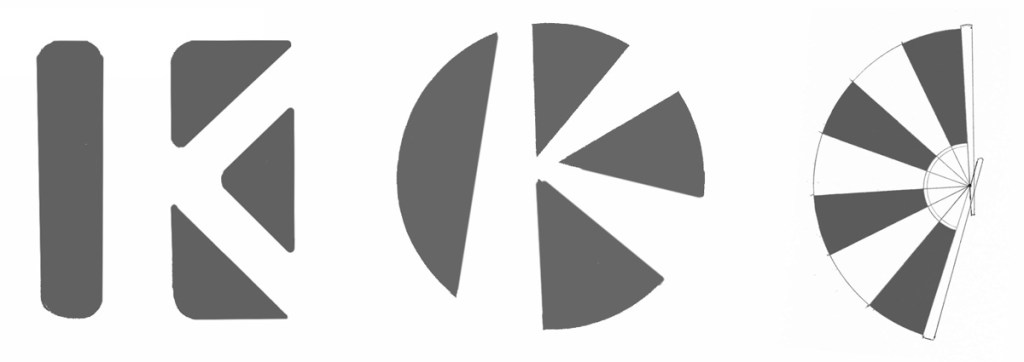
Geography: Although I tried several revisions, the “K in square” design closest to the original concept sketch is the strongest. It meets most of the seven criteria, and it can become more distinctive with minor revisions and when paired with text.

Modern Culture: Inspired by Japan’s rising sun flag, the “K in circle” design is very similar to the first due to its use of negative space. The third sketch revision is strongest because it shares the positive qualities of the “K in square” design but is more distinctive and culturally relevant.

Tradition: The original concept sketch was a very quick doodle inspired by Geisha. It was one of my least favorite designs personally, but the peer critique helped me see past the roughness of the drawing and understand why it worked as an appropriate design. The simplified fan icon focuses on one thing associated with Kyoto, is easy to commit to memory, and incorporates tradition.

References:

Airey, D. (2014, August 20). Logo Design Love, Annotated and Expanded Edition, Second Edition. Retrieved from https://ce.safaribooksonline.com/book/branding/9780133812589

Lawless, K., & Crabill, S. (2015, March 27). How to Give and Receive a Good Design Critique. Retrieved from https://baltimore.aiga.org/how-to-give-and-receive-a-good-design-critique/

My Design Process for Developing Logos.

This month for the Logo Design Workshop, I developed ninety sketches inspired by the geography, modern culture, and traditions of Kyoto, Japan.

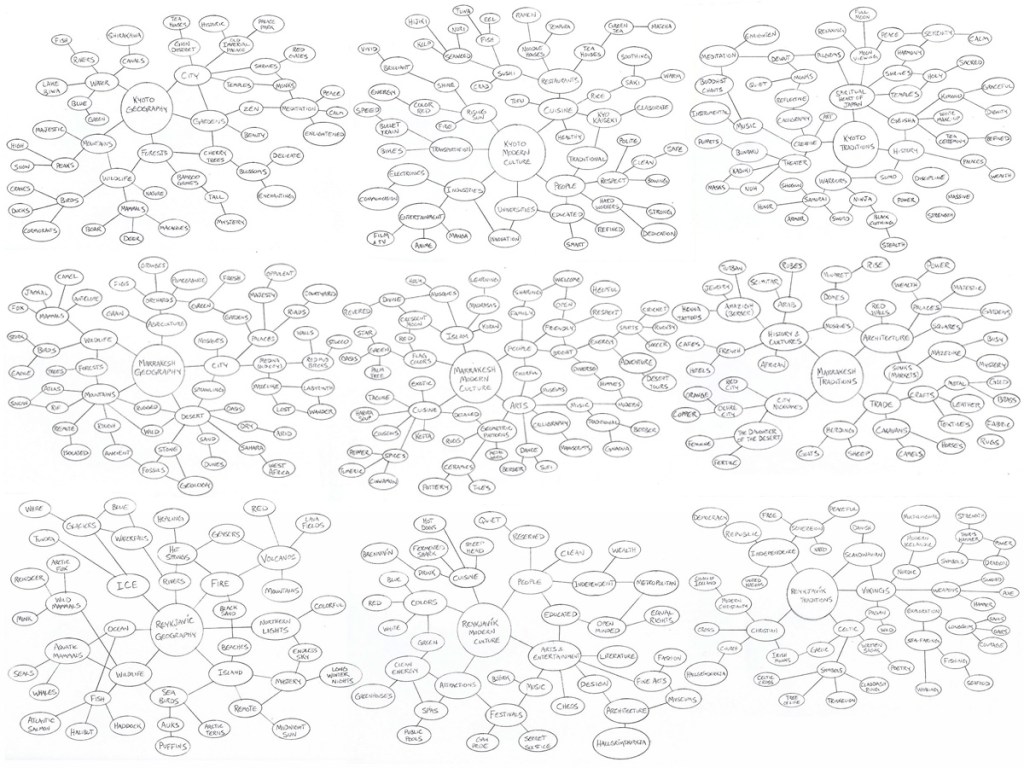
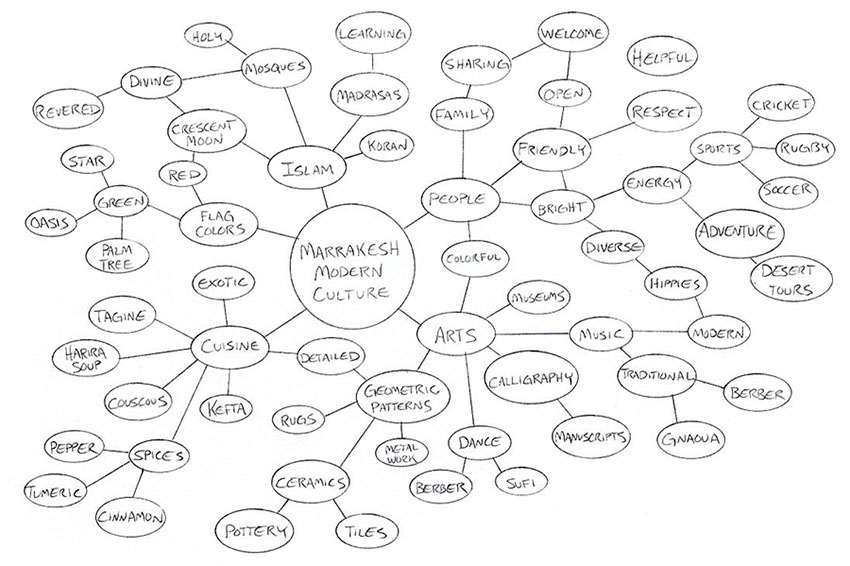
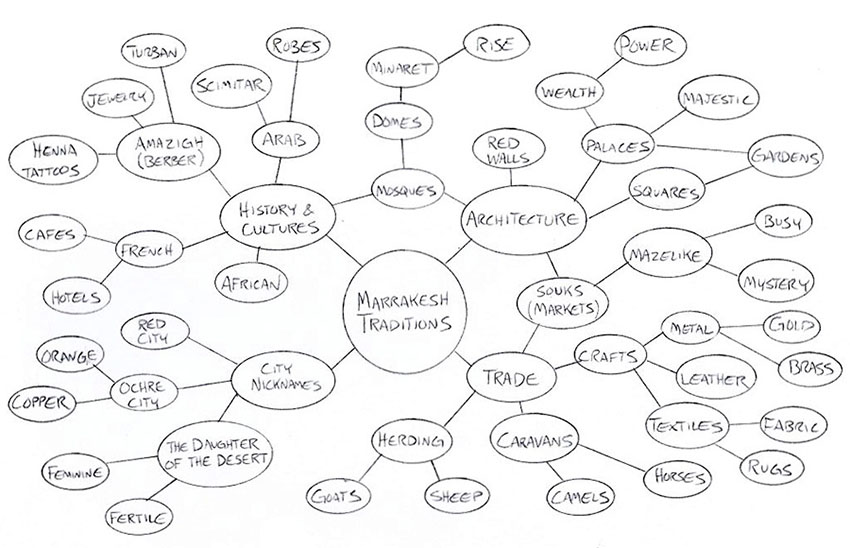
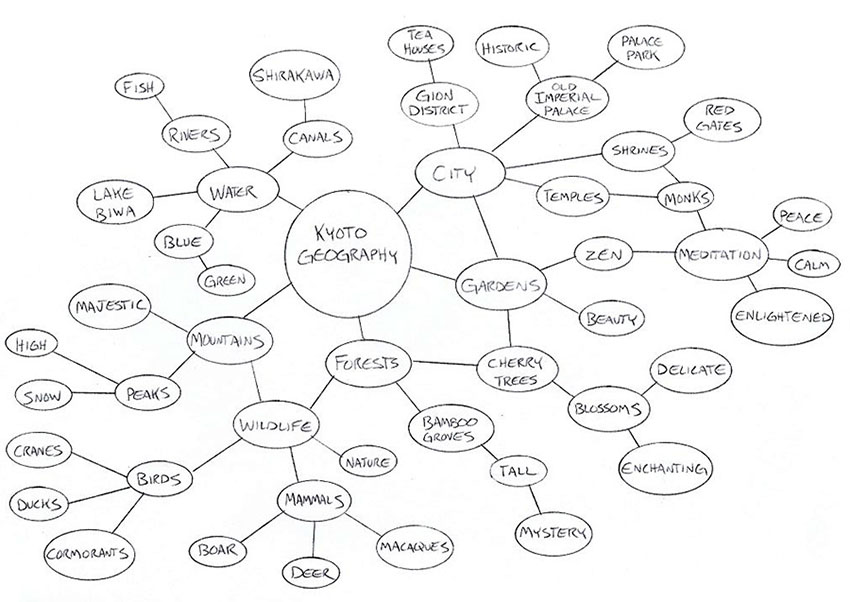
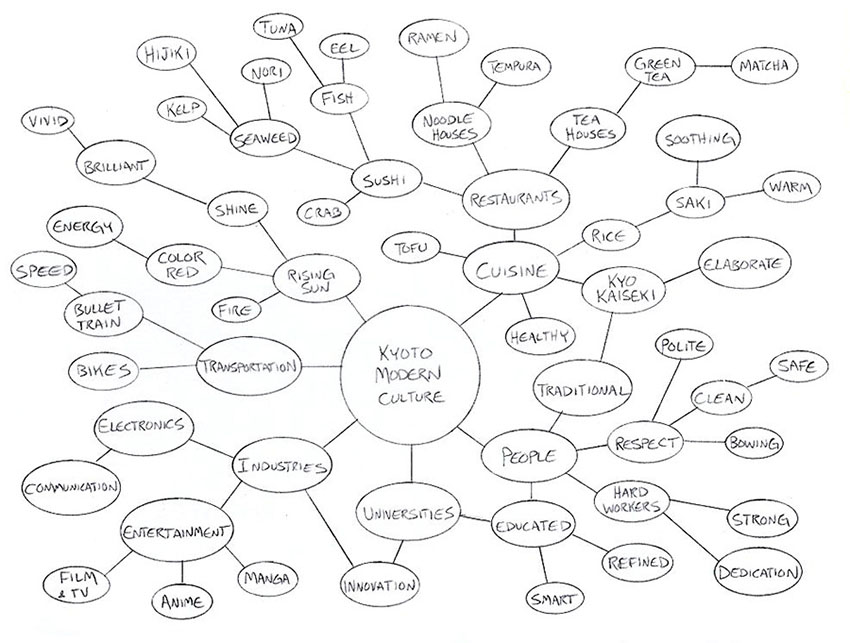
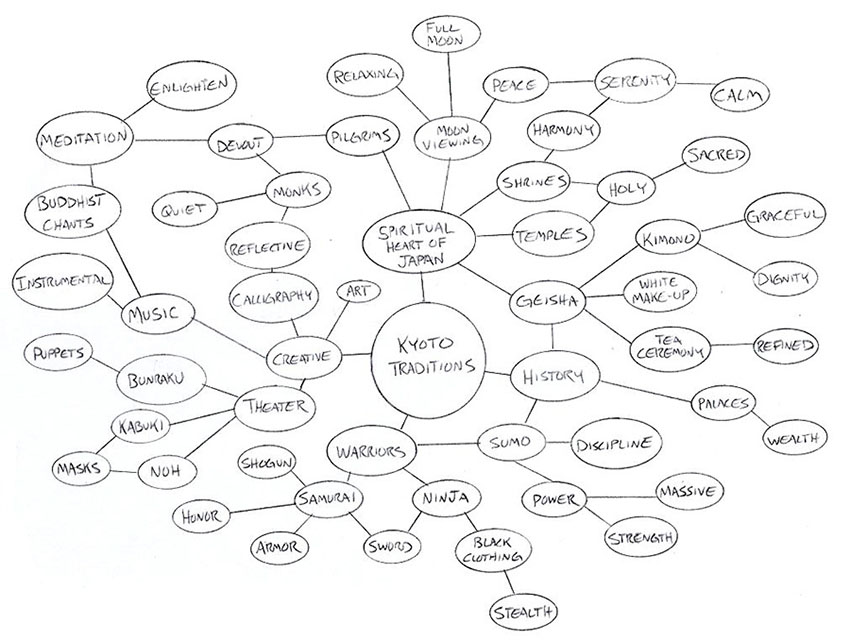
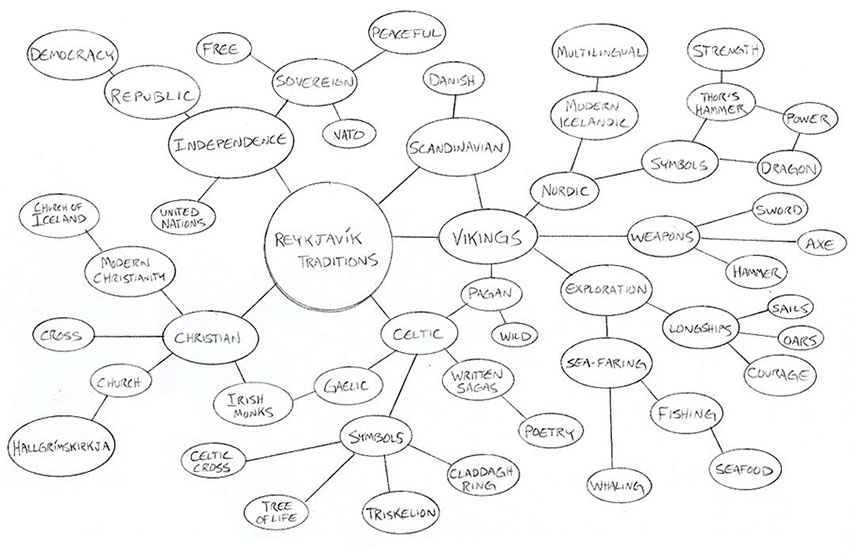
The process began with the commission of the assignment. I started the research process by creating a total of nine mind maps for Reykjavík, Marrakesh, and Kyoto. In Logo Design Love, David Airey says that Mind Mapping is an important step before sketching ideas for a design. (Airey, 2014) Finding keywords for the geography, modern culture, and traditions of each city involved internet searches as well as discussions with a family member who had recently traveled to both Reykjavík and Marrakesh.

city mind maps

The three mind maps for Kyoto included enough keywords that I felt comfortable moving into the concept development phase for that city. I started sketching ideas, but after a while the ideas stopped coming, so I had to go back to the mind maps to find more connections and themes I overlooked during the initial research.

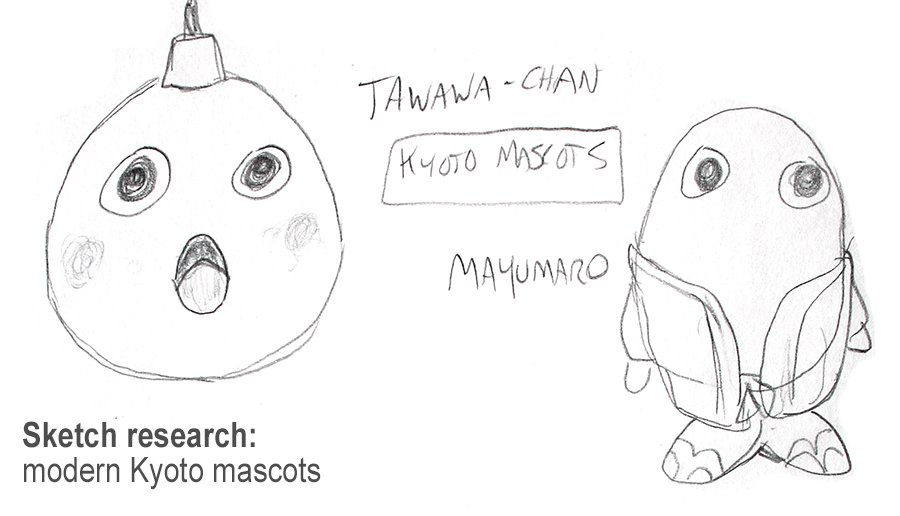
For example, one of my modern culture keywords was “manga” but these comic books are made in many parts of Japan, not just Kyoto. To find distinction, I searched for manga characters associate directly with Kyoto. During this search I discovered the popularity of Yuru-kyara, cute mascots used to promote cities, events and organizations. (JoJo, 2018) I sketched two of Kyoto’s mascots as part of the research.

sketch research – modern Kyoto mascots

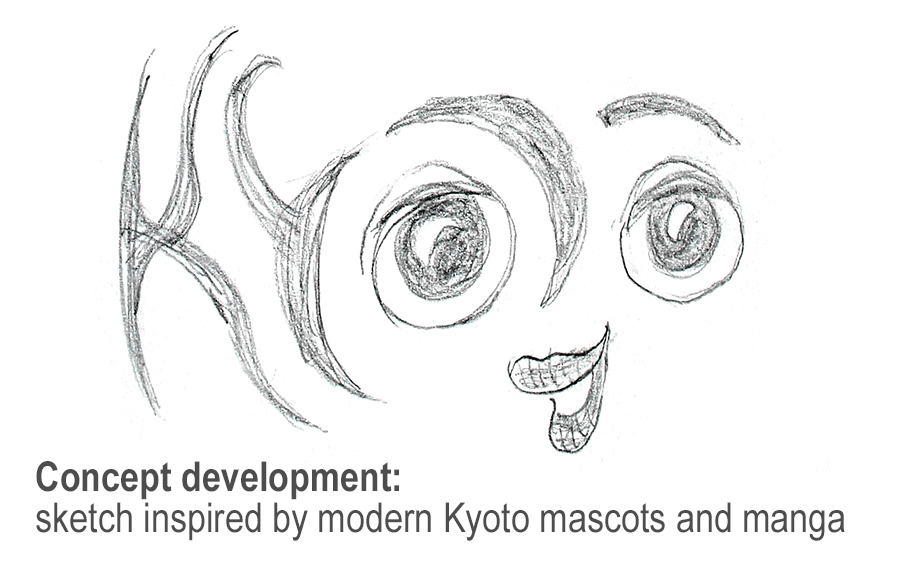
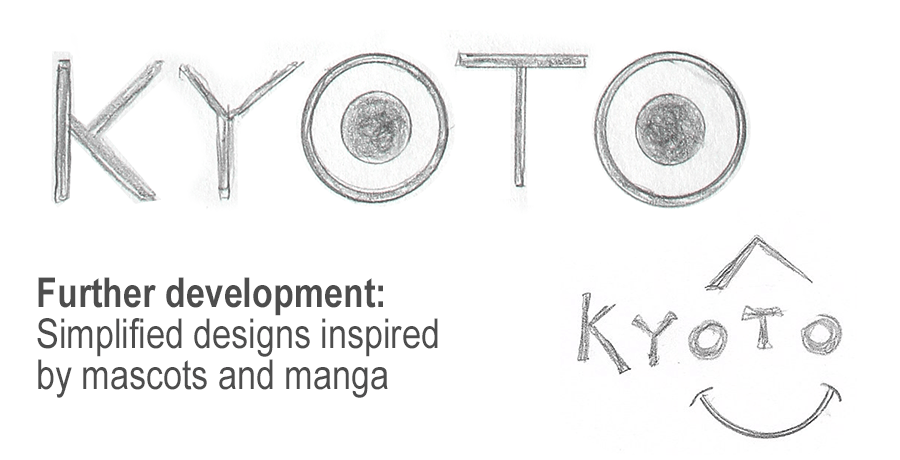
Drawing Tawawa-chan and Mayumaro helped me find connections between them and other popular manga characters. Large, expressive eyes with minimal other facial features are a common element, so I used those characteristics to develop the design below.

concept development – logo sketch

This sketch worked as an exploratory exercise but did not meet all of David Airey’s elements of iconic design. For the sketches below, I tried to “think small” and make the logos easier to commit to memory by keeping them simple. (Airey, 2014)

further development – simple logo sketches

After completing the ninety rough sketches, they were submitted for peer review. The critiques I receive will be essential moving ahead to the Prototyping phase. I will analyze the feedback and utilize further research and self-critique to choose the designs with the most potential. I will also find ways of variating that design based on peer recommendations.

In a critique of this assignment, Dennis Pulido mentioned that manga inspired designs might seem childish to older visitors. However, the simplified designs offer friendly but more “expensive” feel that appeals to some travelers. I will continue thinking of the target audience for each design.

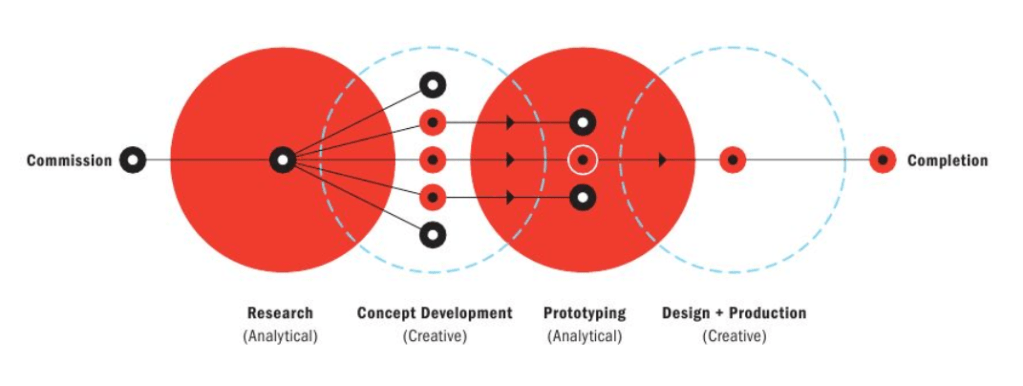
My current design process most closely matches the top illustration on page 68 of A Designer’s Research Manual. (OGrady & OGrady, 2009).

design process diagram

In the Week 4 Live Session video, Ryan McClung says that design is not a linear process. It is a cyclical journey that returns to the research phase at many points. (McClung, 2019). The second illustration on page 68 of A Designer’s Research Manual adds the assessment phase to help the designer make better informed decisions. (OGrady & OGrady, 2009). Although I would like to add an assessment phase to my own design process, I haven’t yet had the opportunity. Peer critiques are helpful in the concept development and prototyping stages, but once the design is finalized further assessment is needed to track its success. I look forward to the Media Design MFA course Measuring Design Effectiveness and learning more ways to analyze my design solutions.

References:

Airey, D. (2014, August 20). Logo Design Love, Annotated and Expanded Edition, Second Edition. Retrieved from https://ce.safaribooksonline.com/book/branding/9780133812589

JoJo. (2018, July 25). Japan’s mascot obsession. Retrieved from https://tokyotreat.com/news/japans-mascot-obsession-cute-kawaii-crazy-japan

McClung, R. (2019, August 27). Week 4 Live Session. Retrieved August 27, 2019, from https://online.fullsail.edu/class_sections/46722/modules/173179/activities/1087782

OGrady, J. V., & OGrady, K. V. (2009, February 1). A designer’s research manual: succeed in design by knowing your clients and what they really need. Gloucester, MA: Rockport Publishers. Retrieved from http://ce.safaribooksonline.com/book/graphic-design/9781592535576/chapter-2-practicing-research-driven-design/68

Logo Design Workshop, part 1 – concept sketches

In the third week of Defining Client Needs, we were asked to create at least 75 rough sketches for a city logo using the mind maps we created in week two.

I chose to create designs for Kyoto, Japan because of my affinity for Asian culture. I started with sketches inspired by Kyoto’s geography, using keywords from the previous mind mapping assignment.

These rough concept sketches will be reviewed by my peers. Using their input, I will move ahead with the strongest ideas.

Kyoto geography inspired sketches

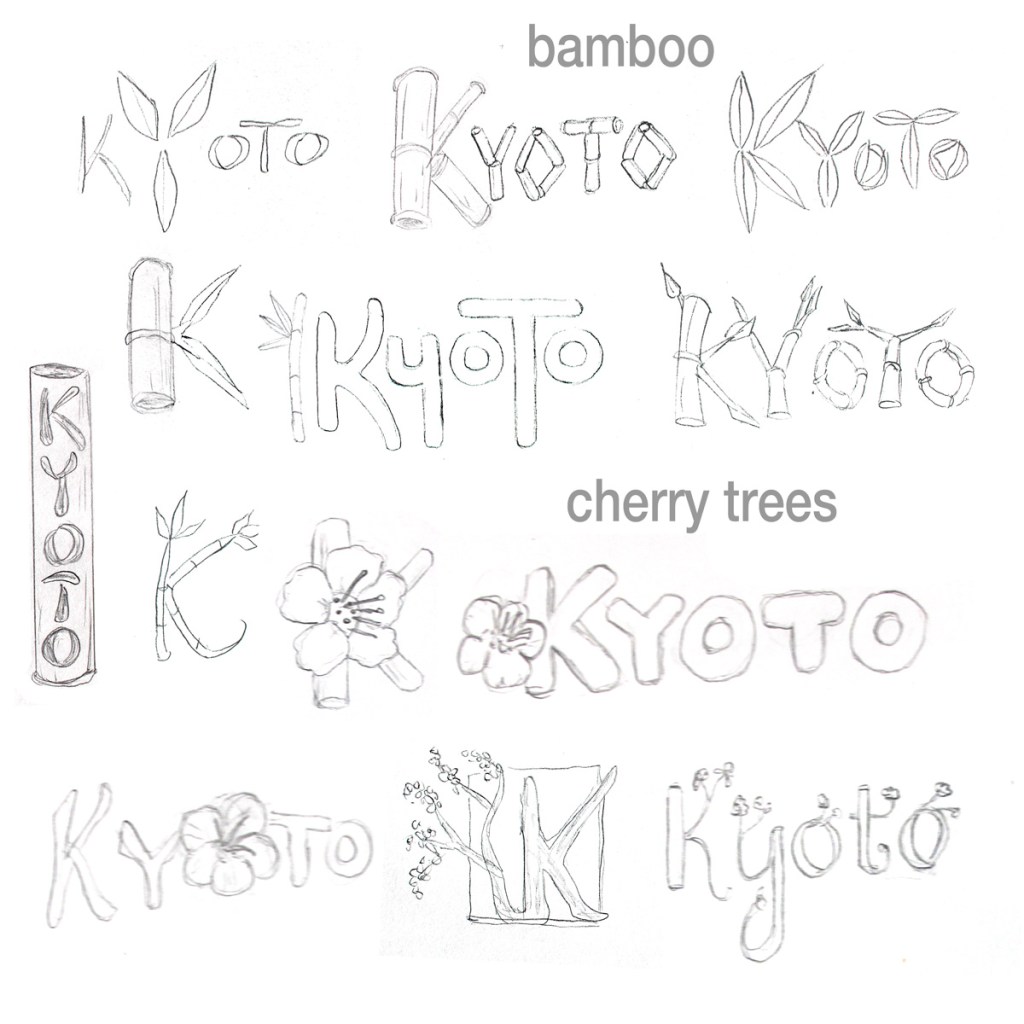
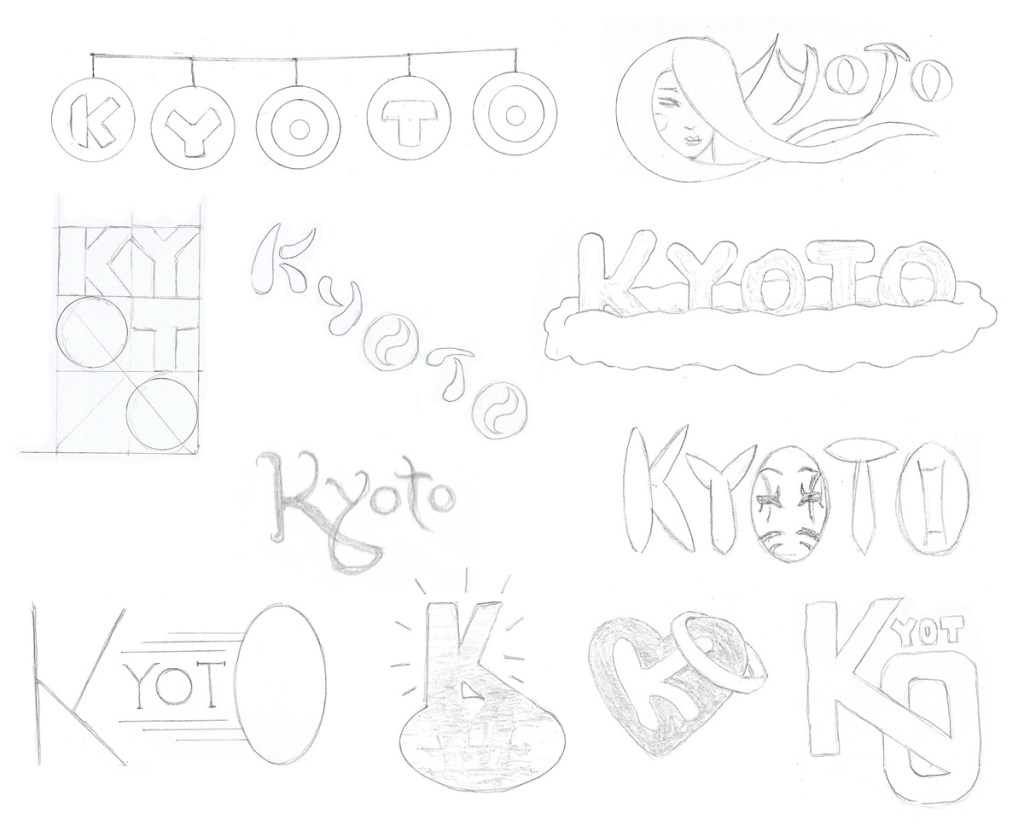
Bamboo groves and cherry trees are part of Kyoto’s natural beauty. The first few sketches use bamboo leaves and stalks as part of the wordmark. The rest use cherry branches and blossoms.

Kyoto logo sketches 1

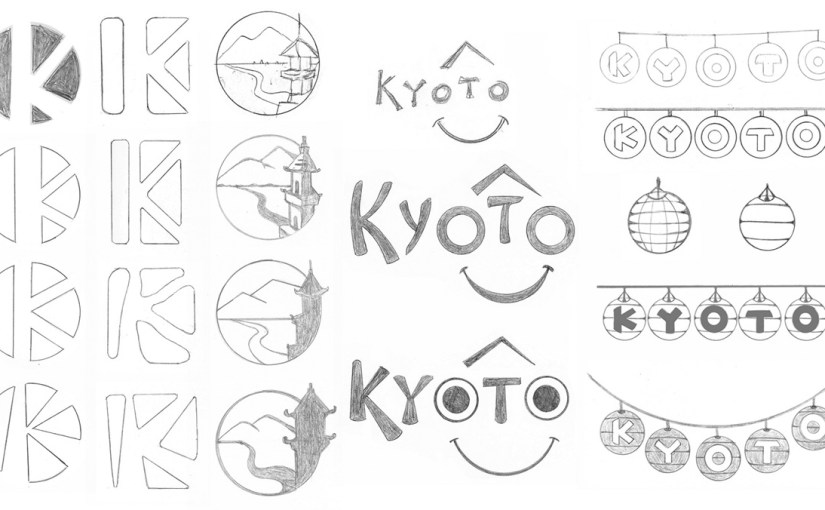
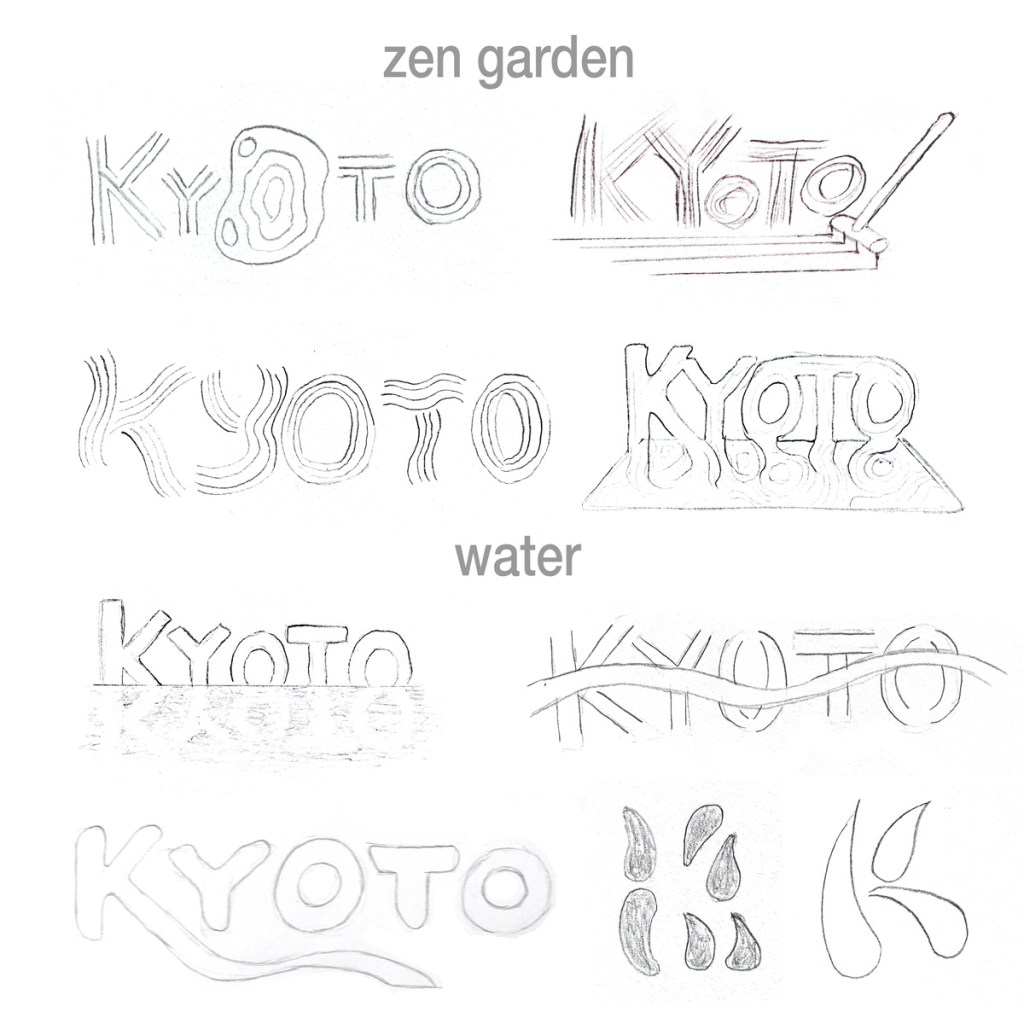
Kyoto is famous for Zen gardens, lakes, and rivers. The top four sketches are inspired by raked sand in the gardens. The first water inspired sketch is a reflection of Kyoto in a lake. Next to it, a river flows through the type. A stream flows form the K in the bottom left sketch. To the right, I make sketches that formed a K with water drops and negative space.

Kyoto logo sketches 2

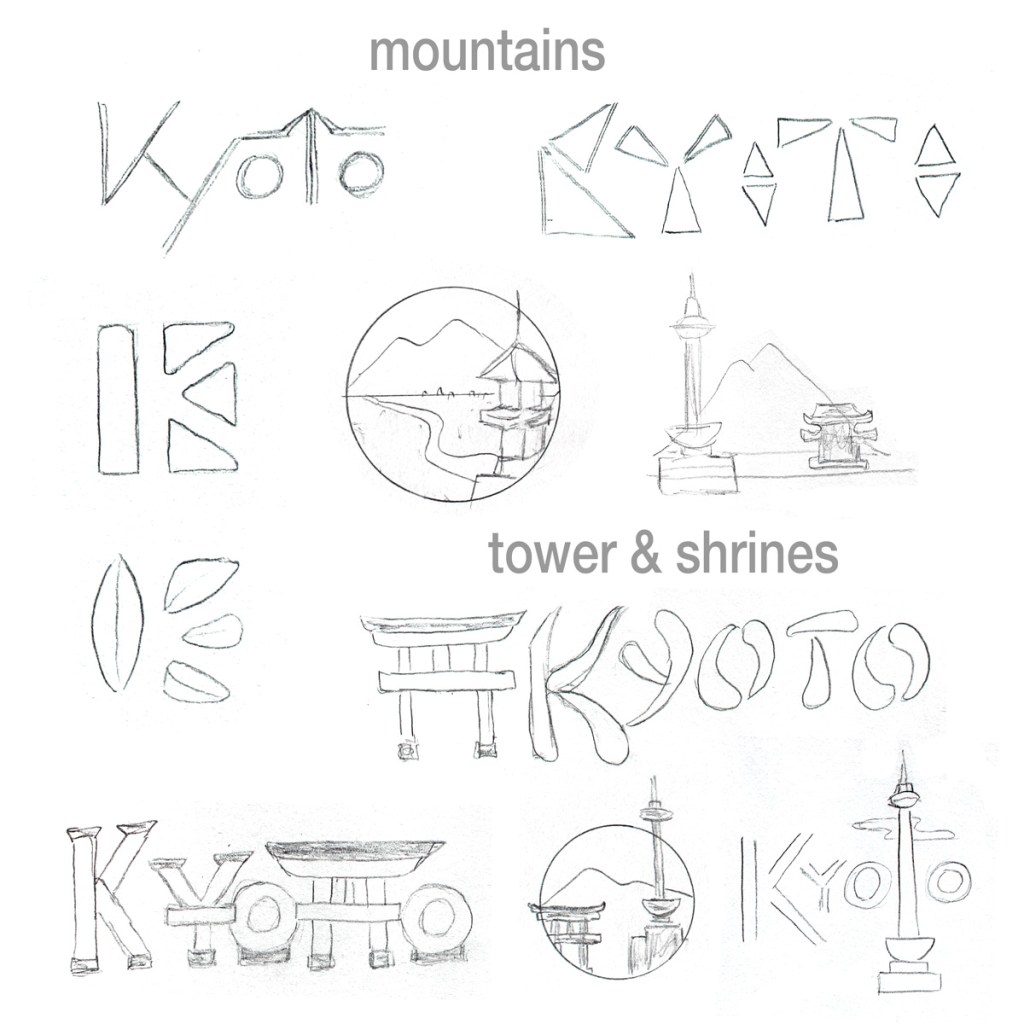
Lush green mountains surround Kyoto, contrasting with the red and gold shrines that draw so many to the city. The top left sketch uses diagonal lines to signify the mountains. Next to it, I used triangles as the most basic 2-dimensional representations of mountains. I continued exploring the motif by using three triangles and a pillar to form a K in the negative space. Below that, I tried something similar with bamboo leaves. The rest of the sketches below are inspired by Kyoto tower, Nijo castle, and the Fushimi Inari-taisha shrine gates.

Kyoto logo sketches
Kyoto logo sketches 3

What I learned making these designs.

I had to find photo references for Kyoto landmarks and for natural elements like cherry blossoms that I could not draw from memory. Reducing these elaborate and complex structures into simple icons was creatively and technically challenging. I didn’t post the many exploratory sketches that looked like nothing but random scribbles and shapes.

I looked for keywords that stood out on my Kyoto geography mind map and selected ones that would be attractive to tourists, rejecting words that were too vague or easily associated with other cities. I avoided subjects that might be considered cliché or unlucky by the Japanese people.

During my searches, I found that many of today’s city logos are very colorful and modern. Kyoto is very traditional and historic, so I tried to avoid the overlapping colors trend seen in so many city logos. Instead, I tried to find shapes inspired by the history and natural beauty of Kyoto.

I’m still learning about typography, especially creating hand-drawn fonts. This project has made me better at drawing consistent characters that match a style. It has also been good practice using lines, basic shapes, and negative space to represent a letter or landmark.

Kyoto modern culture inspired sketches

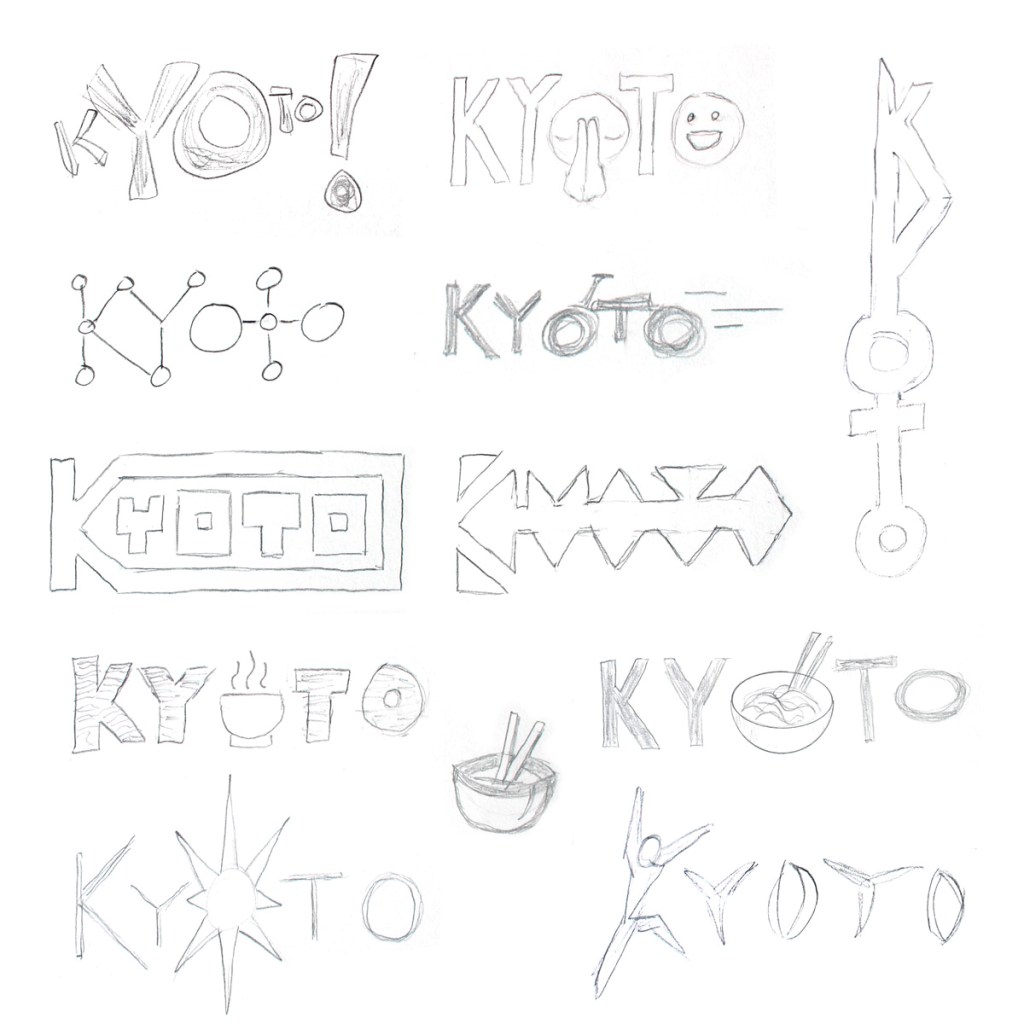
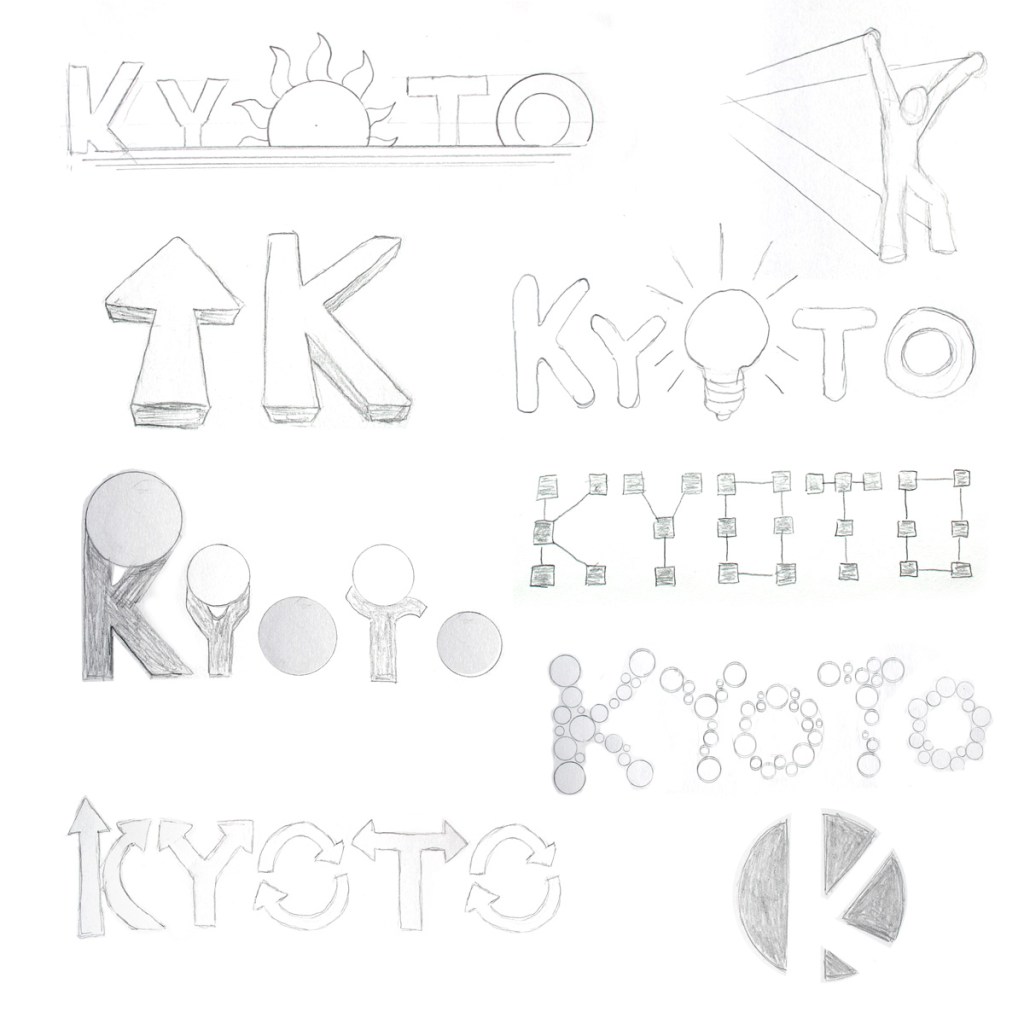
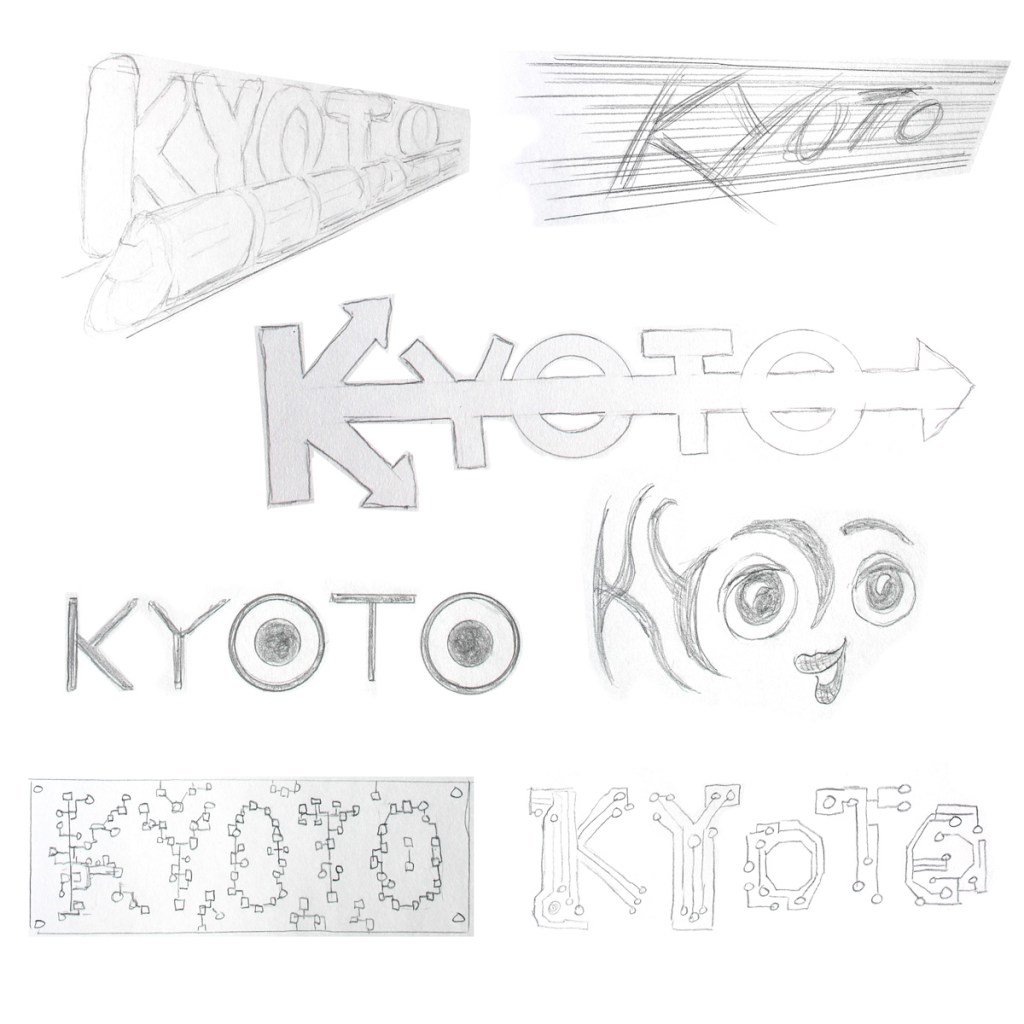
For the second batch of sketches, I worked with ideas inspired by Kyoto’s modern culture. The mind map was helpful, but further research was needed to find visual inspiration for some of the keywords like “brilliant”.

Kyoto logo sketches 4
Kyoto logo sketches 5
Kyoto logo sketches 6

What I learned making these designs.

I delved deeper into Kyoto’s modern sports teams and city mascots, examining their shared motifs and styles. Several designs inspired were by manga, including a simple logo using the wide eyes of Mayumaro, Kyoto’s friendly egg-like mascot.

I drew a few sketches integrating food or tea but resisted the urge to do more because they seemed more appropriate for a restaurant than a city’s logo. Several designs were inspired by the rising sun of Japan’s flag, but are intentionally not too similar to avoid offense.

I tried to express energy and movement in several of the designs. Many city logos express vibrancy through color choices. I want Kyoto’s logo to have energy even without color. I’m also trying to keep my designs simple… to find ways to “iconify” a concept like respect. Most of my sketches are still way too complex, but the best ideas can always be simplified later.

Kyoto traditions and history inspired sketches

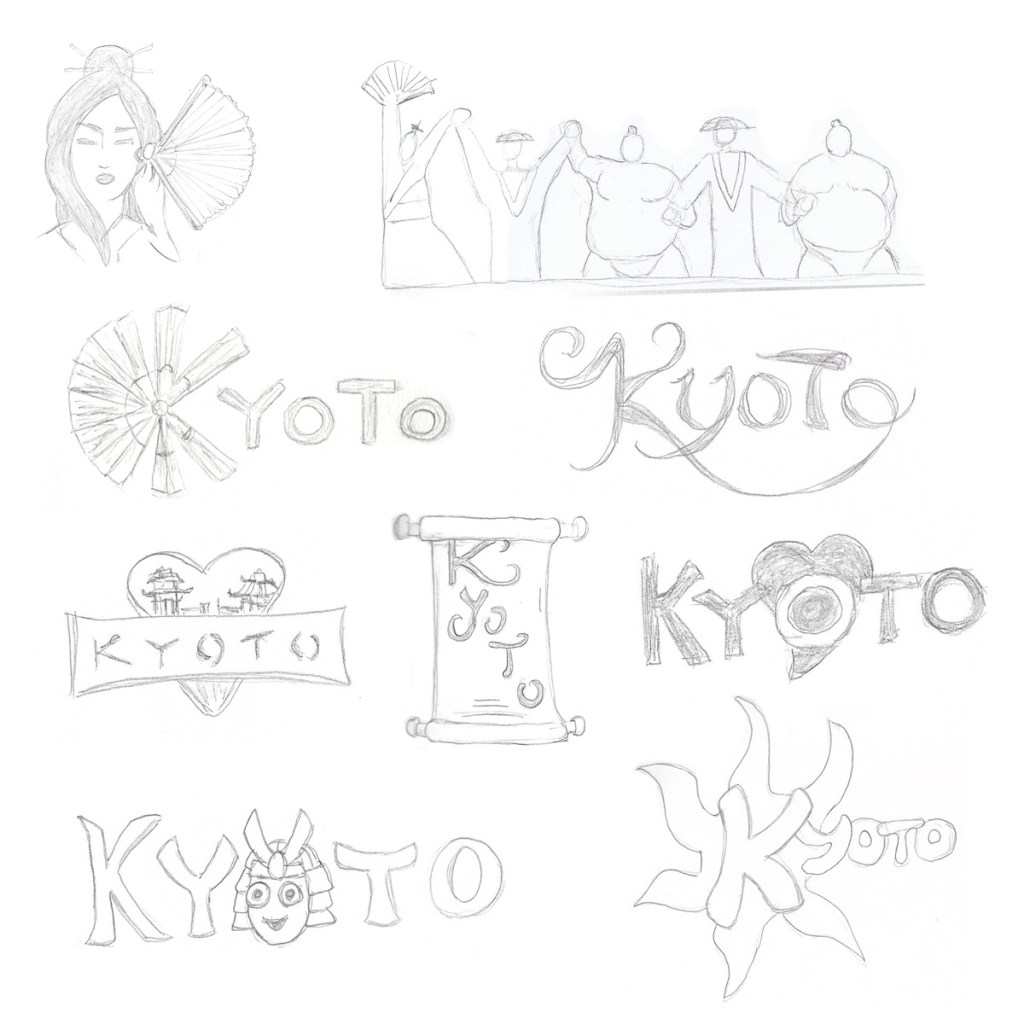
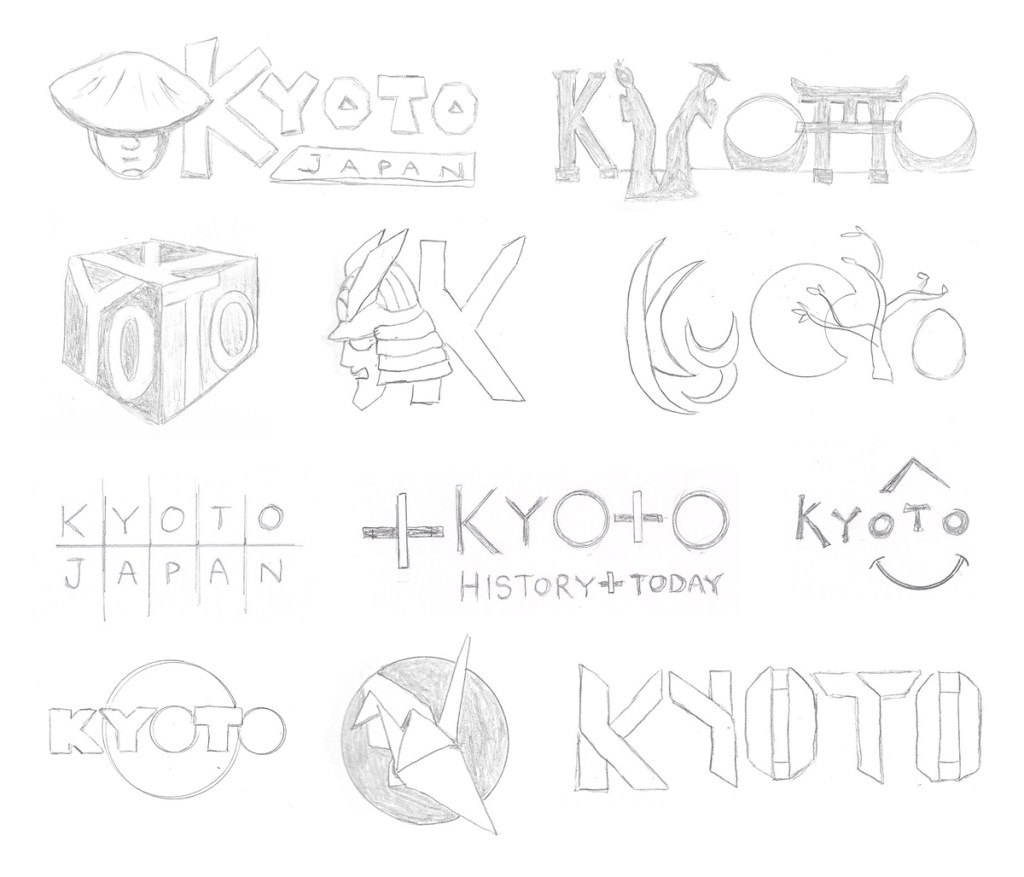
For the last batch of sketches, I drew inspiration from Kyoto’s traditions and history. Because Kyoto is considered to be the spiritual heart of Japan, many of the sketches are inspired by monks, temples, and the western heart shape.

Kyoto logo sketches 7
Kyoto logo sketches 8
Kyoto logo sketches 9

What I learned making these designs.

I researched samurai, geisha, and kabuki to find motifs to carry over to the designs. Some of the shapes I turned into silhouettes to simplify them. I also researched origami for the folded crane icon and folded paper typography.

I looked at calligraphic type for inspiration but tried not to mimic existing fonts. Not being a calligrapher, I simplified the brush strokes as much as possible.

Many other city logos have modern typography. Using hand drawn or calligraphic type seems more appropriate when emphasizing Kyoto’s history and culture.

My hand drawing skills are improving and I’m getting better at making designs simple. Some are still too complex or busy, but I can refine the best designs later. I’m also learning to use tools like a French curve when drawing.

Which logo concept is strongest?

Does one or more of the designs above stand out to you? Let me know in the comments below!

Defining Client Needs – Week 3 Reflection

3 Takeaways

Simplicity
In the Week 3 Live Session video for Defining Client Needs, Ryan McClung discusses logo development and what makes a great logo. He emphasizes that simple logos are more memorable and effective. (McClung, 2019). David Airy supports the “keep it simple” concept with his seven elements of iconic design. (Airy, 2014)

Distinction
McClung notes that the logo is not about you, the designer. It is also not about the client’s personal tastes. Both the designer and client should understand that the logo is being designed for the brand’s target audience. Distinction from competitors should be a main element of the logo design. Innovation requires avoiding clichés and imitation. (McClung, 2019)

Use of Logo
A logo can be used on anything from a pen to the side of a building, so it should be legible at any size. Good typography and simplicity of design are important. An icon and wordmark pairing can be used in a variety of layouts at different sizes. A designer should also consider all color modes that may be used in future reproduction. Choosing an incompatible color can lead to higher reproduction costs and inconsistencies in how the brand is presented. (McClung, 2019)

References:

Airey, D. (2014, August 20). Logo Design Love, Annotated and Expanded Edition, Second Edition. Retrieved from https://ce.safaribooksonline.com/book/branding/9780133812589

McClung, R. (2019, August 20). Week 3 Live Session. Retrieved August 22, 2019, from https://online.fullsail.edu/class_sections/46722/modules/173179/activities/1087781

Mind Mapping for City Logos

In the second week of Defining Client Needs, we were assigned three cities:

  • Reykjavík, Iceland
  • Marrakesh, Morocco
  • Kyoto, Japan

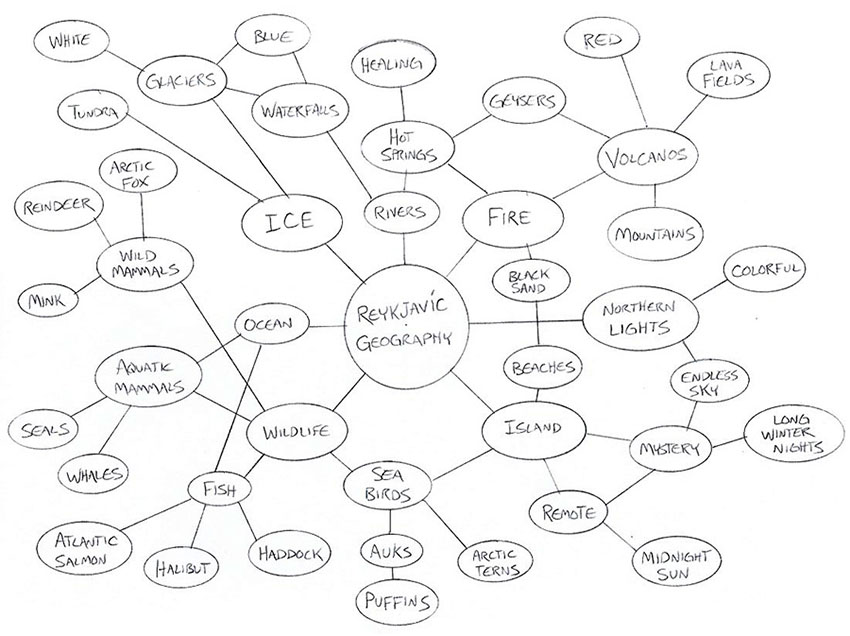
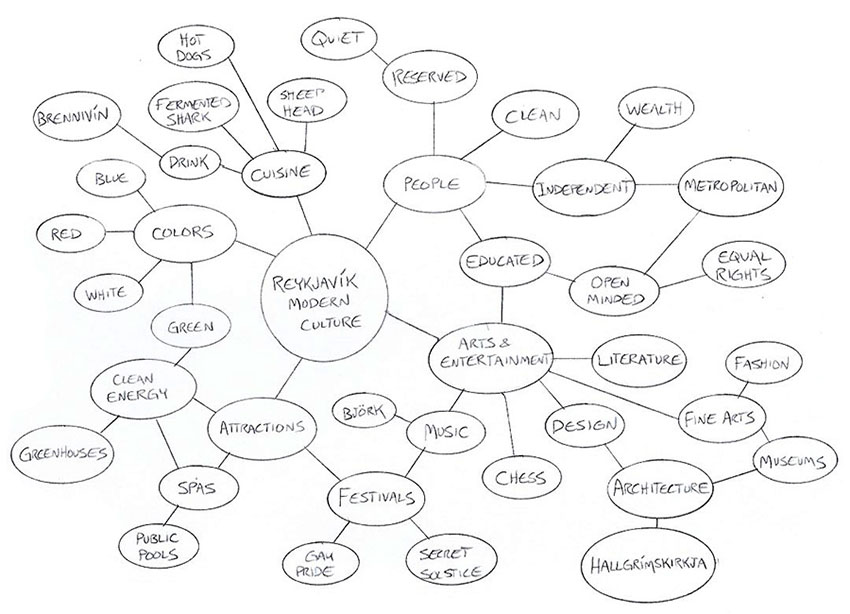
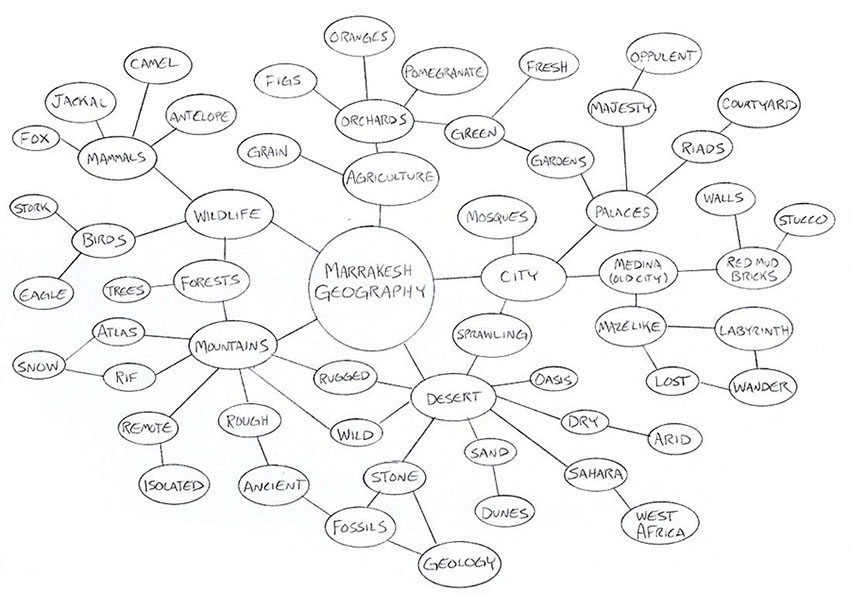
We learned how to use Mind Mapping to generate and connect ideas that could be used to create logos for each city. I created nine mind maps to cover each city’s geography, modern culture, and traditions.

Reykjavík

Reykjavík geography mind map
Reykjavík modern culture mind map
Reykjavík traditions mind map

Marrakesh

Marrakesh geography mind map
Marrakesh modern culture mind map
Marrakesh traditions mind map

Kyoto

Kyoto geography mind map
Kyoto modern culture mind map
Kyoto traditions mind map

In what ways did you connect and synthesize the research?

The Lonely Planet websites for each city were a good starting point, and other travel websites provided branches of research. I also looked at satellite maps and used image searches to find colors and motifs for each city. Using my collected notes, I created lists of keywords that I organized into the three categories for each city.

How did you employ multiple approaches to problem-solving through your research?

In addition to internet research, I also interviewed my mother, who has recently visited both Iceland and Morocco. Her impressions of Reykjavík and Marrakesh as a tourist helped inform my ideas of which attractions the cities would want to promote. Having no personal connection to Kyoto, I searched for online testimonials from recent visitors.

In what ways did you find unique, or innovative, ideas to work with by comparison to existing logos found through research that represent other cities?

I found that city logos often use basic elements like a mountain that can be very generic unless you focus on specific details. If you are going to use a mosque to represent Marrakesh or a shrine to represent Kyoto, what makes that mosque or shrine distinct from others in the region? A city logo should be an instantly recognizable image that represents the city identity.

What research competencies did you display through this work?

This week I focused on in-depth research to answer specific questions about each of the three cities. This research generated keywords that I organized by city and categories. I visually mind mapped each category for the cities, finding connections and brainstorming new words to fit the concepts.

What’s Next?

Our next step is to choose one of the cities and start sketching rough designs based on ideas discovered through the word maps.

Stay tuned for more…

Defining Client Needs – Week 2 Reflection

In the Week 2 Live Session video for Defining Client Needs, Ryan McClung discusses the role of the Media Designer, their relationship with clients and stakeholders, and the importance of research in the design process. He states that the Media Designer is responsible for planning and developing information material that effectively communicates a message across the many types of media available today. (McClung, 2019)

The Media Designer must make their ideas palatable and comprehensible to not only the client, but to all external and internal stakeholders. It is important to understand the needs, problems, and objectives of each of these stakeholders. This can be achieved by researching the client, their competitors, and the issues that need to be solved.

Thorough research provides insight, direction, and value. It assures the client that the designer’s services are worth the investment and helps identify unacknowledged issues. Research provides validation of the designer’s ideas and helps sell those ideas. McClung states that 80% of design is selling your ideas and your worth as a designer. (McClung, 2019)

Mind Mapping is one important research tool that helps the designer generate and connect ideas. Mind maps help the designer narrow options and find strong directions to pursue. McClung notes that having infinite options gives zero solutions (McClung, 2019), so it is important to define and focus on solutions that will best address the issue that needs to be solved. David Airey notes that Mind Mapping is an important step before concept sketching and further development of the design solution. (Airey, 2014)

References:

Airey, D. (2014, August 20). Logo Design Love, Annotated and Expanded Edition, Second Edition. Retrieved from https://ce.safaribooksonline.com/book/branding/9780133812589

McClung, R. (2019). Week 2 Live Session. Retrieved August 13, 2019, from https://online.fullsail.edu/class_sections/46722/modules/173179/activities/1087780

Defining Client Needs – Week 1 Reflection

Summary

In the Week 1 Live Meeting video for Defining Client Needs, professor Ryan McClung states that the Media Design MFA program is a lot like the Media Design industry. (McClung, 2019) Both are about solving problems and finding solutions. This requires strong research, critical thinking, time management, and communication skills. My research skills need improvement, but every assignment is practice.

The Design industry and this MFA program also both require critique of your work, by professionals and peers. (McClung, 2019) I look forward to this opportunity to improve my designs, as I have often operated in a bubble without much feedback from anyone but my client or boss. In the video What is Graphic Design, Sean Adams says that graphic design is about ideas. (Adams, 2017) Sharing ideas with peers can transform those ideas into design solutions.

In regard to Academic Writing, McClung states that opinions don’t matter. (McClung, 2019) I’m used to writing magazine articles, blogs, and lectures that are often based on personal experience and opinions. It’s an adjustment, but I appreciate how research-based writing forces me to dig deeper and find real knowledge to support my ideas.

Action Plan

By the end of the Media Design MFA program, I should show improvement in my research and writing skills in addition to wider knowledge of the methodologies of design. I will apply these skills to find more design clients and create better lessons for my students.

Juggling school, work, and family requires efficient time management. I’ve created the following weekly study schedule to keep me on track.

Monday

  • Read/watch materials for weekly assignments, prepare notes – 4 hours.
  • Read design or motion graphics book on Safari Books – 2 hours.

Tuesday

  • Write and submit discussion, research weekly assignment – 4 hours.
  • Watch design or motion graphics courses on Lynda.com – 2 hours.

Wednesday

  • Reply to discussion, work on weekly assignment – 4 hours.
  • Read design blogs on Feedly and browse Behance for inspiration – 2 hours.

Thursday

  • Work on weekly assignment – 4 hours.
  • Watch design or motion graphics courses on Lynda.com – 2 hours.

Friday

  • Try to finish weekly assignment – 4 hours.
  • Read design or motion graphics book on Safari Books – 2 hours.

Saturday

  • Edit and submit weekly assignment, write and submit blog. – 4 hours.
  • Watch design or motion graphics courses on Lynda.com – 2 hours.

I have reserved Sunday for family time, rest, and reflection. Even then, I try to keep a sketchbook handy. Every night before bed I spend a few minutes sketching out random ideas. This “twilight time” between consciousness and sleep is when some of my best concepts emerge in a raw form. All my old sketchbooks were destroyed in the 2018 fire, but my sketching habit is still a vital part of the design process as described by Sean Adams. (Adams, 2017)

References:

Adams, S. (2017, May 31). What is graphic design? Retrieved August 9, 2019, from https://www.lynda.com/Graphic-Design-tutorials/What-graphic-design/614734/625796-4.html?org=fullsail.edu

McClung, R. (2019, August 6). Week 1 Live Session. Retrieved August 9, 2019, from https://online.fullsail.edu/class_sections/46722/modules/173179/activities/1087779