
What was the original Problem to be solved by creating new identity branding? Has the purpose of the brand been met in your materials?
The original problem identified in January for the Strategic Development course is that many American consumers are confused or intimidated by sushi and its ingredients. To address this issue, the Boxpark Sushi identity is built around the Sushi Sensei personality. All of the brand’s media assets utilize this wise but fun identity to make customers feel more comfortable about eating sushi. For example, the back of the Boxpark Sushi takeout bag features words of wisdom with a dash of humor. The education aspect of the brand could be further expressed by printing quotes and fun facts about sushi and Japanese culture on other media assets like napkins and in-store décor.
Will the brand identity and asset designs be perceived as appropriate to the brand attributes? What aspect(s) of the design, specifically, make it so?
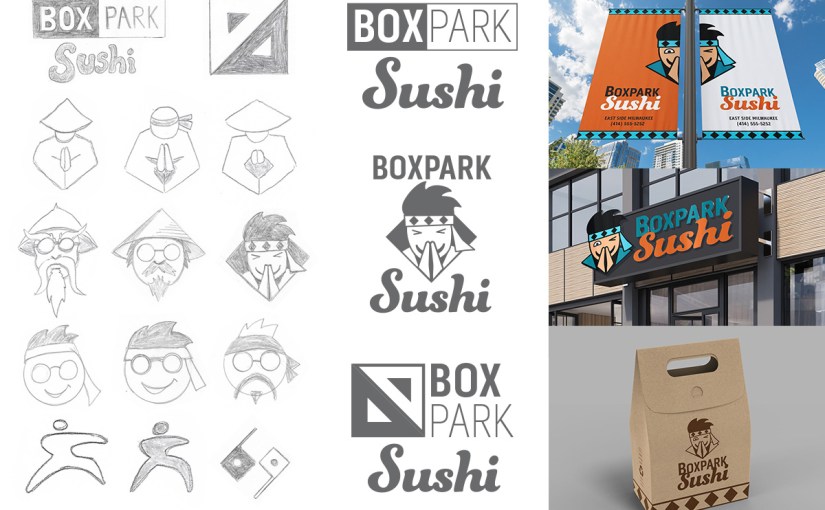
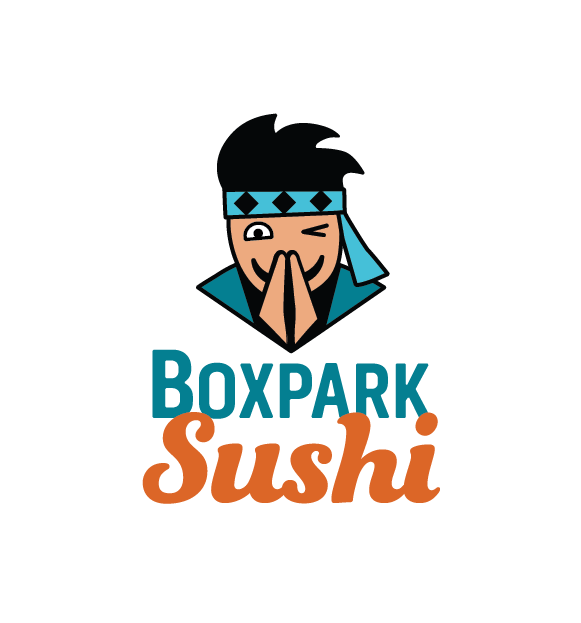
Boxpark Sushi is wise, fun, friendly, and helpful. One way the brand identity reflects this is in the Sushi Sensei design. The sensei communicates wisdom and helpfulness with a bowing pose, demonstrating fun with a wink and friendliness with a smile. In addition, the logotype fuses the brand’s strong and precise side with its fun and organic side, like a well-trained sushi chef preparing a maki roll.
Does the design convey the intended message? If so, explain how. If not, how might this be corrected?
My biggest concern is that the Sushi Sensei will be mistaken for a sushi chef or just a random character used to make Boxpark seem like the KFC of sushi. After feedback from professor Argo, I tried to be sure that every shape and line in the logo served a communicative purpose. However, it’s difficult to know how successfully the logo conveys Boxpark Sushi’s message without any means of measuring the success. I’m hopeful that the next course in the Media Design MFA program will help in that area.
Are the media choices effective in sharing the community’s brand? Explain how the design leads to increased interest or better visibility.
East Side Milwaukee residents in the target audience are young and educated. They are open to new experiences, and Boxpark Sushi provides a stress-free way to learn while sharing a great meal. Assets like the “Official Sushi Black Belt” magnet help build the Boxpark Sushi tribe and expand brand awareness. Furthermore, street advertising like pole banners visually introduce the brand to the local community more effectively than radio, television, or internet ads.
Is the design expected or unexpected? Is that good or bad? Explain why.
Boxpark Sushi’s logo and media asset designs stand out from competitors because they are unexpected. After all, sushi restaurant logos are more likely to feature chopsticks and sushi rolls than brand mascots, which are normally associated with fast food. However, mascots are an effective way to literally put a face on a brand, making it easier to connect with the target audience. The Sushi Sensei mascot expresses the brand personality without cheapening it or making it seem too childish.
Is there anything about the design that should be finessed, adjusted, or reconsidered?
Even after researching color theory and the psychological associations of colors, I still don’t feel confident in my choice of color palette for the Boxpark Sushi logo. There is a strong rationale for using orange and blue to depict fun and wisdom, but something about the pairing or my choice of hues doesn’t feel right. Maybe I’m too dependent on tools like Coolors and Adobe Color. On future projects, I plan to use mood boards to find inspiration in colors from images that capture the brand characteristics.
 Joshua Siegel's Mastery Journal