

Don’s Seafood Case Study
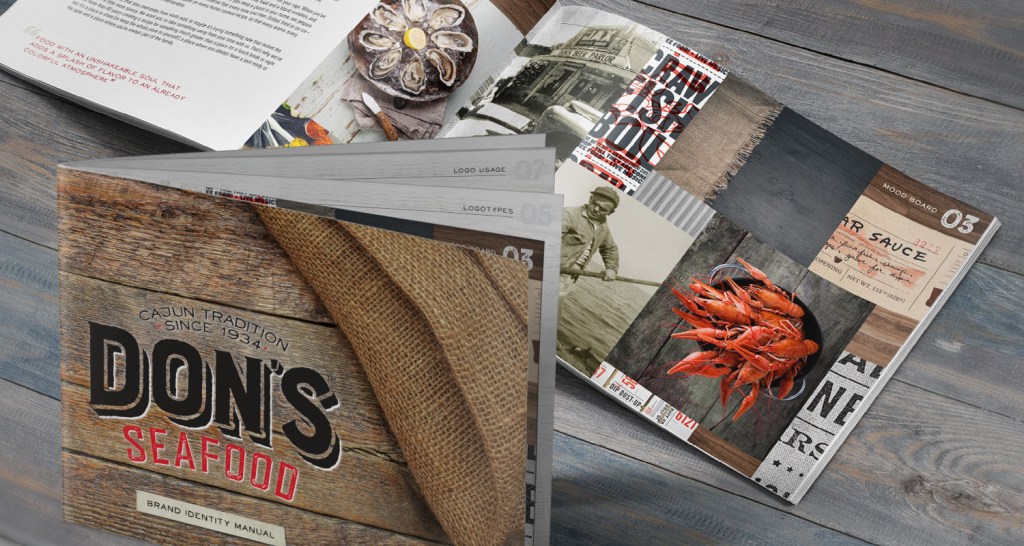
In 2017, design agency MESH re-branded local Cajun restaurant Don’s Seafood. Their challenge was to “visually and verbally capture the tastes and taste buds of the guests who love Don’s Seafood and the guests who have yet to realize what they’re missing” (MESH, n.d.). In order to do so, they first identified the brand’s values and the attributes that make it unique. This helped the MESH designers create a brand definition based on family.
Only after defining the brand identity did the designers create a new logo, tagline, and look for Don’s Seafood. The media strategy included a mix of print and environmental advertising in the form of print ads, kiosks, and billboards. A new online identity was also created with a redesigned website and updated social media presence.
On-air advertising was not included in the media plan. The most probably reasons for this exclusion are the high production costs for television commercials and the fact that younger audiences no longer watch television (Stone, 2010). The advertising budget for Don’s Seafood is better spent on localized environmental advertising like billboards and social media campaigns for a wider reach.
The Purpose of Creative Briefs and Design Briefs
Designers and design agencies use tools or concepts with very similar names, like vision boards and mood boards. In a similar way, the terms “Creative Brief” and “Design Brief” are used interchangeable by some designers. However, there are important differences to keep in mind.
The purpose of a Creative Brief is to define a singular message that sets the objective of the project. The creative brief is a blueprint that helps you “shape the overall strategy and goals for the project” (Bruun, 2019). No matter how long or short the creative brief, Felton (2013) recommends that it answers the following three questions:
- What benefit are you promising?
- Who are you making it to?
- Why should they believe you?
In contrast, a Design Brief includes the objective and strategies defined in the creative brief but also adds additional information (Frenson, 2015). This can include color palette and typographical considerations, voice and tone samples, and media strategies.
Using a Media Matrix
There are many ways to market a brand, but budgets and time limit the number of outlets a brand can utilize. Therefore, it is important to consider the benefits and drawbacks of each media outlet (Stone, 2010). A Media Matrix is a graphical media planner that explains the pros and cons of advertising in four categories of media: print, environmental, on-air, and online.
A well-researched media matrix demonstrates why a client should spend their budget on one form of media over another. Stone (2010) explains many of those pros and cons in a sample media matrix, but this should only be used as a guideline when designing a media plan. Every client and brand has different needs. A media matrix can explain why particular outlets are more suitable for the client’s message and target audience. For example, a fashion brand can benefit from print magazine ads as well as social media sharing to reach their target audience of young women (Chen, 2020).
References:
Bruun, K. (2019, June 19). 10 Key Elements of a Successful Creative Brief. https://www.upwork.com/hiring/design/how-to-create-an-effective-creative-brief/
Chen, J. (2020, January 24). 5 actionable strategies for social media branding. https://sproutsocial.com/insights/social-media-branding/
Felton, G. (2013). Advertising: Concept and Copy (Third). W.W. Norton.
Frenson, M. (2016, July 5). How to write effective design briefs: a quick guide. https://unmatchedstyle.com/news/how-to-write-effective-design-briefs-a-quick-guide.php
MESH. (n.d.). Don’s Seafood: A Rebrand More than 80 Years in the Making. https://www.meshbr.com/project/dons-seafood
 Joshua Siegel's Mastery Journal