
The second step of the Strategic Development project is to research the brand’s competition. Burstein (2012) refers to three types of competitors in the business world:
- Direct competitors: brands with similar products that are likely to be used if your client’s product did not exist.
- Indirect competitors: brand with similar products but a strong differentiation from your client or in another market segment.
- Replacement competitors: brands with very different products that are competing for the same customer’s time and money.
For this project we are focusing on direct and indirect competitors while being aware of all aspects of the client’s marketplace.
A primary reason for researching a brand’s competition is to find ways to differentiate from competitors and better serve customers.
Comparison Criteria
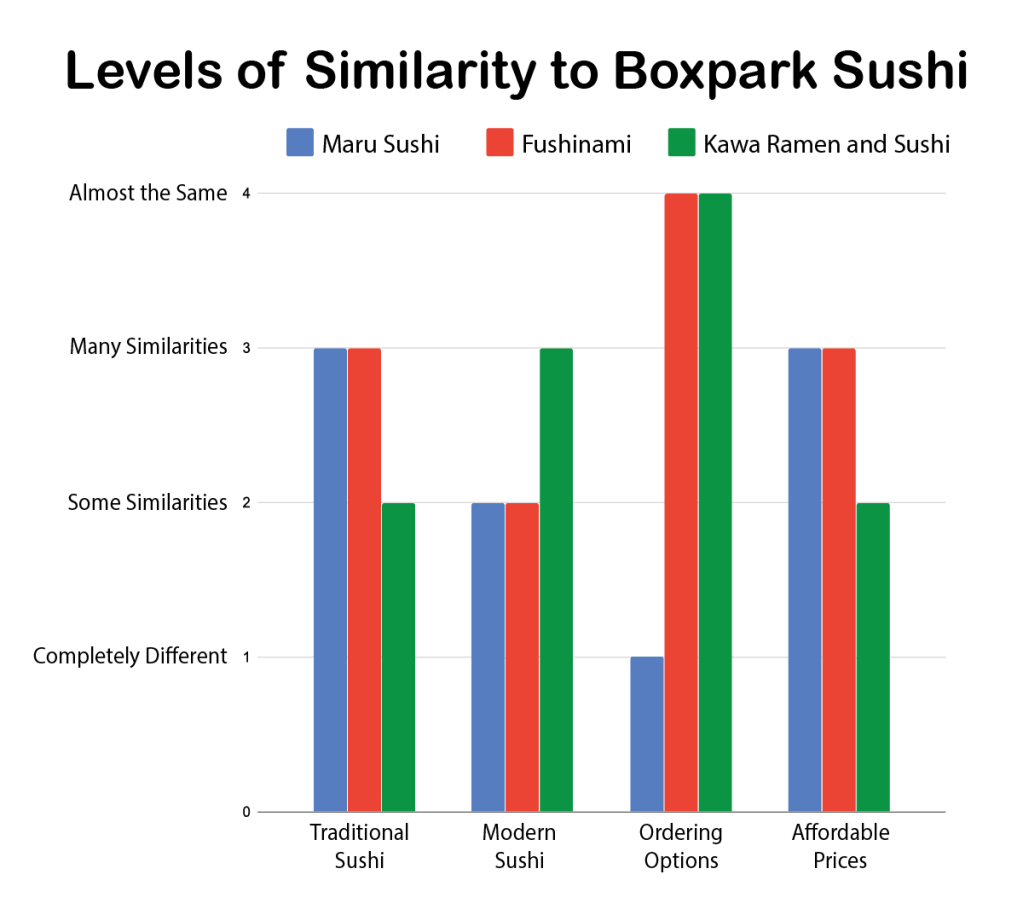
Traditional Sushi: Sushi is freshly prepared by trained sushi chefs in an area where diners can order directly and interact with their chef. A variety of maki, sashimi, and other traditional sushi are made with locally sourced, sustainable ingredients.
Modern Sushi: Western sushi innovations, especially those without raw fish, can introduce new customers leery of traditional sushi as well as introducing new culinary trends. Tom (n.d.) describes many interesting rolled food options, including waffle breakfast sushi, bacon and egg sushi, and peanut butter and jelly sushi that appeal to American kids and adults who don’t like seafood.
Ordering Options: In addition to the dine-in sushi bar experience, diners should have the option to pick up premade to-go boxes, order take-out, and place orders by phone, text, online, or with an app.
Affordable Prices: Quality chefs and ingredients require more money, but these costs could be offset by the lower overhead of operating from a Boxpark container. Prices should reflect the quality of the sushi while remaining competitive with nearby restaurants.
Direct Competitors
Three popular sushi restaurants were located in East Side Milwaukee using Google Maps.
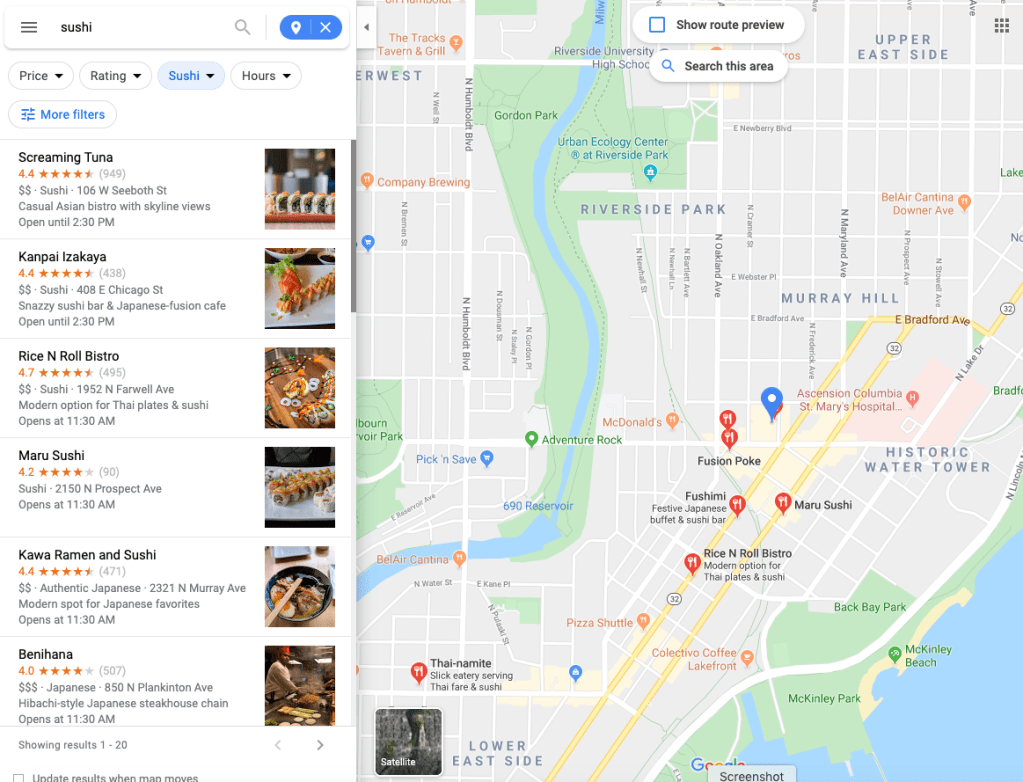
Maru Sushi: Located on North Prospect Avenue, Maru Sushi features an all-you-can eat lunch special and a simple menu with classic and signature maki rolls. Online reviews are mostly positive, but a few mention slow service and too much rice in the rolls.
Fushinami: A Japanese buffet and sushi bar on North Farwell Avenue, just around the corner from Maru Sushi. Many online reviewers enjoyed the all-you-can eat buffet, especially the seafood. Sushi is included with the buffet, and all sushi is made fresh to order by the sushi bar chefs. The restaurant also includes a full bar and “party tray” platters of sushi available for take-out.
Kawa Ramen and Sushi: A small and modern style restaurant that serves a variety of sushi, noodle dishes, and Japanese appetizers and beverages. Their sushi prices are higher than other nearby restaurants, and their website notes that they only serve 120 bowls of ramen each day. Online reviews range from average to “the best sushi and ramen I have ever had in my life,” (Dix, 2019).
Indirect Competitors
Asian Fusion: A modern restaurant serving traditional and modern takes on Chinese dishes from a variety of provinces. Known as a home-away-from-home for Chinese-born college students (OnMilwaukee, 2019).
FreshFin Poké: A bright, modern counter-serve restaurant featuring signature and build-your-own poké bowl. Poké is a Hawaiin dish of raw, marinated fish tossed with rice and vegetables that has been described as “the next generation of sushi” (Pfeffer, 2017).
Huan Xi Chinese Restaurant: A small restaurant with a bar and Hot Pot stations at each table, so diners can prepare their own hot pot dishes. Online reviews suggest that many local students order take-out here, but the service is slow.
Features used as criteria to determine that the business is a competitor:
- Asian Cuisine
- Location in East Side Milwaukee
- Popular with College Students
- Dine-in and Take-out options
References:
Burstein, D. (September 28, 2012). Market Competition 101: The 3 Types Of Competitors To Keep An Eye On. Retrieved from: https://rpablog.marketingsherpa.com
Dix, Z. (2019). Review of Kawa Ramen and Sushi. Retrieved from: https://goo.gl/maps/3S4zL8hsNvgTrPeU6
OnMilwaukee. (October 25, 2019). East Side dining guide. Retrieved from: https://onmilwaukee.com/dining/articles/east-side-dining-guide.html
Pfeffer, S. E. (June 5, 2017). What Is a Poke Bowl, Anyway? A Chef Breaks Down the Food Trend. Retrieved from: https://people.com/food/poke-bowl-food-trend-recipe/
Tom, H. (n.d.) 21 Unique Recipes for Sushi Without Raw Fish. Retrieved from: https://spoonuniversity.com/recipe/21-unique-recipes-for-sushi-without-raw-fish
 Joshua Siegel's Mastery Journal