
The fifth month of Full Sail University’s Media Design MFA program was focused on Design Research. Design research is different than the pure research or applied research conducted in other professional fields. Rather, it is a research-driven design process that explores how a problem is solved, then communicates the value of the solution. This goes beyond learning about design elements like typography or color theory. Design research requires looking at a design problem from multiple angles to uncover new ideas and solutions.
We learned the concepts and methodologies of design research through place branding assignments. The readings and videos established a strong basic knowledge, and the assignments put this newly acquired knowledge into practice. Over a three week period, students were tasked with choosing a local neighborhood, then conducting a brand analysis and comparative analysis. We conducted primary research by exploring and photographing the chosen neighborhoods, then used secondary research to discover the current brand equity and find ways to differentiate it from similar neighborhoods.
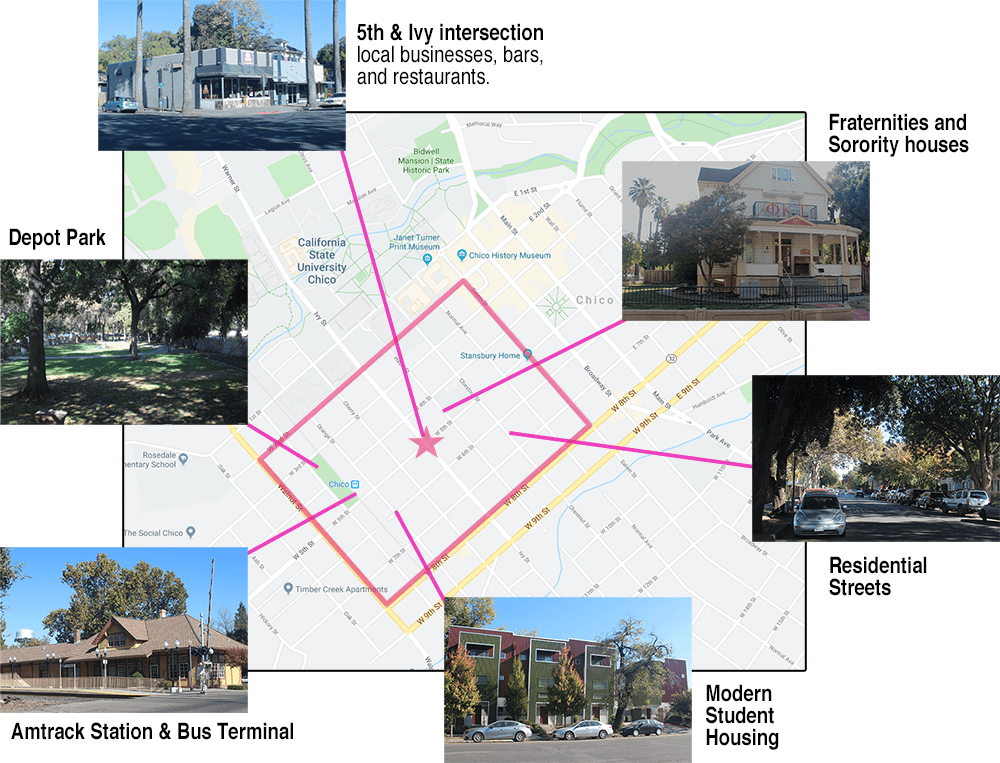
I chose the “U-Town” area in Chico, California. As the oldest residential neighborhood in the city, it has many positive qualities that have often been overshadowed by a reputation for college house parties. For an overview of how each assignment contributed to the learning process, read “Learning Design Research Through Place Branding”.
Connecting / Synthesizing / Transforming
Prior to each assignment, Professor Argo provided links to multiple online articles and videos related to the assignment. These instructional materials established strong knowledge of Place Branding, Brand Equity, Design Research, and Differentiation. Each week built on previous lessons in a logical progression. For example, the article “5 Place Branding Principles for Successful Brand Development and Management” detailed the principles inherent to effective place branding: distinctiveness, authenticity, memorability, co-creation, and a sense of the place that drives emotional connections (Editorial Team, 2019). These principles were reinforced by research into the current brand equity of the U-Town neighborhood (its authenticity, memorability, and sense of the place) and a comparative analysis to find its differentiation (or distinctiveness).
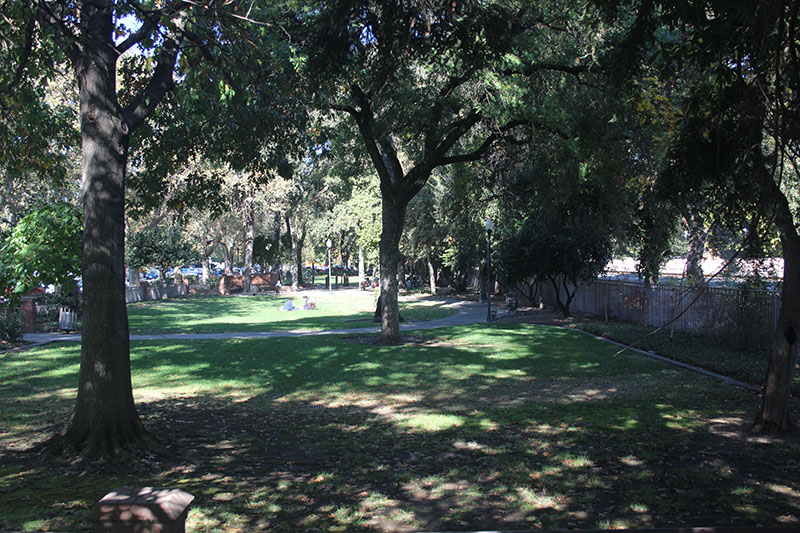
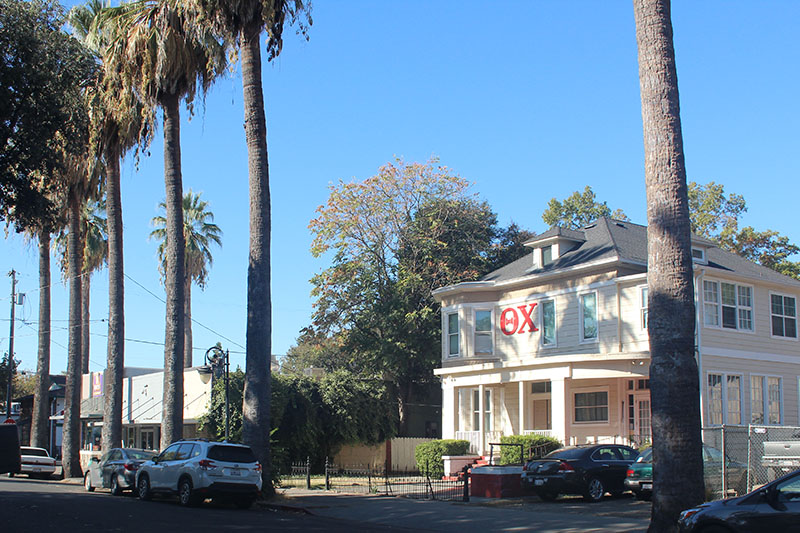
In a video from Gerson Lehrman Group, Turi McKinley explains how design research has both immersion and discovery stages (GLG, 2016). The immersion stage dives deep into the brand’s current equity and needs. The discovery stage explores possible solutions by getting hand-on interaction with people, places, and objects. For the U-Town branding project, the immersion phase was online secondary research into the history and current brand equity of the neighborhood. The information gathered in this phase led to connections made in the discovery stage. Several misconceptions were dispelled by exploring and photographing U-Town. A 2016 article in the Chico News and Review described the neighborhood’s history of raucous house parties and drunken riots, but also noted measures being taken by the city and Chico State to make the area safer for students and residents (Hardee, 2016). A visit to the area on a Saturday afternoon to gather primary research confirmed that those measures were largely successful. Students still drink and party, but those parties no longer spill into the streets and the neighborhood has a very laid-back peaceful vibe.
Problem Solving
The ultimate purpose of design research is solving a design problem. The first step is defining the problem statement. Branding a district is not a design problem. Instead, you must ask a specific question, such as “How do I change the perception of this place for the target audience?” The primary design problem for branding the U-Town neighborhood is “How do I change the neighborhood’s party reputation?”
In the LinkedIn Learning video course “Learning Design Research,” Andy Schwanbeck suggests using KWHL tables to directly inform how to solve a problem (Schwanbeck, 2015). For the place branding assignments, the table below categorized the goals for the research process.
| K: What do you already know? | W: What do you need to find out? | H: How will you learn it? | L: What do you hope to learn? |
| U-Town has largely outgrown its party past, but that reputation remains. The majority of residents are college students under 30. A variety of small businesses and restaurants are focused on student needs. | Top reasons why students want to live in the area. Entertainment options besides alcohol. How is U-Town different from other campus-adjacent neighborhoods? | Brand Equity study utilizing qualitative data from Niche.com neighborhood reviews and studies by the City of Chico Public Works Department. Comparative Analysis of U-Town, Barber, and Downtown Chico. | What is the current brand equity of U-Town and what is its primary point of differentiation? |
The Brand Equity study for U-Town discovered that the most liked aspects of the neighborhood are the beautiful trees and walkability. Both of these aspects provided a path to changing U-Town’s party reputation. The Comparative Analysis study found that the mature urban forest and walkable proximity to the college are two distinctive assets that appeal to nature-minded students. This emphasis on the local, environmentally friendly aspect of the neighborhood can help change its reputation as a raucous party area to a place that is nourishing to personal growth.
Innovative Thinking
A primary take-away from the Design Research course is that innovation is about differentiation. The place branding research required us to find the qualities that make a location stand out. Miguel Rivas notes that “distinctiveness emerges from the singular combination of different city assets and approaching the city narrative as an honest introspection, projected with healthy optimism into the future” (Rivas, 2015). Researching a location’s assets and narrative provides unique insights and understanding of how the brand connects with the target audience. By synthesizing innovative designs based on differentiation, we are building skills that can be used on future brand development projects.
The design research skills learned in the course are basic to the profession, but how they are used is a demonstration of innovative thinking. Finding U-Town’s “Zag” required a deep immersion in its current brand equity plus discovery of its differentiation. Comparisons were made to Downtown Chico, which also suffered from a negative “party town” reputation before being transformed into a family-friendly destination. With effective branding as an environmentally friendly neighborhood, U-Town can make a similar transformation.
Acquiring Competencies
The following are concepts or skills learned in the Design Research course. They are categorized as Academic (pertaining to school work) or Occupational (pertaining to work in the Media Design field), and Technical (pertaining to software or other design skills) or Conceptual (new terminology, procedures, or ideas).
Week 1
Mastery Goals and Active Learning. Academic, Conceptual.
The difference between art and design. Occupational, Conceptual.
Principles of Place Branding. Occupational, Conceptual.
Week 2
What is Design Research? Academic, Conceptual.
Pure Research vs Applied Research. Academic, Conceptual.
Developing Brand Equity. Occupational, Conceptual.
Defining a design problem. Occupational, Conceptual.
Week 3
What is Differentiation? Academic, Conceptual.
When the competition zigs, you zag. Occupational, Conceptual.
You can’t be all things to all people. Occupational, Conceptual.
Week 4
Innovative Thinking in Media Design. Occupational, Conceptual.
Differentiation in Place Branding. Academic, Conceptual.
APA Formatting. Academic, Technical.
Creating Illustrator Infographics (LinkedIn Learning). Occupational, Technical.
References:
GLG. (2016, May 4). Frog Design’s Turi McKinley on Problem Solving and Design Research: GLG Leading Learners. Retrieved from https://www.youtube.com/watch?v=h2jBP3oOJZM
Hardee, H. (2016, April 14). Losing our buzz: Does Chico (State) still deserve its hard-partying reputation? Chico News and Review. Retrieved from https://www.newsreview.com/chico/losing-our-buzz/content?oid=20614263
Rivas, M. (2015) Innovative Place Brand Management: Relearning City Branding. Retrieved from https://urbact.eu/sites/default/files/final_report_urbact_citylogo_2012-2015_miguel_rivas.pdf
Schwanbeck, A. (2015, February 24). Learning Design Research. Retrieved from https://www.lynda.com/Design-Foundations-tutorials/Foundations-Design-Research/182890-2.html?org=fullsail.edu
Team, E. (2019, June 1). 5 Place Branding Principles for Successful Brand Development and Management. Retrieved from https://placebrandobserver.com/5-place-branding-principles-to-guide-brand-development-management/
 Joshua Siegel's Mastery Journal