

This month I continued advancing towards the Media Design MFA degree with Effective Copy Writing taught by professor Elena Rogalle. Like the previous courses, this class revealed how much thought and research is required to create effective brand identities and ad campaigns. George Felton states that your message “should represent the brand’s personality and speak with the right voice” (Felton, 2013, p. 93). Copy and design should work together with a consistent voice that connects the brand with its target audience.
Felton’s book “Advertising: Concept and Copy” was the primary resource for this class. The text provided guidance as we developed advertising for a new client. This month we put aside the city brand identities created for the previous two classes to focus on advertising for a nonprofit organization. I chose PAWS, the Performing Animal Welfare Society, a California based nonprofit that rescues and provides sanctuaries for exotic animals. The first assignment for this “client” was developing Target Audience Profiles.
Target Audience Profiles
Whether advertising a product or organization, Felton recommends looking for the “highest possible benefit” (Felton, 2013, p. 23). To determine that highest benefit, we must first ask what the audience needs. Felton lists fifteen basic needs that can be addressed. After researching the PAWS organization and its mission, I identified three of the strongest needs in potential PAWS donors:
- Achievement: the need to perform difficult tasks (Felton, 2013, p. 26). Protecting animals and ending abuse are lofty goals that inspire donors to help make a positive change.
- Nurturance: the need to provide care for others (Felton, 2013, p. 27). Pet owners are a good target audience for PAWS because they’ve already demonstrated a need to nurture animals.
- Novelty: the need to alter routine, be surprised (Felton, 2013, p. 29). Audiences are bombarded by charities asking them to give. To attract new donors, ads should be different and memorable.
With this information I developed two Target Audience Profiles. We were encouraged to be very specific and detailed, which wasn’t a problem. My years as an actor, screenwriter, and roleplaying aficionado (aka D&D nerd) provided plenty of experience developing detailed characters with rich backgrounds.
Profile 1

Persona Information
Persona’s Name: Darren Harlin
Geographic Location: Calabasas, California
Target Demographic
Age: 67
Gender: Male
Education Level: College graduate, California Institute of the Arts
Income: $125,000 (Pension and savings)
Occupation: Set Designer (semi-retired)
Target Attributes
Family: Divorced with an adult son (Brett, 42) and daughter (Courtney, 39). Lives with a male mixed breed dog named Hitch.
Social Life: Hiking, sketching, playing with Hitch. Gets together with old friends a couple times a month.
Social Media: Facebook to keep in touch with his kids and showbiz friends.
Cultural: Subscribes to The Hollywood Reporter and Architectural Digest. His Kindle is filled with Tolkien and Asimov stories that he’s already read. Volunteers at the Performing Arts Education Center.
Political: voting Democrat
Ethnicity: Caucasian
Personal Values: Union man who fights for worker rights.
Clubs/Tribes: A movie buff who binge watches Netflix and has a DVD collection with over 400 titles.
Faith/Religious Beliefs: non-practicing Jewish
Target Persona’s Story
Darren grew up in Orland California surrounded by almond orchards and cattle ranches. He attended CalArts with plans to direct commercials but soon found his niche in the art department, first in props and eventually working his way up to set designer. Darren is a proud member of the International Alliance of Theatrical Stage Employees (IATSE) who worked in film and television for over four decades before retiring last year. He made a good living and lots of friends, but he witnessed first hand the way performing animals were treated on set.
Darren’s weekend starts with half a grapefruit and rye toast while listening to National Public Radio. His left knee aches since tripping over the garden hose last month, but Hitch needs a walk. The scruffy, gray muzzled mutt pulls Darren through the neighborhood, an upscale planned community in the hills outside Los Angeles. They get home and Hitch settles on the couch while Darren writes a short grocery list. Darren drives to Trader Joe’s in the 2013 Prius and stocks up for the week. The Cocoa Truffles are a guilty pleasure. When Darren gets home, his knee is throbbing so he takes a puff on his Care By Design vape pen before relaxing on the couch with Hitch and a glass of Merlot. They get comfortable for a long afternoon of Animal Planet and Swedish films.
Profile 2

Persona Information
Persona’s Name: Rebecca Kim
Geographic Location: Portland, Oregon
Target Demographic
Age: 29
Gender: Female
Education Level: Graduate of Montclair Culinary Academy, New Jersey
Income: $67,000
Occupation: Vegan chef / caterer
Target Attributes
Family: Single with a female roommate (Terri), a bearded dragon (Gordo), a male ginger cat (Max) and twin female Siamese cats (Shiva and Vishnu). Mom, Dad, and sister Lillian still live in Fort Lee, New Jersey.
Social Life: Game night every Saturday with friends, good food, and cards or board games.
Social Media: Instagram, Snapchat, sometimes Facebook for talking with Grams.
Cultural: Loves 90’s Alternative Rock, Thai food, cruelty-free fashion, and urban photography. Collects elephant toys.
Political: Liberal
Ethnicity: Third generation Korean American
Personal Values: Vegan, fights for animal rights.
Clubs/Tribes: Jet Black vegan cafe, iPhone all the way.
Faith/Religious Beliefs: Believes in God but doesn’t know what to call Her.
Target Persona’s Story
Becca wakes to Nirvana blaring from her iPhone. Max is curled next to her head, Shiva and Vishnu by her feet. A quick shower with John Masters Organics blood orange and vanilla body wash, then she slips into her Denim Forum jeans, Susi Studio sandals, and a vintage Stone Temple Pilots tee. Out the door with a left-over blueberry muffin and Jet Black coffee in a thermos. The Uber driver is waiting by the curb. As they wind through Portland traffic, Becca skims Instagram and replies to a text from her boss at Blossoming Lotus. They don’t open until eleven, so there’s time to pick up fresh ingredients from the farmer’s market. Meatless bibimbap with marinated mushrooms and kimchi is one of Becca’s special dishes inspired by Gram’s cooking.
On the way home she stops at Guardian Games to pick up the latest Settlers of Catan expansion. She also buys a plushie Dumbo to add to her elephants collection. Why not? Her vegan catering side business “Veggie Goddess” is doing great. Booked every Sunday for months and over 2,000 Instagram followers. Becca also has ideas for a fashion line featuring animal memes. At home she feeds the kitties their Blue Freedom cat chow and lets Gordo out of his terrarium to prowl the apartment. Becca browses the web and plays games on her iPad until it’s time for bed. Another busy day tomorrow.
Testimonial Ads
The next copywriting assignment was to create six concept sketches for testimonial ads and write rationales for each concept. The ads were designed to appeal directly to the two Target Audience Profiles developed in the previous assignment.
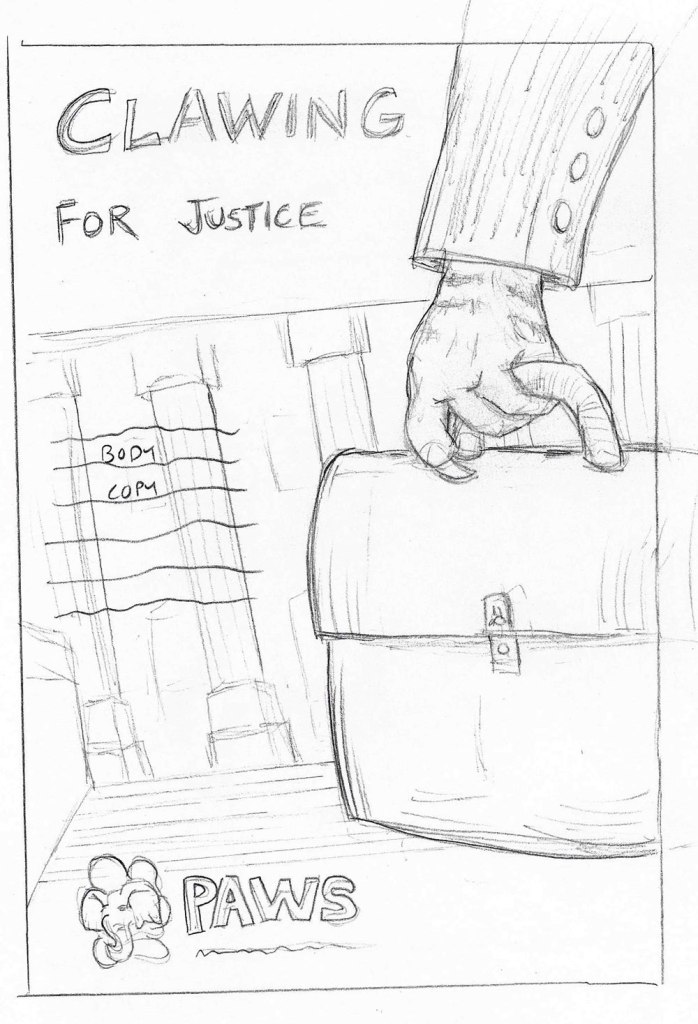
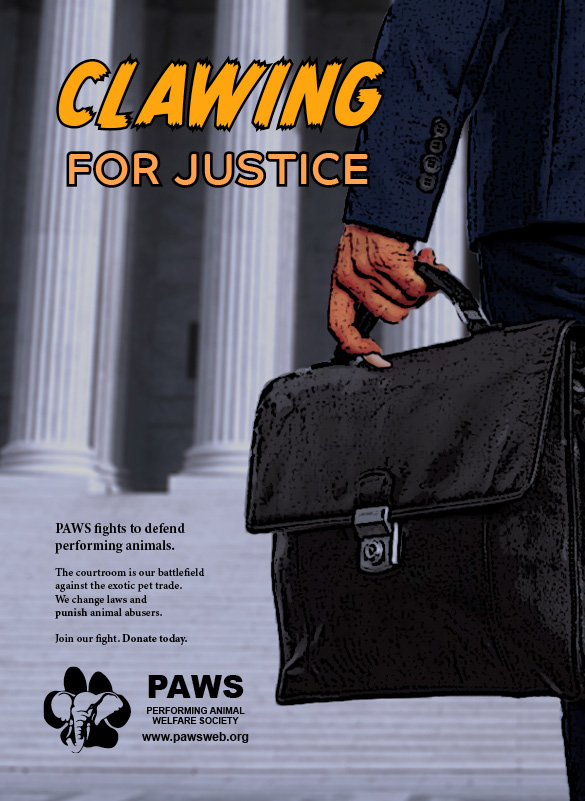
Headline: Clawing for Justice
Subhead: PAWS fights to defend performing animals.
Body Copy: The courtroom is our battlefield against the exotic pet trade. We change laws and punish animal abusers.
Call to Action: Join our fight. Donate today.
A lawyer goes to court, briefcase in hand… a tiger hand. This testimonial ad is voiced by the Extreme User (Felton, 2013, p. 241), an attorney who is a frequent donor and advocate for animal rights. His sharp tone and action words (fight, battle, claw) speak directly to target persona Darren Harlin’s need for Dominance (the need to exercise power over others, direct and supervise, have influence) over people who exploit performing animals (Felton, 2013, p. 26).
The “clawing” headline and tiger claw visual hooks the viewer with something unexpected, then draws them in for an explanation. Following advice from Craig Smallish (2013), the ad story was developed by free association of words like “justice” and using an online image search. A search for “lawyer briefcase” accidentally found a photo that inspired the idea of a fierce tiger lawyer going into a courthouse.
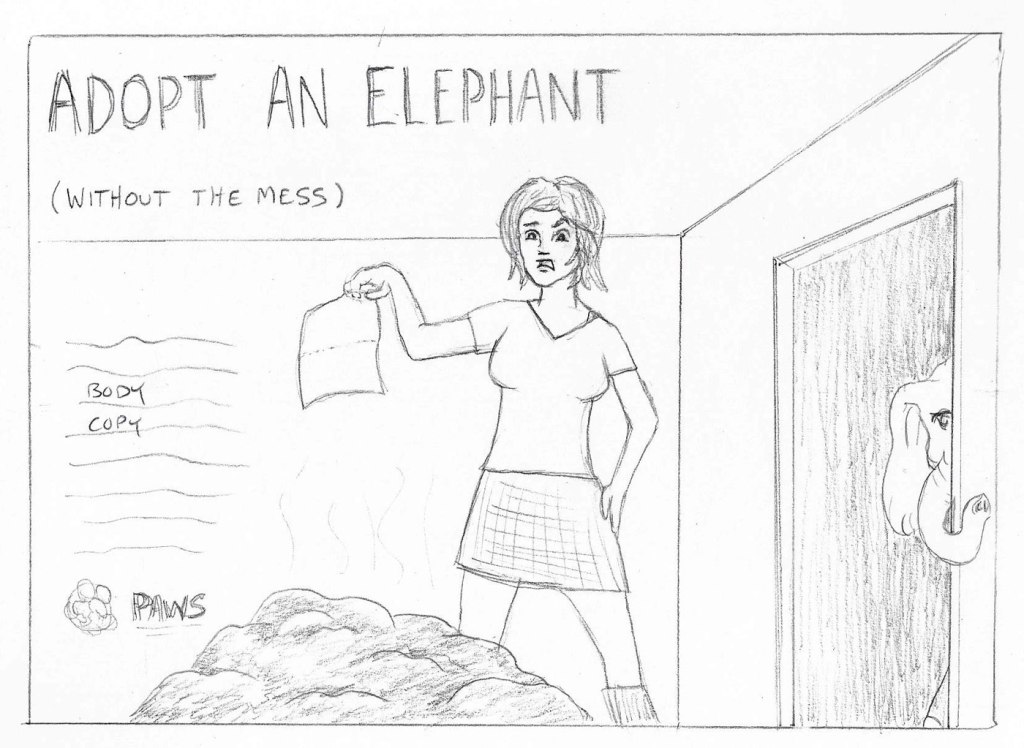
Headline: ADOPT AN ELEPHANT
Subhead: (without the mess)
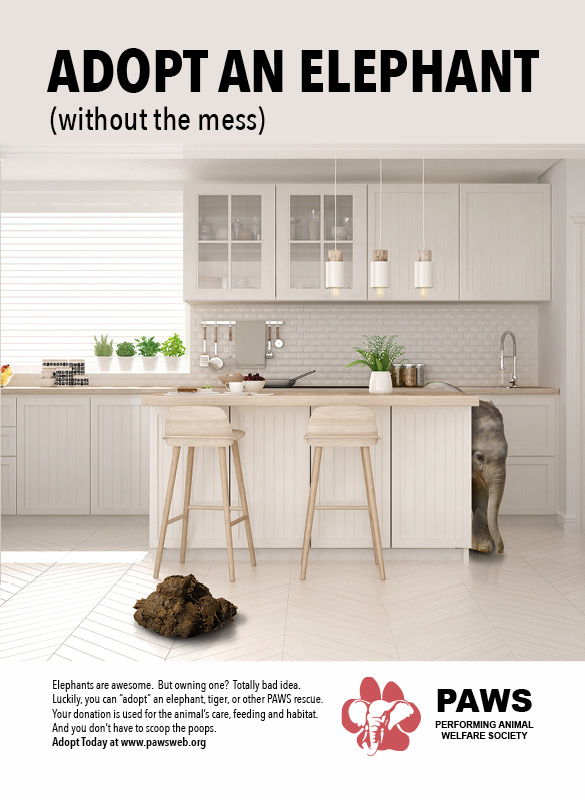
Body Copy: Elephants are awesome. But owning one? Totally bad idea. Luckily, you can “adopt” an elephant, tiger, or other PAWS rescue. Your donation is used for the animal’s care, feeding and habitat. And you don’t have to scoop the poops.
Call to Action: Adopt Today at http://www.pawsweb.org
A woman holds a paper towel, bewildered by a massive pile of dung on the floor. A guilty elephant peeks around the corner. This ad speaks to target persona Rebecca Kim in the friendly, modern voice of a close friend, or “just plain folk” personality (Felton, 2013, p. 246). The testimonial uses humor to point out a downside of taking care of pets and offers an alternate solution for those who desire Nurturance (the need to provide care for others, to have and protect) for exotic animals (Felton, 2013, p. 27).
The first iterations of the concept involved a man using a snow shovel to clean up elephant dung on a sidewalk. Craig Smallish recommends 180 degree thinking to develop ideas (Smallish, 2013), so I changed the setting to inside an apartment and the character to a woman with a paper towel instead of a shovel. These changes made the concept stronger and more relatable to indoor pet owners like Rebecca Kim.
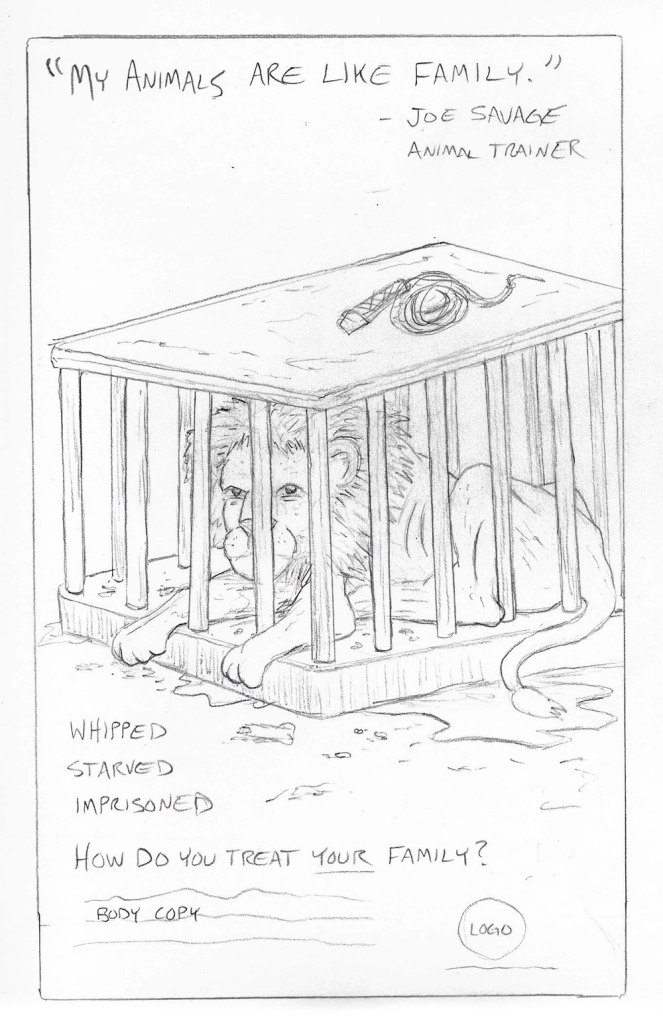
Headline: “My animals are like family.” – Joe Savage, animal trainer
Subhead: Whipped. Starved. Imprisoned. How do you treat YOUR family?
Body Copy: PAWS rescues performing animals from “family” like Joe Savage. At our sanctuaries, we give animals the freedom, love, and care that real family deserves.
Call to Action: Join our family. Donate today.
A sad, malnourished lion lies caged beneath an ironic quote from an animal trainer. This testimonial headline is from the Wrong Person (Felton, 2013, p. 243). The response is voiced by PAWS Co-founder Ed Steward or another person close to the organization. This helps personify the brand (Felton, 2013, p. 243). It appeals to target persona Darren Harlin’s need for Understanding (the need to comprehend, teach and learn, discover patterns, make connections) and Nurturance (the need to provide care for others, to have and protect) for performing animals (Felton, 2013, p. 27).
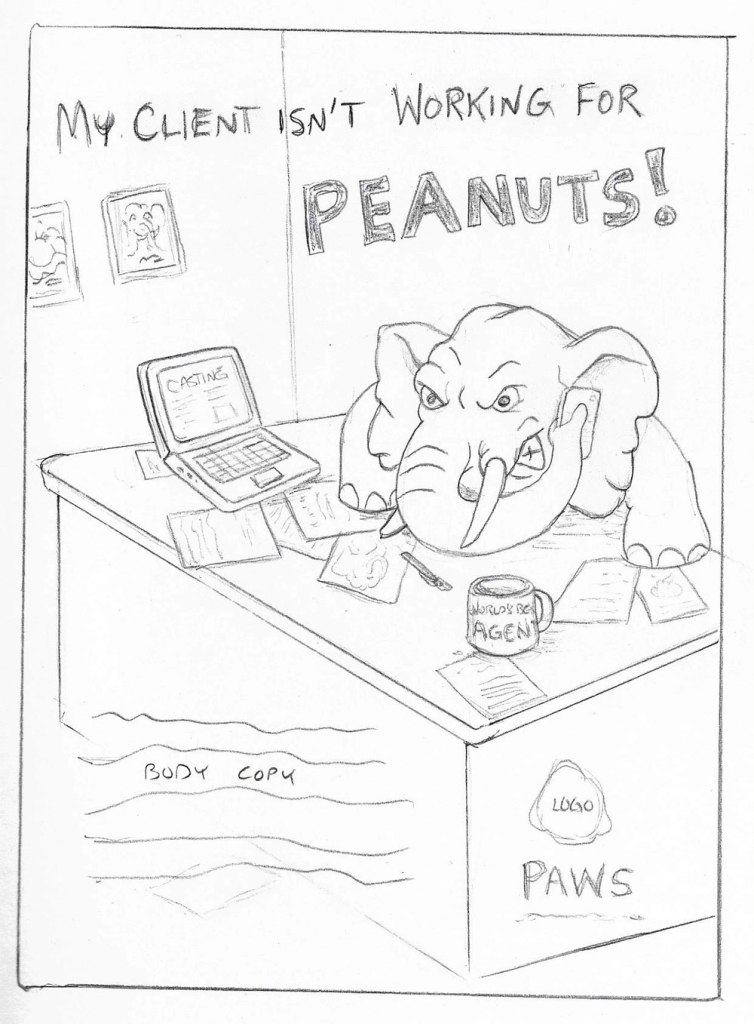
Headline: My client isn’t working for PEANUTS!
Subhead: Your agent looks out for you.
Body Copy: Animal performers aren’t so lucky. No fancy trailer. No residuals. No beach house in Malibu. PAWS protects animals long after Hollywood forgets.
Call to Action: Learn more at http://www.pawsweb.org
A Hollywood agent, an angry bull elephant, negotiates a deal for his client. He is “not the person, but something associated with the person” according to George Felton (2013).
The headline and image are twists on several clichés. Craig Smallish recommends finding a quirky variation on a cliché to draw viewer attention (Smallish, 2013). The no-nonsense voice of an agent fighting for performer rights speaks directly to target persona Darren Harlin. The ad addresses his need for Understanding (the need to comprehend, teach and learn, discover patterns, make connections) with a visual twist that adds the Novelty (the need to alter routine, be surprised, acquire new skills, have new and different experiences) of an elephant agent (Felton, 2013, p. 29).
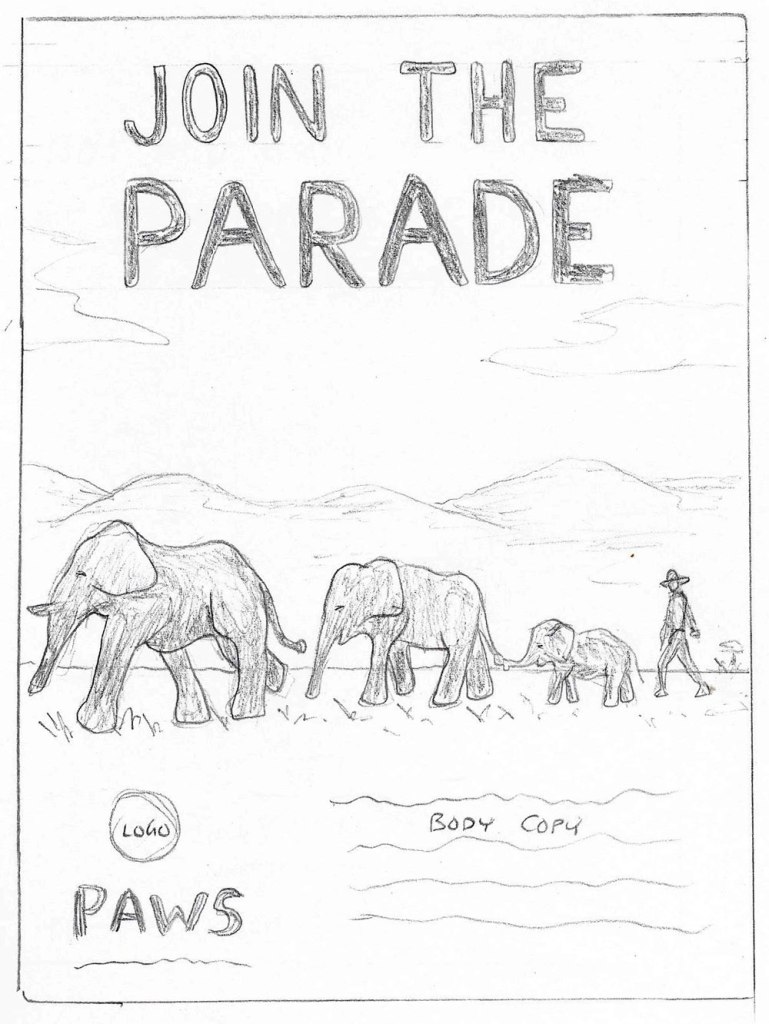
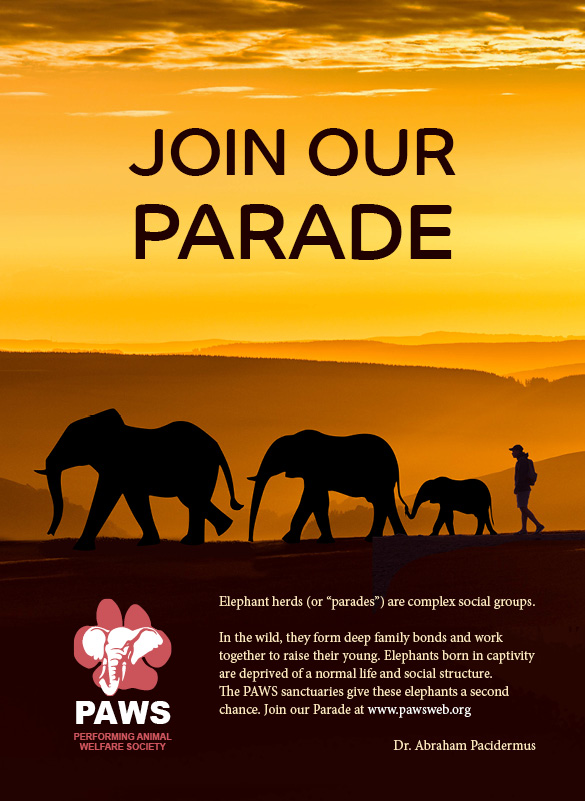
Headline: JOIN THE PARADE
Subhead: Elephant herds (or “parades”) are complex social groups.
Body Copy: “In the wild, they form deep family bonds and work together to raise their young. Elephants born in captivity are deprived of a normal life and social structure. The PAWS sanctuaries give these elephants a second chance.” Dr. Abraham Pacidermus
Call to Action: Join our Parade at http://www.pawsweb.org
A parade of elephants walks in a line, joined by a naturalist at the end. His testimonial is presented with the academic voice of an elephant Expert, someone who stands outside the brand and has the expertise to evaluate it (Felton, 2013, p. 241). His straight-forward, non-sentimental tone appeals to target persona Darren Harlin’s need for Understanding (the need to comprehend, teach and learn, discover patterns, make connections) without manipulating his emotions (Felton, 2013, p. 29). The headline and call to action address his need for Affiliation (the need to be closely associated with others, the need for relationships) with the respected naturalist and others who believe in protecting animals (Felton, 2013, p. 27).
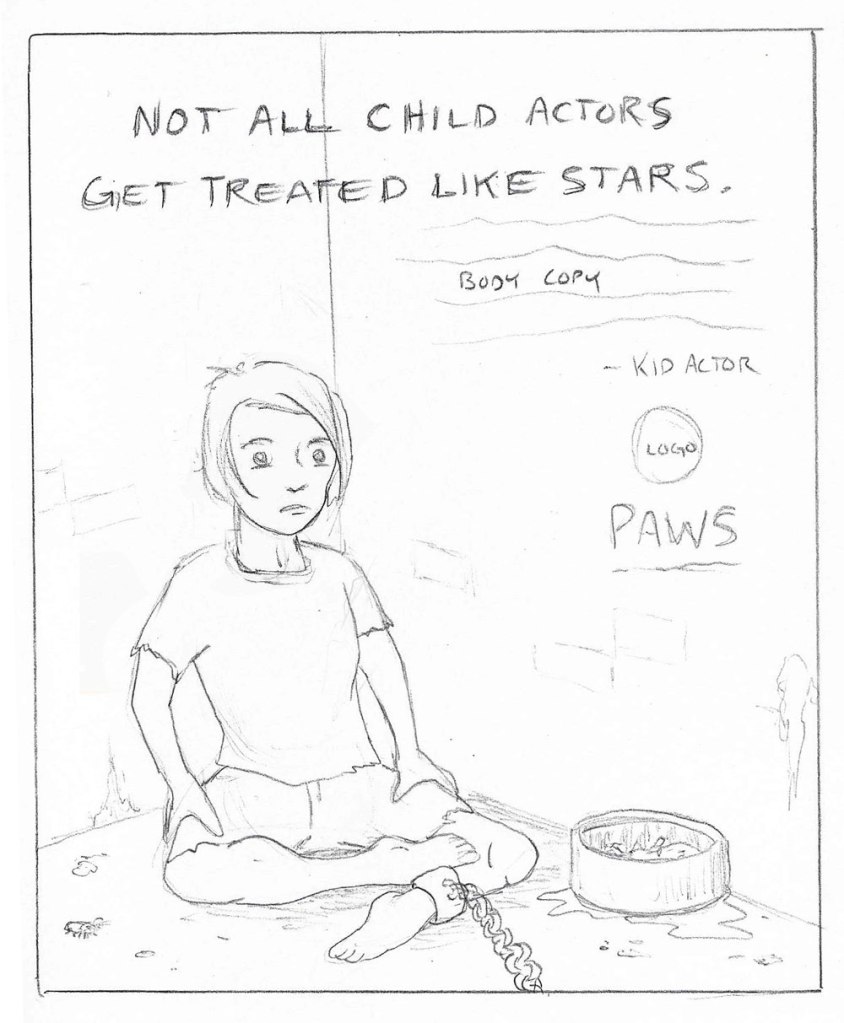
Headline: Not all child actors get treated like stars.
Subhead: Good thing I’m human.
Body Copy: “When I’m acting, my parents look after me. Performing animals aren’t so lucky. Taken away from their mother as babies. Locked in cages for days. Starved and abused. We can change that.” – Famous Child Actor
Call to Action: Learn more about performing animals at http://www.pawsweb.org
A famous child actor sits chained in a filthy cell. According to Felton, celebrity endorsements need an unusual treatment to make them stand out (Felton, 2013, p. 243). The image of a young star being treated like an animal grabs attention and calls to the need for Nurturance (the need to provide care for others, to have and protect) in the target persona Rebecca Kim. The quote “We can change that,” connects with the need for Achievement (the need to perform difficult tasks, exercise one’s skills) with the goal of changing the way performing animals are treated (Felton, 2013, p. 26). Craig Smallish recommends trying different viewpoints to change the feel of the scene (Smallish, 2013). Early iterations had the child behind bars but moving the viewer into the cage with the young actor gave the image a closer emotional connection.
Ad Comps
After choosing the three most effective ad concepts, I revised the copy based on professor Rogalle’s feedback. The next step was designing comps in Adobe Photoshop and Indesign. Craig Smallish suggests that final comps should “illustrate every aspect of the concept” even though they are still at the proposal stage (Smallish, 2013). Once every element is approved, the comp will serve as a blueprint for the design team.
Comp Revisions
The first three ad comps for PAWS were varied in style and tone. Professor Elena Rogalle advised that the “Adopt an elephant, without the mess” ad was successful because it effectively used humor to promote the organization.
Classy.org writer Ellie Burke notes that “humor can be a great way to show your audience the human side of your organization.” She also remarks that humor delights existing supporters and “can also attract new supporters of specific demographics” (Burke, 2019). This campaign targets animal lovers who also appreciate a tidy home. It uses a clean, modern layout that could be advertising upscale home furnishings, but the addition of a messy element draws attention.
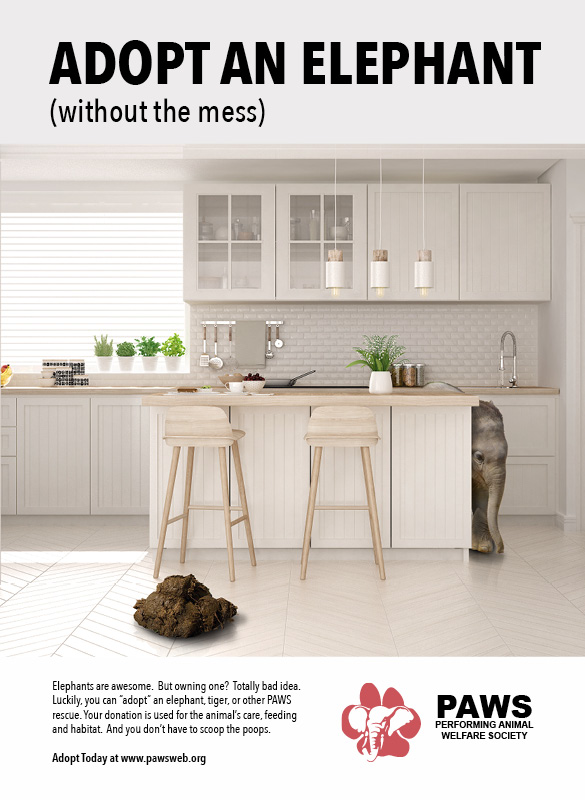
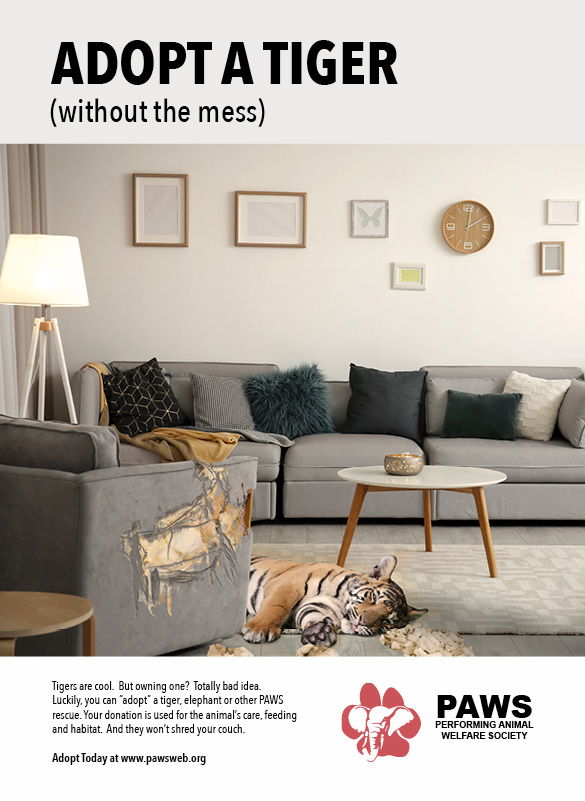
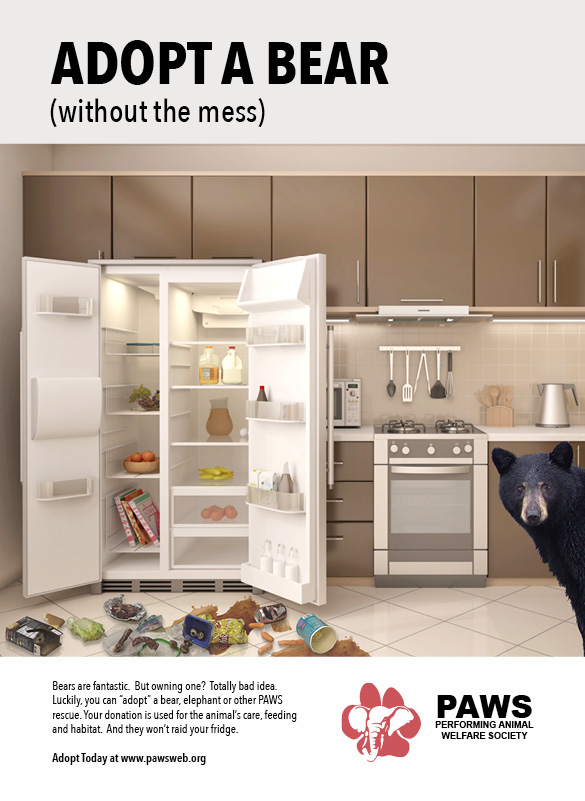
My first revision step was to implement the changes suggested by professor Rogalle. I adjusted the body copy to give it more air after the image and make the text flow better. I then used the elephant ad as a template for the tiger and bear ads. I considered not using photos of the animals in the ads and letting the viewer get the story from the copy. However, the addition of the animals gives the campaign a closer connection to the organization’s cause with a bonus cuteness factor.
This campaign uses humor to point out a downside of exotic pets and explains the benefits of “adopting” a PAWS rescue for those who desire Nurturance (the need to provide care for others, to have and protect) for animals (Felton, 2013, p. 27). The first three ads are designed for print to reach target persona Darren Harlin, a semi-retired set designer. However, the layouts and copy can be adjusted for social media to better reach the younger target persona Rebecca Kim.
Taglines
The last copywriting assignment for my nonprofit was to create a new tagline. The current PAWS tagline, “The Nation’s First Elephant Sanctuary” describes one feature of the organization but does not communicate its “highest possible benefit” (Felton, 2013, p. 23). Today, PAWS protects many exotic animal species in three sanctuaries, so I tried to express that benefit in the ten tagline concepts and rationales presented to my classmates:
- Performing kindness.
Animal lovers believe in kindness. In the article “Types of Taglines,” Eric Swartz declares that “Aspirational taglines focus on an audience’s deeply cherished needs and wishes” (Swartz, n.d.). This tagline takes an adjective from the charity name “Performing Animal Welfare Society” and changes the context to an action verb. In chapter 17 of Advertising Concept & Copy, George Felton notes that Metaphor in a tagline can “change the way consumers see your client’s product” (Felton, 2006, p.224). The negative imagery of animals performing tricks is twisted into PAWS performing acts of kindness. - Where freedom is forever.
In “Wag the Tagline,” Eric Swartz lists Alliteration, the recurrence of initial consonant sounds, as one rhetorical device used to amplify a tagline’s meaning and “crystallize its persuasive effect” (Swartz, 2006). Swartz also states that Functional taglines “focus on the fundamental aims and concerns that embrace a company’s mission, purpose, benefit, or competitive advantage” (Swartz, n.d.). This tagline uses the alliteration of positive f-words to focus on PAWS sanctuaries for rescued performing animals. - Real protection. Real lives.
George Felton recommends trying Parallelism to think up slogans. The repetition of “real” in this tagline emphasizes the authenticity and honesty of the PAWS mission. Felton also encourages writers to sell benefits, not features (Felton, 2013, p.222). Protection from abuse and the freedom to live a normal life are the highest benefits that PAWS offers. - Captivity ends here.
This tagline evokes an image of mistreated animals finally experiencing freedom in a sanctuary. Eric Swartz states that Character-Driven taglines “focus on the unique attributes that reveal a company’s core values and character” (Swartz, n.d.). Furthermore, George Felton claims that a tagline can Elevate the product if you “look for the highest possible benefit.” This tagline demonstrates PAWS dedication to ending the captivity of exotic wildlife (Performing Animal Welfare Society, n.d.) - Keeping wildlife wild.
Eric Swartz lists Diacope, “the repetition of a word or phrase after an intervening word or phrase,” as another rhetorical device to make a catchy headline (Swartz, n.d.). This headline went through many iterations like “Keeping the wild in wildlife” until it was distilled into three words. George Felton suggests that writers “Look for the quick, punchy, tight version” of an idea to make a headline shorter (Felton, 2013, p. 225). - Born caged, now free.
“Born free” is a phrase that is so overused that it has become a cliché. Felton notes that writers can “twist, tweak, or add to a cliché” to make an original headline (Felton, 2013, p. 223). This headline calls attention to the fact that most PAWS rescues were born in captive breeding programs. In addition, Eric Swartz asserts that Character-Driven taglines “focus on the unique attributes that reveal a company’s core values and character” (Swartz, n.d.). This headline reflects the PAWS mission to free exotic animals that were raised in captivity. - Paws up for animals.
Felton remarks that Metaphor can “change the way consumers see your client’s product” (Felton, 2006, p.224). This headline uses the PAWS name in a playful way that evokes the charity’s fighting spirit. - Performers protected.
Alliteration and Euphony are used to “make the slogan memorable by maximizing the way the words sound together” (Felton, 2006, p.225). This tagline succinctly states the PAWS mission with two words that sound good together. - Sanctuary not cages.
George Felton recommends trying Opposition to create taglines (Felton, 2006, p.223). Furthermore, Swartz notes that “Aspirational taglines focus on an audience’s deeply cherished needs and wishes” (Swartz, n.d.). This tagline promotes the charity’s highest benefit while also stating what it opposes. - Let freedom roar.
Eric Swartz remarks that taglines Aligned with a Category “focus on the alignment of a company with a recognized class or category that lends it prestige and credibility” (Swartz, n.d.). Felton agrees that “If your client’s product or brand is not well known, relate it to something that is” (Felton, 2013, p. 224). This headline aligns with American patriotism by tweaking the phrase “Let freedom ring” into a call to arms for animal rights.
Taglines Peer Feedback
These are the top three taglines according to critique from classmates:
Let freedom roar: Two peers thought this tagline was effective and memorable. One added that the line gave a fresh twist to the cliché phrase “hear me roar”.
Paws up for animals: Two classmates thought this tagline provided a strong visual metaphor. A third peer agreed but noted that not all PAWS animals have paws.
Performing Kindness: One classmate thought this tagline was “very ownable for this particular client,” while another noted that it was “so broad that it could be used by any non-profit.”
My personal favorite and least favorite both made the top three, and classmates often had conflicting views. This reminded me that even with strong rationales, feedback can be subjective (but still valuable).
Class Takeaways
The Copy Writing Designer
Before this class, I didn’t realize that copy writing is such an important tool for today’s designers. The research practices utilized to develop effective logos and brands are also applied to create effective headlines, taglines, and copy. As a comic book writer and filmmaker, I’ve learned to tell stories with a synergy of images and words. This course has expanded my storytelling skills into the realm of advertising, a lucrative market that I’m eager to explore.
Finding a Voice
Writing with a distinct, consistent voice is one of the issues I face as a writer who bounces between screenplays, magazine articles, blogs, and academic papers. Fortunately, tools like Target Audience Personas can help determine the voice and maintain brand continuity. I’ve learned to research who the message is trying to reach and find the most effective voice to connect with that audience.
The Swipe File
Inspiration is all around us. Every day, I see a photo, artwork, or ad that captures my imagination. Most of the time, I make a quick mental note and move on. Creating a “swipe file” of inspiring ads for this class motivated me to start a digital collection that’s far more effective than my ever-fading memory. Right now it’s a folder on my hard drive, but soon I’ll start using Pinterest to collect my favorite graphics.
Overall, I’m extremely pleased that a copywriting class had so much to offer for students in the design field. Special thanks to Professor Rogalle and my classmates for the feedback and guidance they provided.
References:
Burke, E. (2019, April 1). How to Leverage Humor in Your Nonprofit’s Marketing. Retrieved from https://www.classy.org/blog/leverage-humor-nonprofits-marketing/
Felton, G. (2013). Advertising: Concept and Copy (Third). New York: W.W. Norton.
Performing Animal Welfare Society. (n.d.) About PAWS. Retrieved from http://www.pawsweb.org/about_paws_home_page.html
Smallish, C. (2013, August 16). Developing Ideas and Design Concepts. Retrieved from http://www.lynda.com/Design-Business-tutorials/Developing-Ideas-Design-Concepts/126121-2.html?org=fullsailold.edu
Swartz, E. (n.d.). Types of Taglines. Tagline Guru. Retrieved from https://www.taglineguru.com/tgpedia.html
 Joshua Siegel's Mastery Journal