
This month for the Logo Design Workshop, I developed ninety sketches inspired by the geography, modern culture, and traditions of Kyoto, Japan.
The process began with the commission of the assignment. I started the research process by creating a total of nine mind maps for Reykjavík, Marrakesh, and Kyoto. In Logo Design Love, David Airey says that Mind Mapping is an important step before sketching ideas for a design. (Airey, 2014) Finding keywords for the geography, modern culture, and traditions of each city involved internet searches as well as discussions with a family member who had recently traveled to both Reykjavík and Marrakesh.
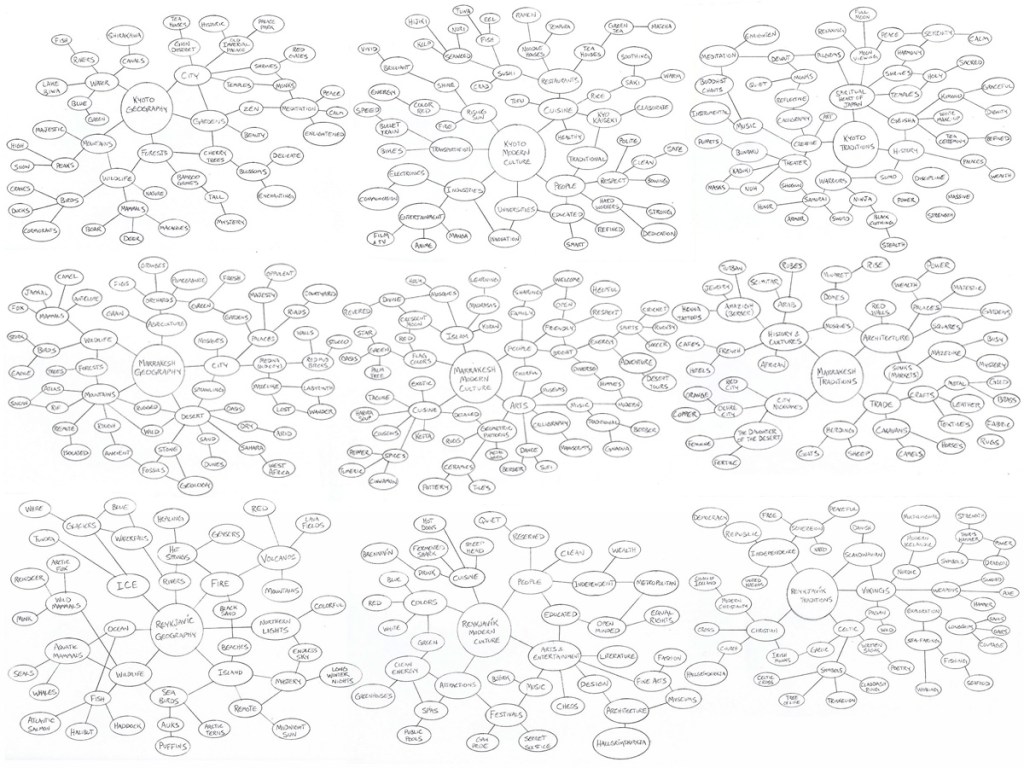
The three mind maps for Kyoto included enough keywords that I felt comfortable moving into the concept development phase for that city. I started sketching ideas, but after a while the ideas stopped coming, so I had to go back to the mind maps to find more connections and themes I overlooked during the initial research.
For example, one of my modern culture keywords was “manga” but these comic books are made in many parts of Japan, not just Kyoto. To find distinction, I searched for manga characters associate directly with Kyoto. During this search I discovered the popularity of Yuru-kyara, cute mascots used to promote cities, events and organizations. (JoJo, 2018) I sketched two of Kyoto’s mascots as part of the research.
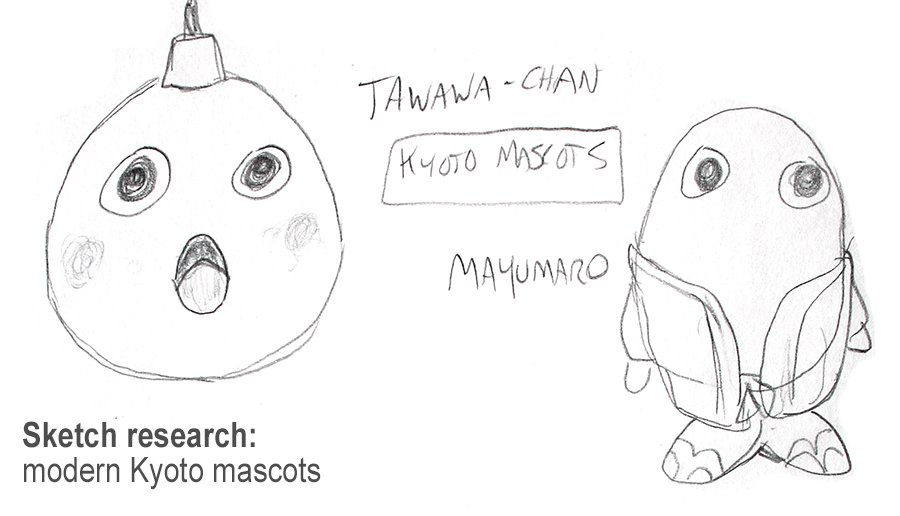
Drawing Tawawa-chan and Mayumaro helped me find connections between them and other popular manga characters. Large, expressive eyes with minimal other facial features are a common element, so I used those characteristics to develop the design below.
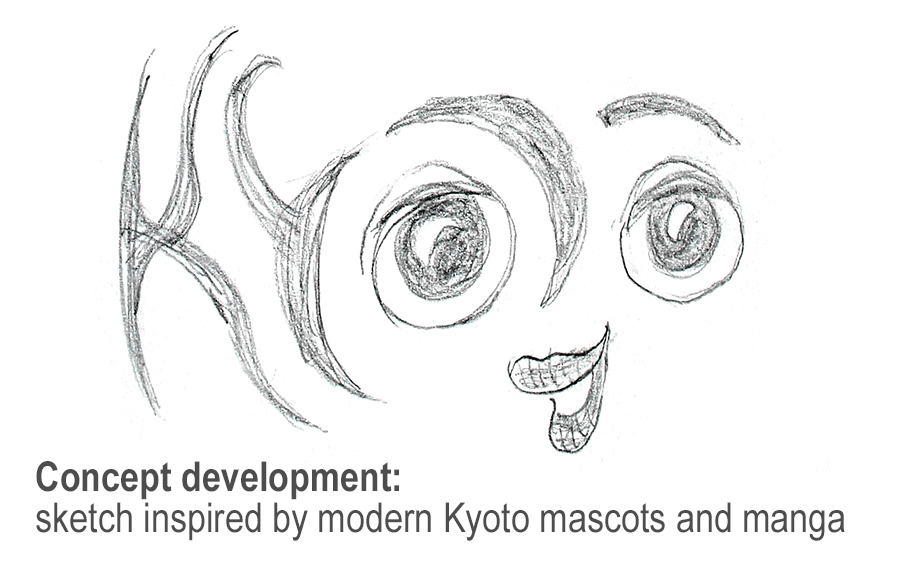
This sketch worked as an exploratory exercise but did not meet all of David Airey’s elements of iconic design. For the sketches below, I tried to “think small” and make the logos easier to commit to memory by keeping them simple. (Airey, 2014)
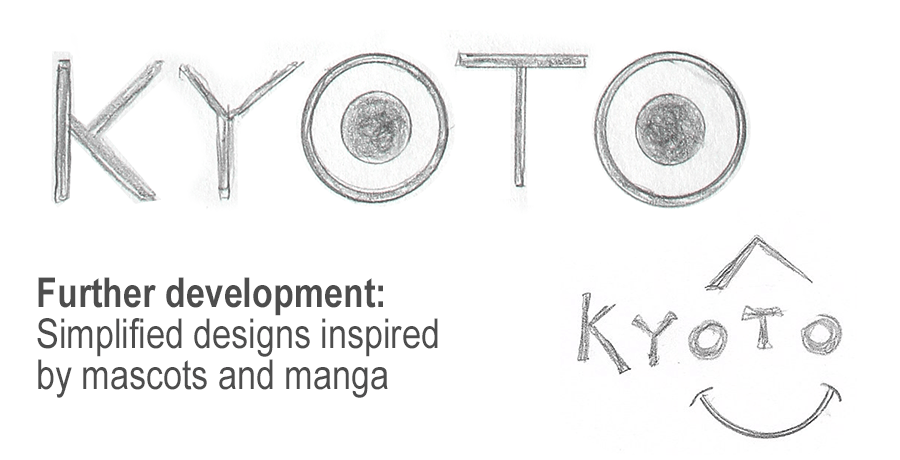
After completing the ninety rough sketches, they were submitted for peer review. The critiques I receive will be essential moving ahead to the Prototyping phase. I will analyze the feedback and utilize further research and self-critique to choose the designs with the most potential. I will also find ways of variating that design based on peer recommendations.
In a critique of this assignment, Dennis Pulido mentioned that manga inspired designs might seem childish to older visitors. However, the simplified designs offer friendly but more “expensive” feel that appeals to some travelers. I will continue thinking of the target audience for each design.
My current design process most closely matches the top illustration on page 68 of A Designer’s Research Manual. (OGrady & OGrady, 2009).
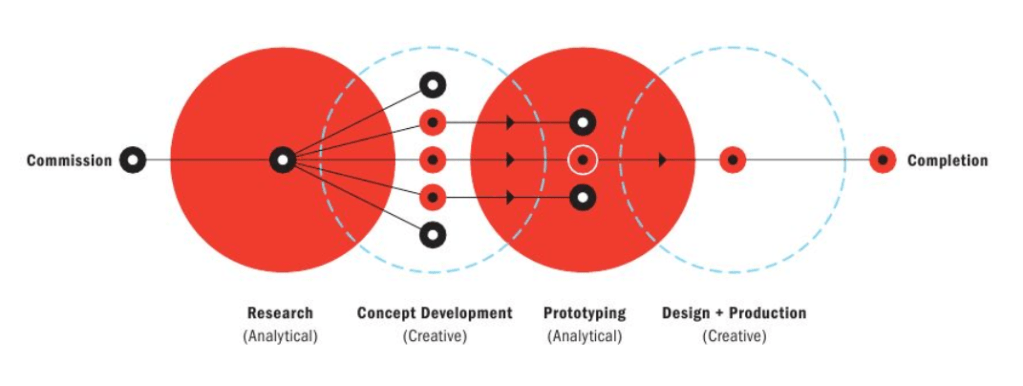
In the Week 4 Live Session video, Ryan McClung says that design is not a linear process. It is a cyclical journey that returns to the research phase at many points. (McClung, 2019). The second illustration on page 68 of A Designer’s Research Manual adds the assessment phase to help the designer make better informed decisions. (OGrady & OGrady, 2009). Although I would like to add an assessment phase to my own design process, I haven’t yet had the opportunity. Peer critiques are helpful in the concept development and prototyping stages, but once the design is finalized further assessment is needed to track its success. I look forward to the Media Design MFA course Measuring Design Effectiveness and learning more ways to analyze my design solutions.
References:
Airey, D. (2014, August 20). Logo Design Love, Annotated and Expanded Edition, Second Edition. Retrieved from https://ce.safaribooksonline.com/book/branding/9780133812589
JoJo. (2018, July 25). Japan’s mascot obsession. Retrieved from https://tokyotreat.com/news/japans-mascot-obsession-cute-kawaii-crazy-japan
McClung, R. (2019, August 27). Week 4 Live Session. Retrieved August 27, 2019, from https://online.fullsail.edu/class_sections/46722/modules/173179/activities/1087782
OGrady, J. V., & OGrady, K. V. (2009, February 1). A designer’s research manual: succeed in design by knowing your clients and what they really need. Gloucester, MA: Rockport Publishers. Retrieved from http://ce.safaribooksonline.com/book/graphic-design/9781592535576/chapter-2-practicing-research-driven-design/68
 Joshua Siegel's Mastery Journal